7 Best Wool Roving Kits For Needle Felting To Try
Discover the 7 best wool roving kits for needle felting to start your next craft project. Explore our top recommendations and shop your perfect starter kit today.
Needle felting serves as the perfect bridge for knitters looking to expand their fiber arts repertoire beyond two needles and a ball of yarn. Much like choosing between a high-twist superwash merino for cables or a rustic, sticky wool for colorwork, selecting the right roving kit dictates the success of a sculpture. These kits provide the tactile foundation necessary to master core density and structural integrity. Transitioning from working with a fixed-length strand to a loose mass of wool fiber requires a shift in how one perceives tension and surface texture.
Dimensions Kit: Best for First-Time Felters


Dimensions kits act as the “standard gauge” of the needle felting world. They offer highly structured, step-by-step instructions that prevent the common frustration of over-felting or misshaping a project in its early stages.
These kits are ideal for those who prefer the logic of a well-written knitting pattern over the creative ambiguity of free-form sculpting. Everything needed to reach the intended shape is pre-measured and color-coded.
The primary trade-off involves the simplicity of the designs. While excellent for learning the mechanical process, they offer less room for artistic deviation compared to more open-ended kits.
Woolbuddy Kit: Best for Making Cute Creatures

Woolbuddy kits focus on a whimsical, approachable aesthetic that makes them perfect for creating small, dense figures. Much like working with a simple garter stitch pattern, the focus here remains on repeating basic movements to achieve a consistent, uniform finish.
The wool provided in these kits generally has a good “grab,” making it easier for the needles to entangle the fibers quickly. This is essential for beginners who might otherwise find the felting process tedious if the wool lacks sufficient crimp or friction.
Expect a straightforward experience that results in a sturdy, charming finished product. It serves as an excellent introduction to creating three-dimensional volume without the need for complex wire armatures.
Living Felt Kit: Best All-In-One Starter Set
Living Felt sets provide a comprehensive education in fiber arts through professional-grade materials. If a knitter views their craft as a long-term investment, these kits offer the quality of materials—such as high-quality batting and precision needles—that distinguish a hobbyist from a serious fiber artist.
The advantage of this kit lies in the quality of the wool supply, which behaves much more predictably than entry-level synthetic blends. Just as one learns to feel the difference between a high-quality hand-dyed wool and mass-produced acrylic, one will quickly notice the superior felting speed of better-quality fiber.
This remains the top choice for those who intend to build their own stash. It includes the tools necessary to move from simple starter projects into more advanced, sculptural works.
Sarafina Kit: Best for Realistic Sculpting
Sarafina specializes in the art of realism, focusing on the subtle nuances of animal anatomy and texture. This approach requires a deeper understanding of fiber density and needle depth, similar to the precision required for complex lace charts or intricate intarsia.
The materials included allow for a sophisticated, painterly approach to surface color. Users can layer different shades and textures to mimic natural fur or realistic skin folds, moving far beyond the cartoonish aesthetic found in basic kits.
This kit is not for the faint of heart; it requires patience and a steady hand. However, for the knitter who enjoys the challenge of a complex, multi-stage project, the reward is an unparalleled level of detail.
Mayboos 50-Color Set: Best for Color Variety
A 50-color set functions much like a massive yarn advent calendar or a full spectrum of embroidery floss. For those who enjoy designing their own projects, having a vast palette available allows for endless experimentation with shading and highlight placement.
The trade-off here is the quality of the wool, which may be more utilitarian and less refined than single-source, boutique roving. It functions perfectly for small, decorative accents, though it might lack the bounce and resilience required for large-scale, load-bearing sculptures.
Consider this an essential resource for the “scrappy” maker. It is the perfect supply to have on hand for adding small, colorful details to larger, more structured pieces.
Artec360 Woodland Animals: Best Themed Project
Artec360 kits lean into charming, cohesive themes that provide a clear project path from start to finish. They provide a predictable outcome that helps makers refine their technique on a specific type of animal anatomy.
This is a great option for makers who are easily overwhelmed by the vast array of loose wool options available. The kit limits the variables, allowing the user to focus entirely on the mechanics of needle manipulation and fiber density.
The end result is almost always a reliable, giftable item. It removes the stress of design and allows for pure, process-oriented enjoyment.
Hawthorn Handmade: Best for Gifting a Project
Hawthorn Handmade presents their kits with a level of aesthetic care that makes them ideal gifts for the crafter in one’s life. The branding and packaging feel premium, matching the quality of the fibers contained inside.
These kits bridge the gap between a craft project and a lifestyle experience. They are designed to be enjoyed as a meditative, slow-living activity rather than a quick afternoon task.
The instructions are clear, and the materials are curated for a pleasant user experience. It is a thoughtful choice for those who want to provide a complete, high-quality creative kit to a friend or family member.
How to Choose Your First Needle Felting Kit
- Project Complexity: Assess if a project requires a wire armature for support, which adds a layer of difficulty.
- Instructional Style: Decide between visual, image-heavy guides and detailed, written step-by-step tutorials.
- Material Quality: Look for natural wools over synthetic blends, as the former is significantly easier to manipulate and provides a better tactile experience.
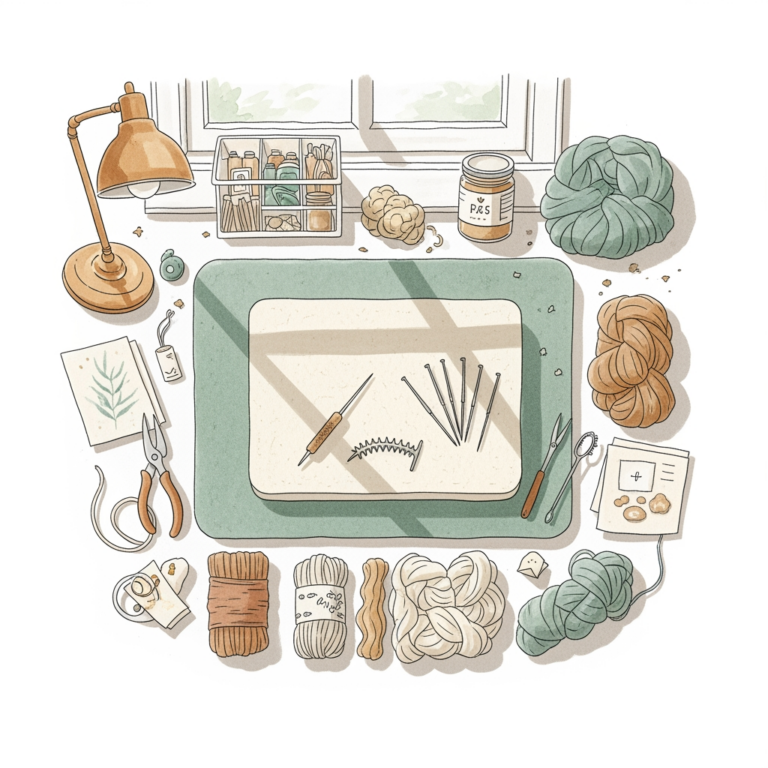
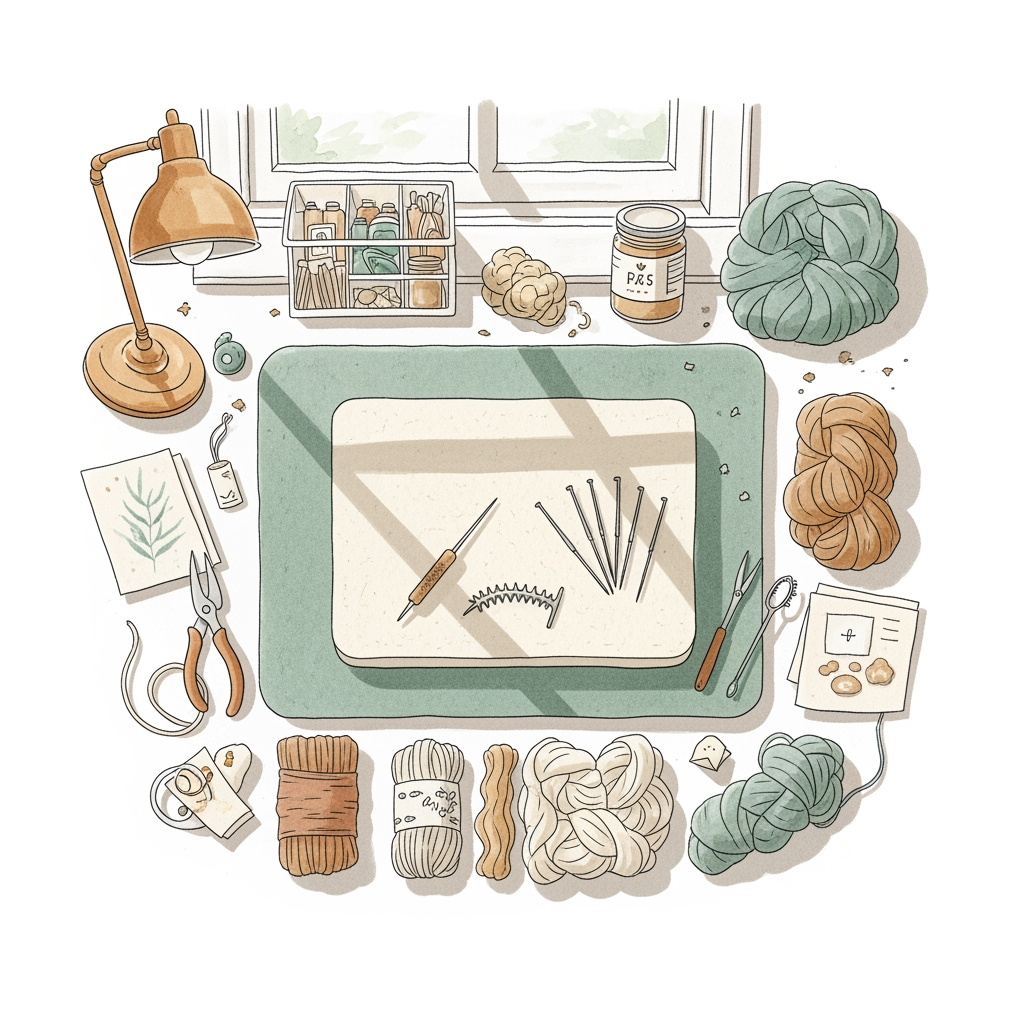
- Tool Completeness: Ensure the kit includes a foam mat, as this is the most frequently overlooked necessity for protecting both the needles and the work surface.
Essential Needle Felting Tools and Safety Tips
The most important tool is the felting needle itself, which is extremely sharp and prone to snapping if handled with too much lateral pressure. Just as one would not use a needle to pry open a package, avoid using felting needles for anything other than vertical, repetitive stabbing.
- Foam Mat: Always work on a dense, foam base to catch the needle tips.
- Finger Protectors: Leather or silicone guards are essential for beginners learning to control the needle trajectory.
- Needle Gauge: Use larger needles (typically 36 gauge) for the initial, rough shaping and smaller, finer needles (40 or 42 gauge) for surface detailing.
- Ergonomics: Maintain a relaxed grip on the needle holder; tension in the hand leads to fatigue and increases the likelihood of needle breakage.
Roving 101: Corriedale vs. Merino for Felting
Choosing the right fiber is as critical as choosing the right yarn weight for a sweater. Merino is famously soft and has a very fine crimp, making it excellent for detail work and surface application, but it can be more challenging to build into a dense, solid core.
Corriedale is the “workhorse” of the felting world. It features a medium-fine staple that is exceptionally easy to handle, holds its shape well, and firms up quickly under the needle.
For most beginners, starting with Corriedale provides a much more satisfying and rapid result. Reserve the delicate, slippery merino for the final layers or when specific, fine textures are required for a project’s finish.
Mastering needle felting, much like mastering any fiber craft, requires an appreciation for how different materials behave under tension. With the right kit and a steady, patient approach, the jump from two-dimensional fabric to three-dimensional sculpture becomes a natural and deeply rewarding evolution of your skills.