6 Yarn Bowl Stands For Stable Winding To Consider
Stop chasing runaway yarn balls. Discover our top 6 yarn bowl stands for stable winding and keep your craft organized. Shop our curated selection to start today!
Transforming a loose, tangled hank of yarn into a neat, ready-to-knit ball is a rite of passage for every dedicated fiber artist. While manual winding by hand is a classic method, using stable winding equipment turns this tedious chore into a seamless, meditative experience. Investing in the right tools prevents yarn fatigue, ensures consistent tension, and protects delicate fibers from unnecessary friction. This guide explores the essential equipment required to build a reliable home winding station that serves both the casual hobbyist and the serious stash-builder.
Knit Picks Swift: Best Budget-Friendly Pick


The Knit Picks Swift is an entry-level staple for those looking to transition away from winding yarn over the back of a chair. Its umbrella-style design collapses easily, making it an ideal choice for knitters with limited storage space or those who only wind yarn occasionally.
Because it is constructed primarily from plastic and metal, it is lightweight and highly portable. While it lacks the sheer mass of heavy wooden models, it performs admirably for standard weight yarns, from light fingering to worsted.
This tool is the perfect bridge for a knitter moving from hand-winding to a more professional setup. It provides the essential rotation needed to feed yarn without snags, provided it is clamped securely to a stable, level surface.
Knit Picks Yarn Ball Winder: The Perfect Swift Partner
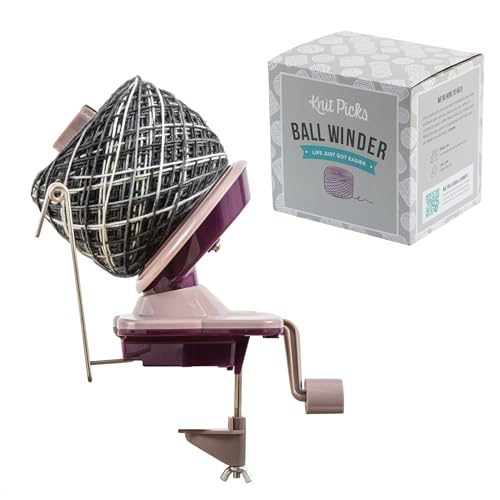
A swift is only half of the equation; a reliable ball winder is what transforms a rotating hank into a tidy, center-pull cake. The Knit Picks Yarn Ball Winder is a widely recognized workhorse designed specifically to pair with the swift mentioned above.
This winder creates a classic “cake” shape, which prevents yarn from rolling across the floor while the knitter works. The gear mechanism is intuitive, though it requires a steady, rhythmic pace to ensure the yarn stays taut enough to prevent the cake from collapsing.
It is particularly useful for those who buy luxury hanks of wool or alpaca that need to be stored in a way that preserves their loft. By creating a center-pull cake, the yarn retains its original structure without being stretched or crushed by tight, manual ball-winding.
Stanwood Umbrella Swift: The Sturdy Wooden Workhorse
For those who regularly process large hanks or work with slippery fibers like silk and bamboo, the Stanwood Umbrella Swift is a significant upgrade. The weight and smoothness of the solid wood construction provide a level of stability that lighter, plastic alternatives cannot match.
This swift features a metal clamp that secures firmly to almost any table edge, preventing the wobble that often leads to dropped stitches or tangled yarn. The natural wood finish minimizes friction, allowing the swift to spin effortlessly even when the yarn is slightly damp or delicate.
It is an investment piece, but it is one that pays dividends in longevity. If a collection includes heavy sweater quantities of bulky yarn, the added strength of this model makes it a necessary addition to the studio.
Beka Floor Swift: For Crafters With Dedicated Space
The Beka Floor Swift is designed for the knitter who requires a high-capacity, heavy-duty solution that does not rely on table space. Its freestanding design allows it to be placed anywhere in the room, making it excellent for winding multiple hanks in a single session.
Because it stands on the floor, it accommodates larger hanks that might otherwise drag on a tabletop. It is an excellent choice for those who work with long-yardage lace weight yarns, where keeping the yarn path clear of obstacles is paramount to preventing tangles.
This tool is a commitment to the craft. It is best suited for those with a permanent knitting corner, as its size makes it less portable than tabletop versions.
The Wool Jeanie: Unique Magnetic Yarn Suspension

The Wool Jeanie offers a departure from the traditional umbrella swift by using a magnetic, top-down suspension system. Instead of spinning a horizontal hank, the yarn is held on a vertical spindle that rotates as the yarn is pulled.
This design is particularly advantageous for preventing the “yarn-jumping” that happens when a horizontal swift spins too quickly. It creates a smooth, consistent tension that is ideal for those who prefer to keep their winder directly in front of them.
It is a compact solution that excels in small spaces or areas where table real estate is scarce. Because it eliminates the complex mechanics of an umbrella swift, there are fewer moving parts to maintain or wear out over time.
Furls Whirling Winder: An Elegant Tabletop Spinner
The Furls Whirling Winder is designed with aesthetics in mind, offering a beautiful, minimalist approach to yarn management. Its weighted base provides a sturdy platform for smooth, quiet winding, which is a major advantage for knitters who work in shared living spaces.
This model is as much about the experience as it is about the function. The ball bearings are exceptionally smooth, requiring very little effort to initiate the spin and keeping the momentum steady throughout the winding process.
It is an excellent choice for the knitter who wants a high-quality tool that looks professional on a workspace. While it occupies more space than some budget winders, the resulting tension and stability make it a top contender for a permanent winding station.
How To Set Up Your Swift and Winder Correctly
Proper alignment is the most important factor in preventing yarn tangles. The swift and the winder should be positioned so that the yarn travels in a straight line from one to the other, ideally with about two to three feet of distance between them.
If the angle is too sharp, the yarn will experience uneven friction, which can cause the winder to snag or pull too aggressively. Always ensure that both tools are clamped firmly to a surface that does not vibrate or shift during the winding process.
Before starting, check that the swift is fully expanded to the size of the hank to prevent sagging. Secure the end of the yarn to the winder, and begin with a slow, deliberate pace until the yarn starts to feed consistently.
Swift vs. Nostepinne: Which Winding Tool Is Best?
A nostepinne is an ancient, handheld tool used to wind yarn into a center-pull ball without mechanical assistance. It provides a tactile connection to the yarn that mechanical winders lack, allowing the knitter to feel the tension directly.
A mechanical swift and winder system is vastly superior for speed and consistency, especially when processing multiple hanks or high-yardage projects. A nostepinne is better suited for smaller amounts of yarn or for those who appreciate the meditative, traditional aspect of manual winding.
Deciding between the two comes down to volume and preference. If the goal is to wind a sweater’s worth of yarn in minutes, choose the mechanical path; if the goal is to carefully inspect yarn for defects while winding, a nostepinne is an excellent companion.
Winding Center-Pull vs. Outside-Pull Yarn Cakes
Most modern winders create center-pull cakes, which are designed to stay stationary while the yarn is pulled from the inside. This is highly effective for preventing the ball from rolling away, but it can lead to “yarn barf”—a large tangle of yarn that erupts from the center—if the cake is stored improperly or crushed.
Outside-pull balls are created by winding yarn manually or using a system that does not produce a center core. These are generally more stable for long-term storage, as they are less likely to collapse or tangle when placed in a project bag.
When using a center-pull cake, always ensure the inner end is tucked in or tied off. If a cake becomes loose or “mushy” after some use, it is best to rewind it or move it to a project bowl to prevent it from knotting.
Preventing Tangles When Winding From a Hank
The most common mistake when winding from a hank is failing to properly untwist the yarn before placing it on the swift. Always ensure the yarn is in a perfect circle without any figure-eight crosses, which are guaranteed to catch during the winding process.
If a tangle does occur, stop immediately and backtrack. Pulling harder will only tighten the knot, making it significantly harder to remove without cutting the yarn.
Keep the yarn path clean and clear. Avoid placing the winder near other objects like scissors, patterns, or needles that might catch the yarn as it moves from the swift to the winder.
Equipping a workspace with the right swift and winder is the best way to ensure that every knitting project starts on a professional note. By prioritizing stability and proper alignment, these tools protect both the time and the investment put into every beautiful skein of fiber.