
6 Glue Sticks For Collage Journaling That Hold Securely
Discover the 6 best glue sticks for collage journaling that ensure your pages stay securely bonded. Read our expert guide and choose your perfect adhesive today.
Collage journaling is a tactile practice that mirrors the thoughtful construction of a complex garment. Just as selecting the right yarn weight is vital for a sweater’s drape, choosing the correct adhesive ensures your pages remain intact through years of handling. These tools are the foundation upon which your creative records are built. Relying on the right glue stick transforms a scattered collection of paper and fabric scraps into a permanent, professional-looking keepsake.
UHU Stic Glue Stick: The Reliable All-Rounder


The UHU Stic is the standard-bearer for many crafters, much like a classic worsted-weight wool is for the beginning knitter. It provides a consistent, reliable bond that works across a wide variety of paper textures, from thin newsprint to heavy cardstock.
When working with collage, the primary concern is paper weight and absorbency. Because this glue applies smoothly without excessive moisture, it prevents the warping common in lighter fibers or thinner paper stocks.
This is the sensible choice for general-purpose journaling. While it might not withstand heavy embellishments, it is perfect for layering delicate sketches and ephemera.
Elmer’s Craft Bond: For a Truly Strong Hold
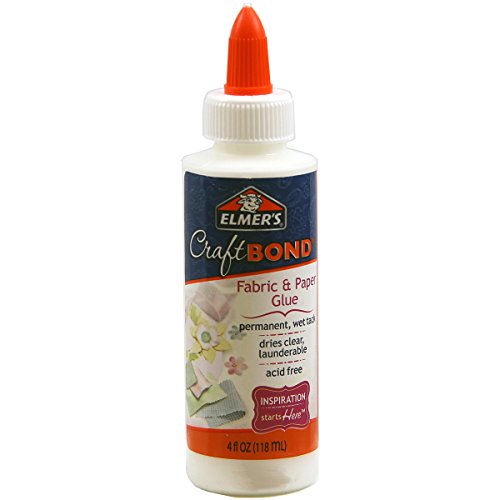
Elmer’s Craft Bond is formulated with extra strength, making it the ideal selection for securing heavier materials. If the journal includes items like thick wool swatches, lace remnants, or heavy textured paper, this adhesive provides the necessary grip.
Applying this glue requires a firm hand, as the adhesive is denser than standard formulas. It behaves much like a sturdy linen-blend yarn; it provides structural integrity where softer options might fail.
Be aware that the stronger hold often comes with a slightly thicker consistency. Use it sparingly to avoid bumps beneath your pages, ensuring the journal closes flat.
Scotch Create Permanent: Best for Mixed Media

Mixed media journaling often involves combining paper with synthetic ribbons, fabric scraps, or even thin metal findings. Scotch Create Permanent offers a chemical composition that excels at gripping non-porous or textured materials.
Think of this as the equivalent of choosing a high-twist synthetic yarn for a garment exposed to high friction. It is designed for longevity and resilience against the wear-and-tear of frequent page-turning.
While it is robust, it dries relatively quickly, allowing for a swift workflow. This is a must-have for those who treat their journals as miniature textile archives.
Tombow Mono Glue Stick: A Crafter’s Top Pick
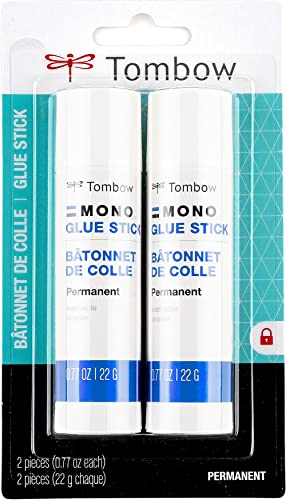
The Tombow Mono is favored for its precise application and unique color-changing formula. It appears blue upon application so the placement is visible, then dries completely clear.
This feature is invaluable when aligning complex patterns or edges. It functions much like a stitch marker or a guide thread—helping you maintain precision before the adhesive sets permanently.
The texture is exceptionally smooth, gliding over delicate surfaces without tearing. It is a premium tool that prioritizes both ease of use and professional results.
Avery Permanent Glue Stic: The Budget Choice

Avery Permanent Glue Stic serves the crafter who keeps a high-volume journal and needs to manage supply costs without sacrificing structural integrity. It functions efficiently for standard paper-to-paper bonding.
While it may not offer the specialized hold of a mixed-media adhesive, it is more than adequate for standard collage work. It is the workhorse of the craft room, much like a reliable, affordable acrylic-wool blend for everyday projects.
When purchasing, prioritize bulk packs to ensure you never run out mid-composition. It is an honest, straightforward product that delivers exactly what it promises.
Pioneer Photo Glue Stick: Safest for Photos
Photos are delicate, susceptible to chemical reactions that lead to yellowing or degradation over time. The Pioneer Photo Glue Stick is designed specifically to be photo-safe, ensuring the long-term preservation of your captured memories.
Using the wrong adhesive on photos is akin to washing an heirloom wool sweater in high-heat water; the damage is often irreversible. This specialized formula prevents the acidic breakdown that occurs with lower-quality products.
Always check the label to confirm the “acid-free” and “archival safe” designation. Investing in the correct adhesive for photos is a non-negotiable step in archival journaling.
Permanent vs. Repositionable: Which Do You Need?
The choice between permanent and repositionable adhesives depends entirely on the design process. Permanent glue is essential for final placements, while repositionable options allow for experimentation.
- Permanent: Best for finished pages where the design is set. It provides a secure bond that prevents lifting or peeling over time.
- Repositionable: Excellent for layouts or “auditioning” pieces, similar to draping fabric before cutting. It allows for adjustments without damaging the underlying journal page.
Most experienced journalers keep both on hand. Start with repositionable to map out your page, then reinforce with permanent adhesive to lock the composition in place.
Why “Acid-Free” Is Essential for Your Journals
Acidic glues will inevitably cause paper to turn yellow, brittle, and eventually disintegrate. This process, known as oxidation, is the enemy of any long-term project.
Just as a knitter avoids using harsh detergents on fine fibers to prevent damage, a journaler must avoid acidic adhesives. Acid-free formulas maintain the integrity of the journal’s pages, ensuring that the work remains in good condition for years.
When in doubt, prioritize products clearly marked as “archival quality.” It is a small detail that makes a profound difference in the longevity of your creative work.
Tips for a Smooth, Wrinkle-Free Application
Wrinkling occurs when the moisture in the glue causes paper fibers to expand unevenly. To minimize this, apply the glue in thin, even strokes rather than thick clumps.
- Start at the edges: Work from the center outward to push out air bubbles.
- Use a bone folder: A flat tool can help press down paper, creating a tight, uniform bond across the entire surface.
- Let it breathe: Allow the page to dry slightly before turning it, just as you would let a blocked garment dry fully before wearing.
Less is usually more. A light, even layer of adhesive will provide a stronger, flatter bond than a heavy-handed application.
How to Properly Store Your Glue Sticks for Longevity
Glue sticks are sensitive to air and temperature fluctuations. Always ensure the cap is snapped on tightly to prevent the adhesive from drying out inside the tube.
Store your sticks in a cool, dark place, ideally in an upright position. Keeping them away from direct sunlight preserves the chemical stability of the formula, maintaining its tackiness for future use.
If a glue stick feels slightly hard at the tip, gently scrape off the top layer to reveal the fresh adhesive underneath. Treating your tools with this level of care ensures they remain ready for the next creative session.
Choosing the right glue stick is the first step in ensuring your journal remains a cherished object for years to come. By matching the strength and archival quality of your adhesive to your specific materials, you secure your hard work against the passage of time. Keep your workspace organized, your caps tight, and your technique consistent, and your collages will stand the test of time.