6 Best Plastic Bobbins For Thread Management To Try
Organize your sewing room with our top 6 picks for the best plastic bobbins. Improve your thread management and shop our expert recommendations for your projects.
Tangled yarn is the quickest way to turn a meditative knitting session into a frustrating mess of knots. When managing multiple colors in a single row, the right bobbin does more than just hold thread; it acts as a silent assistant that maintains tension and prevents tangles. Choosing the wrong tool can lead to uneven tension or, worse, a project abandoned halfway through. Selecting the ideal bobbin depends entirely on the specific fiber weight, the complexity of the colorwork, and how much yarn needs to be managed at once.
Clover Bobbin Set: Best for Intarsia Knitting


Clover bobbins utilize a signature locking mechanism that keeps yarn exactly where it belongs until the moment of use. This is crucial for intarsia, a colorwork technique where individual blocks of color are worked from separate balls of yarn. Because these bobbins do not spin freely, they prevent the sudden “yarn vomit” that often happens when a bobbin slips off a desk or drops during a project.
The plastic used is smooth and snag-free, ensuring that delicate natural fibers like mohair or high-twist merino don’t fray when wrapped. They are particularly well-suited for projects involving multiple small sections of different colors, such as a geometric blanket or a complex pictorial sweater. The trade-off is their rigidity; they are not intended for heavy, long-yardage skeins, but rather for managing the frequent color changes inherent in complex patterns.
For the best results, wind only what is needed for a specific section to keep the bobbin lightweight. When working with splitty, low-twist yarns, the smooth plastic surface of the Clover set is a major advantage. It minimizes the friction that can lead to thinning or breakage over time.
Yarnology Plastic Bobbins: Great Budget Choice
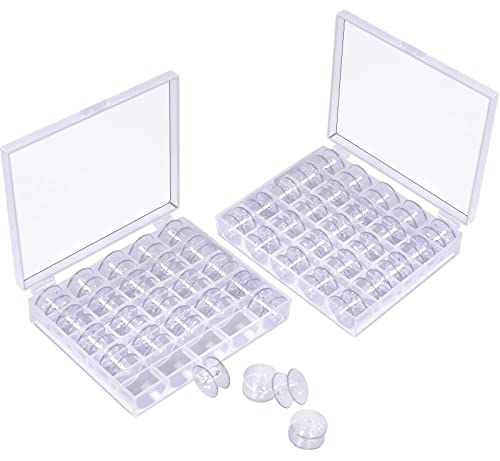
Yarnology bobbins are the workhorses of the craft room, offering a functional and inexpensive solution for large-scale color management. These flat, basic plastic shapes are lightweight and lack the complex moving parts found in specialized knitting tools. Their simplicity is their greatest strength, as there is very little that can break or fail during a long-term project.
These bobbins excel when keeping track of many colors at once, such as during a fair isle project with a large repeat. Because they are so thin, they take up minimal space in a project bag, allowing for better organization in tight quarters. However, they lack a dedicated locking mechanism, which means the yarn must be wrapped carefully to prevent it from sliding off the edges.
They are best suited for stash organization or simple color separation where high-tech features aren’t required. If a project uses many colors but only small amounts of each, these are the most cost-effective way to get organized. Keep in mind that for very slick fibers like silk or bamboo, the lack of a lock might require a bit of extra patience during setup.
DMC Plastic Floss Bobbins: For Embroidery Masters

While designed originally for embroidery floss, these small plastic bobbins are surprisingly effective for fine-gauge knitting and intricate intarsia. They are extremely compact, making them ideal for high-detail colorwork using lace-weight or fingering-weight yarns. Their small footprint allows them to hang neatly from the back of the work without adding excessive weight that could distort the stitches.
These bobbins typically feature two notched edges that help secure the yarn end, preventing it from unwinding during storage. They are surprisingly durable and can be reused across dozens of projects. Because they are designed to be thin, they don’t add bulk to a project bag, which is a major benefit when traveling with a work-in-progress.
One potential drawback is the limited capacity of the bobbin itself. If the project requires a significant amount of a single color, these will need to be refilled frequently. They are a precision tool, perfect for the knitter who demands tidy organization for fine details and doesn’t mind the occasional reload.
KnitPicks Rainbow Bobbins: Fun and Functional

KnitPicks Rainbow bobbins bring a visual organization system to the workspace, allowing for color-coded project management. Using specific colors for specific yarn weights or color repeats makes it much easier to identify which thread belongs to which section of a pattern. This is a subtle but effective way to reduce human error when managing complex charts.
The material is sturdy plastic that stands up well to the tension of stranded colorwork. The shape is designed for easy handling, and they feel comfortable in the hand even after hours of color changes. Because they are brightly colored, they are also harder to lose in the depths of a sofa or a large knitting bag.
While the aesthetic is a primary draw, the utility matches the appeal. They strike a nice balance between the basic flat bobbins and the more specialized locking styles. If organization often feels like a chore, the visual feedback provided by the different colors can make the process feel slightly more manageable and rewarding.
Susan Bates Knit Klips: Securest Yarn Holders
Susan Bates Knit Klips offer a unique “clip” design that functions similarly to a small clothespin. This is the gold standard for knitters who need to secure their yarn ends tightly to prevent any accidental unraveling. The clip mechanism ensures the yarn stays precisely at the length needed, which is vital when working with high-tension fibers.
These are particularly useful for working on the go, as the clip ensures the bobbin won’t unravel even if the bag is jostled. The plastic is smooth enough that it won’t snag on delicate fibers, yet firm enough to hold a significant amount of weight. They provide excellent security for those prone to working in various environments where a dropped bobbin could otherwise cause a disaster.
One minor trade-off is the extra step required to clip and unclip the yarn. For projects with very fast color changes, this might feel slightly slower than using a gravity-fed bobbin. However, the peace of mind offered by the secure clip is often worth the extra few seconds per row.
Fish-Style Weaving Bobbins: Best for Tapestry

The classic fish-style bobbin is an essential tool for tapestry weaving or long-length intarsia where yarn must be kept under constant, even tension. The shape allows for a generous amount of yarn to be wound while maintaining a balanced center of gravity. This balance prevents the bobbin from twisting and curling the yarn, which is a frequent complaint with less ergonomic designs.
The tapered ends allow the bobbin to be passed through narrow spaces between warp threads or between complex color sections in a knitting pattern. Because of their length, they can hold more yarn than a standard flat bobbin, meaning fewer interruptions for refilling. They are truly designed for projects that require long, continuous stretches of consistent color.
While more specialized than a flat plastic card, these bobbins are invaluable for complex color-blocking projects. They provide a professional-grade solution for keeping yarn controlled, tangle-free, and ready for the next pass. If the project involves large-scale color work that spans across the width of a garment, this style is worth the investment.
Choosing the Right Bobbin For Your Next Project
Selecting the correct bobbin is not merely about brand preference; it is about matching the tool to the fiber and the technique. Consider the weight of your yarn first. For lace-weight yarns, stick to smaller, lighter bobbins like the DMC style to avoid distorting your gauge. For worsted or bulky yarns, heavier-duty bobbins are necessary to hold the extra yardage without becoming cumbersome.
Think about how often you change colors. Frequent, small color changes benefit from the quick, locking nature of Clover bobbins. Larger color blocks or tapestry-style work require the capacity and balance of fish-style bobbins. If you tend to knit loosely, be aware that heavier bobbins might pull at your work; in this case, choose the lightest option possible.
Finally, consider your storage space and mobility. If you are a traveling knitter, prioritize flat, low-profile bobbins that fit neatly into project bags. If you prefer to knit in one dedicated spot, locking or fish-style bobbins offer superior tension control and organization.
- For intarsia: Prioritize locking mechanisms.
- For fair isle: Prioritize low-profile, flat designs.
- For lace-weight: Prioritize lightweight, compact bobbins.
- For heavy-duty yarn: Prioritize capacity and center of gravity.
How to Wind Your Bobbins to Prevent Tangling
The way yarn is wound onto a bobbin is just as important as the bobbin itself. Always wind your yarn with consistent, moderate tension. If the yarn is wound too loosely, it will unravel and tangle; if it is wound too tightly, the yarn can become stretched or damaged, especially with elastic fibers like nylon-blend sock yarns.
For flat bobbins, use a “figure-eight” wrapping technique. This ensures that the yarn remains evenly distributed and creates a natural braking effect when the bobbin is hanging. Never wrap the yarn in a single direction around a flat bobbin, as this can twist the fibers and lead to “kinking” while you work.
Always leave a tail of about two inches, and ensure it is either clipped or tucked securely. If using a locking bobbin, make sure the yarn is seated firmly in the groove before proceeding. Consistent winding habits will save you significant time in the long run by preventing knots before they even have a chance to form.
Locking Bobbins vs. Flat Bobbins: Which to Use
Locking bobbins feature mechanical teeth or clips that grip the yarn. These are superior for knitters who find themselves frequently stopping or putting down their work. By locking the yarn in place, you eliminate the possibility of the bobbin spinning freely and losing its yarn length. They are the clear winner for safety and precision.
Flat bobbins, by contrast, rely on geometry and friction. They are thinner, lighter, and often easier to carry in large numbers. These are ideal for complex colorwork projects with many colors where you need to keep several bobbins hanging on the back of the work at once. Using too many locking bobbins can add significant weight and bulk to the back of a sweater, which can affect the drape of the finished garment.
Choose locking bobbins when you are working on a piece that requires significant breaks and portability. Choose flat bobbins for intricate, color-heavy projects where keeping the back of the work tidy and lightweight is the priority. There is no reason a knitter shouldn’t have a selection of both in their kit.
Smart Bobbin Storage and Organization Ideas
Organization is key to maintaining sanity during long, complex projects. A dedicated bin or small clear drawer unit is the best way to keep bobbins from becoming a tangled mess. Sorting them by color or by the project-specific yarn weight ensures that you are never hunting for the right tool mid-row.
For those with many bobbins in rotation, consider using a tension rod inside a drawer to hang them. This keeps them vertical, visible, and tangle-free. If you are constantly on the move, a small, zippered pencil case with elastic loops can hold flat bobbins securely, preventing them from shifting during transport.
Labeling your bobbins is another often-overlooked strategy. A small piece of masking tape or a removable sticker on each bobbin can record the color name or dye lot, preventing those “what yarn was this?” moments months later. Keeping your tools organized turns the technical side of knitting into a stress-free process, allowing more focus on the creative result.
Investing in the right bobbins changes the way you approach colorwork, turning potential tangles into a systematic and enjoyable part of your knitting practice. By selecting tools that match your specific project needs—whether it is the secure grip of a locking bobbin or the slim profile of a flat one—you gain greater control over your tension and the final outcome of your piece. Take the time to evaluate your habits, and you will find that the right equipment is one of the most rewarding additions to your craft room.