6 Best Pattern Templates For Intricate Mandalas To Try
Unlock your creativity with these 6 best pattern templates for intricate mandalas. Download our curated collection and start your relaxing art project today.
Mandala patterns represent the pinnacle of meditative fiber arts, demanding patience, precision, and an eye for intricate geometry. These designs transform simple stitches into breathtaking tapestries, challenging even the most experienced makers to maintain consistent tension over thousands of rounds. Selecting the right template determines whether the process feels like a rhythmic flow or a series of frustrating errors. The following guide explores six iconic patterns that define excellence in the mandala craft.
Frank O’Randle’s ‘Phoenix’: Most Epic Scale


The Phoenix pattern stands as a masterclass in large-scale geometric construction. Its design relies on a sequence of expanding rounds that push the boundaries of traditional circular motifs.
This project is not for the faint of heart, as the sheer size requires significant desk space and hours of dedicated focus. When working on a piece this expansive, maintaining a consistent gauge is the primary challenge; a single tight stitch can cause the entire circumference to ripple or cup.
Invest in high-quality circular needles that allow for a smooth transition of the fabric as the diameter grows. The final result is a monumental display of craftsmanship, making it the perfect choice for an ambitious centerpiece.
Lilla Bjorn’s ‘Nordic Dream’: Best Colorwork
Nordic Dream excels by integrating complex color transitions with clever stitch manipulation. It moves beyond standard circular growth, utilizing texture to define boundaries between color sections.
The design encourages the use of contrasting palettes to make individual geometric motifs pop. For best results, choose a yarn with a consistent twist to ensure the color transitions remain crisp and sharp.
Avoid overly variegated yarns, as they often fight with the intricate stitch geometry, leading to a muddy final appearance. Instead, opt for semi-solids or distinct color blocks to maximize the pattern’s structural impact.
Dedri Uys’s ‘Sophie’s Universe’: Ultimate Journey
Sophie’s Universe is widely regarded as a rite of passage for serious yarn crafters. This pattern masterfully combines diverse stitch techniques into a cohesive, ever-expanding square format.
What makes this design effective is its instructional depth, providing a comprehensive education in advanced stitch placement. It is an excellent choice for those who want to refine their skills while producing a highly detailed heirloom piece.
Because the pattern is modular in its complexity, it is vital to stay organized with stitch markers. Keep a running tally of your stitch counts at the end of every round to avoid structural imbalances that become impossible to correct later.
Mandala Madness CAL Pattern: Best Free Option
Mandala Madness offers a sophisticated look without the barrier of a paid entry. It provides a structured progression of rounds that emphasize lace-like transitions and bold textures.
As a free pattern, it remains a gold standard for accessibility, yet it offers the complexity of high-end design. The pattern is well-documented, making it easier to troubleshoot if you find yourself uncertain about a specific technique.
Remember that even with free patterns, the choice of material remains the biggest factor in success. Use a smooth, non-fuzzy yarn to ensure your delicate stitch work stays visible rather than getting lost in a halo of fiber.
Carola Herbst’s ‘Ariadne’: Best for Texture
Ariadne focuses on the tactile experience, utilizing raised stitches to create a three-dimensional effect. It is the premier choice for crafters who enjoy the physical sensation of working with intricate cabling and puff stitches.
The depth created by these stitches captures light beautifully, adding a professional finish to the piece. However, these textures consume significantly more yarn than standard flat stitches.
Plan for a higher yardage requirement and ensure you have consistent dye lots for your entire project. Texture-heavy designs can hide minor tension issues, but they also require a steady hand to keep the raised stitches uniform.
Anna Nikipirowicz’s ‘Bohemian’: Best Modern Vibe
The Bohemian mandala leans into contemporary aesthetics with clean lines and balanced proportions. It is perfect for those who want a piece that integrates seamlessly into modern interior design.
The pattern relies on repeating motifs that are easier to memorize than purely organic shapes. This makes it a great choice for makers who enjoy a rhythmic, almost hypnotic knitting or crochet experience.
Choose a crisp fiber like mercerized cotton for this design. The lack of elasticity in such fibers ensures that the geometric shapes remain sharp and defined even after years of use.
Choosing the Right Yarn for Your Mandala
Selecting the correct yarn for a mandala is not just about aesthetics; it is about structural integrity. For intricate designs, look for a smooth, high-twist yarn that clearly defines each stitch.
Avoid fuzzy mohairs or loosely spun singles if you want the geometric details to remain visible. A four-ply smooth wool or a high-quality mercerized cotton provides the best stitch definition.
Always check the fiber memory. Synthetic fibers can sometimes stretch too much under their own weight in a large project, while natural fibers provide the structure necessary for a mandala to lay flat after blocking.
How to Block Your Mandala for a Perfect Finish
Blocking is the difference between a project that looks handmade and one that looks artisanal. When dealing with complex mandalas, wet blocking is generally the most effective method for resetting the fibers.
Submerge the piece in lukewarm water, gently squeeze out the excess, and lay it flat on interlocking foam tiles. Use rust-proof stainless steel pins to secure each point of the mandala, pulling gently to open up the lace work.
Do not rush the drying process by applying heat. Allowing the piece to dry naturally ensures the fibers set into their final shape without compromising the texture or color vibrancy.
Managing Colors in Intricate Mandala Designs
Managing color in a mandala requires a systematic approach to avoid chaotic visual noise. Start by mapping out your color sequence before you begin the first round.
When working with many ends, weave them in as you go to prevent an overwhelming finish. For color changes, utilize a “jogless” join technique to keep the transitions invisible throughout the rounds.
Consider using a color wheel to create balanced combinations. Pairing high-contrast colors will highlight the geometric structure, while monochromatic shades will emphasize the texture and stitch complexity.
Reading Complex Mandala Charts and Symbols
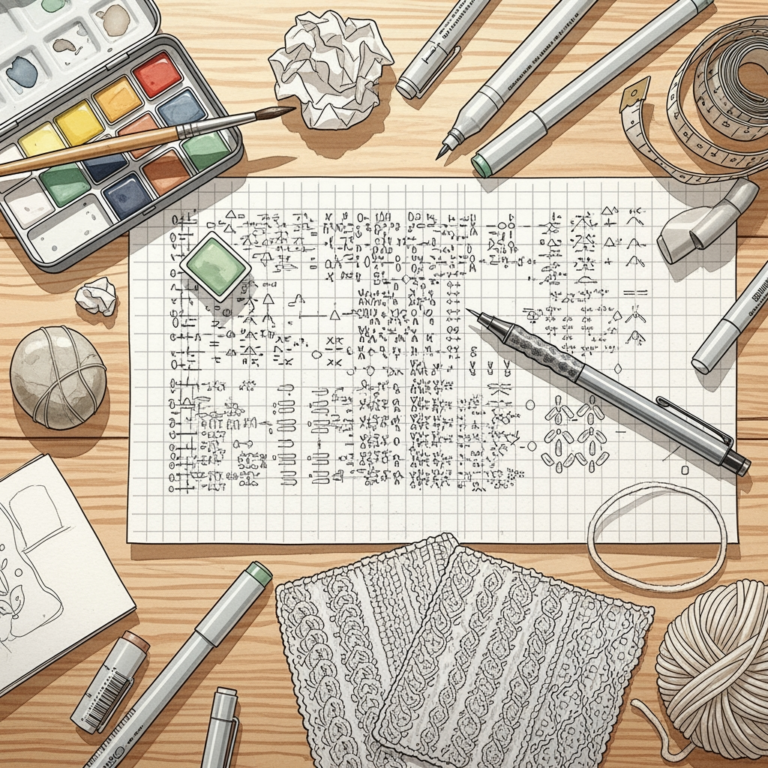
Charts are the universal language of intricate patterns, providing a visual map of the stitches. Focus on the legend first, as symbol notations can vary significantly between designers.
If a chart looks overwhelming, break it down by section rather than trying to interpret the entire design at once. Use a magnetic board or a ruler to isolate the round currently in progress.
If you hit a roadblock, cross-reference the chart with the written instructions if available. A combination of visual mapping and descriptive text is the most reliable way to navigate high-complexity patterns.
Mastering a complex mandala is a rewarding endeavor that bridges the gap between craft and art. By focusing on quality materials and precise technique, any maker can achieve stunning results. Start with a clear plan, maintain patience, and enjoy the transformative journey of the stitch.