
7 Best Scrapbooking Tweezers For Small Die Cuts
Struggling with tiny paper pieces? Discover the 7 best scrapbooking tweezers for small die cuts to improve your precision. Shop our top-rated recommendations now.
Small embellishments in mixed-media crafting require the same level of dexterity as picking up a dropped stitch in a delicate lace shawl. Just as the wrong needle tip can split a fine silk-blend yarn, the wrong pair of tweezers can crush a fragile paper die-cut or fail to place an adhesive stone accurately. Investing in the right tools transforms tedious assembly into a fluid, rhythmic process. This guide breaks down the best options to ensure every intricate detail finds its perfect place.
Cricut Fine-Point Tweezers: Best for Precision
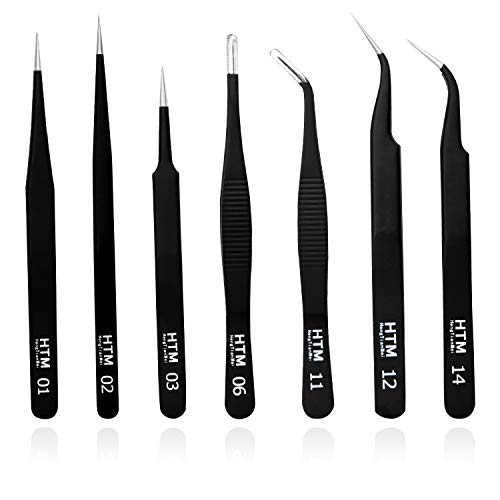

Precision is the hallmark of these tweezers, featuring a sharp, fine point that mimics the control needed when working with tiny glass beads or lace-weight fibers. The tapered tips allow for surgical accuracy when handling minuscule die-cuts that might otherwise tear under clumsy pressure.
These are the go-to choice for crafters who treat their work with the meticulousness of a master lace knitter. Much like choosing a high-quality nickel-plated needle for slick, fast stitches, these tweezers offer a smooth, predictable glide that prevents snagging delicate paper fibers.
However, the lack of a reverse-action grip means you must maintain constant finger pressure to hold an object. If your hand tires easily during long assembly sessions, this tool might feel demanding.
Tim Holtz Assemblage Tweezers: Top Ergonomic Pick

Comfort is essential when you spend hours focused on the minute details of a project, much like maintaining proper tension for miles of plain-stockinette knitting. These tweezers prioritize ergonomics, featuring a comfortable grip that reduces hand fatigue significantly.
The design emphasizes balance, allowing the tool to rest naturally in the hand without requiring a death grip. This is vital when applying adhesive to tiny pieces, as any involuntary trembling can ruin a project’s alignment.
The weight is substantial enough to feel professional but light enough to prevent cramping. Consider these an investment in your long-term craft health, similar to upgrading to ergonomic needle grips for chronic knitting pain.
EK Tools Craft Tweezers: Best Reverse-Action Grip
Reverse-action tweezers function like an automatic stitch holder, gripping the item for you so your hands can focus on placement. By default, these remain closed, letting go only when you apply pressure, which is a game-changer for mounting small die-cuts.
This mechanical advantage is perfect for intricate work, such as positioning tiny cardstock elements onto a layout. It eliminates the need to maintain constant pressure, preventing the “claw hand” sensation that often follows detailed needlework.
These are not ideal for projects that require rapid, repositioning movements, however. If you prefer the tactile freedom of a standard tweezer, the constant tension might feel restrictive.
i-crafter i-Grip Reverse Tweezers: Secure Holding
The i-Grip system is designed specifically for those who need a heavy-duty hold on smaller components. These tweezers lock onto the object with a surprising amount of force, ensuring that even a heavy embellishment won’t slip away during application.
Think of this tool like a secure cable needle that won’t let your stitches slide off mid-turn. The reinforced tips provide extra stability for crafters who have a lighter touch but struggle with items moving during the gluing process.
Because the grip is quite strong, use caution with ultra-thin or porous materials like vellum. Excessive pressure can leave indentations, similar to how a stiff, abrasive wool can mark delicate, soft-spun cashmere.
Sizzix Curved Fine-Tip Tweezers: Angled for Access
Sometimes you need to reach around a corner or access a recessed area, much like knitting in the round on a small circumference where space is at a premium. The curved tip provides an angled approach that keeps your hand out of your line of sight.
This tool excels when you are layering embellishments on a busy page. It allows for a clear view of the substrate, ensuring you can see exactly where the die-cut lands before you commit to the adhesive.
The trade-off is that the curve can make it slightly harder to apply uniform downward pressure. Practice on scrap material to calibrate your hand-to-eye coordination before working on a final piece.
We R Memory Keepers Tweezer Set: Most Versatile Kit
A set is often the most practical choice for those who tackle a wide variety of projects, from chunky paper-crafting to delicate foil work. This kit provides a range of tips, covering almost every possible scenario a crafter might face.
Having a variety of shapes is akin to owning a full set of needles in different materials and sizes. You gain the ability to choose the perfect tool for the job based on the weight of the paper and the scale of the die-cut.
While the individual quality is high, it may lack the specialized, professional-grade balance of a singular high-end tool. For beginners, however, this represents the best value for building a foundational toolbox.
TweezerBee by My Sweet Petunia: Best Premium Tool
The TweezerBee is engineered for those who demand ultimate performance and longevity. It features a unique, high-tensile spring that provides a consistent, smooth motion, mirroring the reliability of handcrafted wooden needles that last a lifetime.
Every aspect of this tool is designed for tactile satisfaction. The grip is intuitive, the tips align perfectly, and the overall construction feels indestructible compared to mass-produced alternatives.
If you are a serious crafter who produces work frequently, the price tag is justified by the reduction in replacement costs. It is a premium instrument for those who consider their tools as integral to the final result as the materials themselves.
What to Look For in High-Quality Craft Tweezers
Quality starts with the alignment of the tips. If they do not meet perfectly, you will struggle to pick up anything, leading to frustration much like knitting with needles that have bent or rough, splintering tips.
Look for materials that are resistant to adhesive buildup, as sticky residue will ruin the precision of any tool. Stainless steel or coated finishes are generally preferred for ease of cleaning.
Finally, consider the spring tension. It should be firm enough to hold objects securely but light enough to prevent hand strain. Always check the texture of the handle; a textured grip is essential for maintaining control when your hands are slightly damp or fatigued.
Reverse vs. Standard Tweezers: Which Is for You?
Reverse-action tweezers are designed to stay closed, meaning you squeeze to release the item. These are superior for sustained tasks like holding a die-cut in place while glue sets, preventing the user from having to pinch the tool continuously.
Standard tweezers operate the opposite way; you squeeze to grip, and release to let go. These are better for quick tasks, such as picking up a single sequin and placing it, then immediately reaching for the next.
Consider your personal workflow: if you struggle with hand fatigue or tendonitis, the reverse-action style is almost always the smarter choice. If you prioritize speed and fluid movement, stick to standard tweezers.
Tweezer Tips Explained: Straight, Curved, and Broad
Straight tips offer the most direct control and are perfect for general-purpose use. They function intuitively, mapping directly to your hand’s movement, making them an excellent starting point for any novice.
Curved tips allow for a more ergonomic wrist angle and better visibility, essential for working in deep shadows or tight spots. They change the perspective, allowing you to see around the tool itself.
Broad tips provide a wider surface area for gripping heavier or larger die-cuts. While they lack the pinpoint precision of a sharp tip, they prevent the tearing that can happen when using fine points on delicate or heavy decorative cardstock.
Choosing the right tool is the difference between an effortless project and a struggle. Match the tweezer to the delicacy of your material, and you will find your assembly process becoming as fluid as a well-knit row of stockinette. Happy crafting.