
6 Best Baking Timers For Multi Tasking Bakers To Use
Stop guessing when your treats are done. Discover the 6 best baking timers for multitasking bakers to track multiple recipes with ease. Upgrade your kitchen now!
Juggling a complex lace project while managing a kitchen requires the same focus needed to track multiple yarn overs. Just as a row counter prevents mistakes in a complicated cable pattern, a reliable timer ensures that delicate baking projects aren’t ruined by a momentary lapse in attention. Much like choosing between a smooth circular needle and a sticky wooden one, the right kitchen timer depends entirely on the specific demands of the task. Selecting the right tool is the difference between a perfectly set sponge and a scorched disappointment.
OXO Good Grips Triple Timer: Best for Multitasking
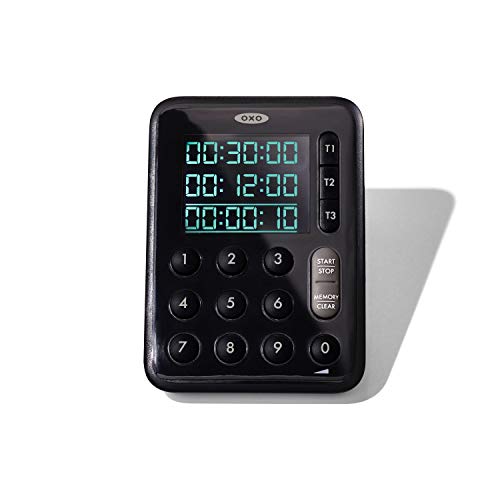

The OXO Triple Timer functions like a high-end interchangeable needle set, offering versatility that is hard to beat for complex projects. Because it allows for three simultaneous countdowns, it is ideal for bakers juggling multiple elements, such as proofing dough while monitoring a preheating oven and a simmering reduction.
The keypad design mimics the intuitive nature of a well-organized project bag. Each timer has its own color-coded button, making it easy to identify which stage of a bake is reaching its conclusion without confusion.
While the footprint is larger than a simple clip-on timer, the stability is worth the space. It acts as the steady anchor on the workstation, ensuring that even during the most frantic moments of a holiday bake, nothing is overlooked.
ThermoPro TM01 Dual Timer: The All-Around Favorite

Reliability is the hallmark of any good tool, much like the consistent tension one learns to maintain over years of knitting. The ThermoPro TM01 offers a dual-display setup that balances functionality with simplicity, making it a staple for those who prefer an uncomplicated workflow.
This unit excels at multitasking because it displays two countdowns simultaneously on a large, backlit screen. This clarity is essential, especially when light levels are low or when deep focus on a knitting pattern has already strained the eyes.
The interface is straightforward, requiring minimal fiddling to set times. For the maker who values a tool that just works—without unnecessary bells and whistles—this represents the most balanced choice for daily kitchen use.
Wrenwane Digital Timer: The Loudest, Clearest Alarm
Every knitter knows the frustration of being so absorbed in a rhythmic purl row that the world fades away. When working with complex brioche or stranded colorwork, a timer needs to be loud enough to cut through that intense, meditative concentration.
The Wrenwane Digital Timer is famous for an alarm that demands attention. It does not rely on subtlety, ensuring that even if one is deep in a 2.25mm sock project, the signal will be heard clearly from across the room.
The large digits are a significant benefit for those who don’t want to stop their progress to squint at a screen. It is a no-nonsense tool that treats time management with the same seriousness a professional knitter applies to gauge swatches.
Antonki 4-Channel Timer: Best for Visual Cues
Visual feedback is as important in the kitchen as it is when checking a garment’s drape during the blocking process. The Antonki 4-Channel timer provides an immediate sense of how much time remains through a simple, effective interface.
The 4-channel capability allows for tracking multiple oven racks or different stages of a delicate pastry. Because it displays each channel independently, it eliminates the guesswork associated with cycling through menus on smaller, digital-only devices.
This timer works exceptionally well for those who prefer to keep their kitchen environment organized. By assigning a channel to each specific task, one can maintain a calm, methodical pace that prevents the errors common in hurried, disorganized baking.
TimeStick Trio: The Most Compact Multi-Timer
For the minimalist, the TimeStick Trio serves as the lightweight, portable option that fits into any pocket or apron string. It is the ergonomic equivalent of carrying a small crochet hook in a purse—compact, unobtrusive, and always ready for action.
Despite its slim design, it manages three timers with remarkable efficiency. Its long, stick-like shape is easy to grip, and the controls are placed to prevent accidental resetting during movement.
This is an excellent choice for those with limited counter space. If the kitchen is already crowded with bowls, whisks, and cooling racks, this timer keeps things tidy without sacrificing the ability to track multiple bakes simultaneously.
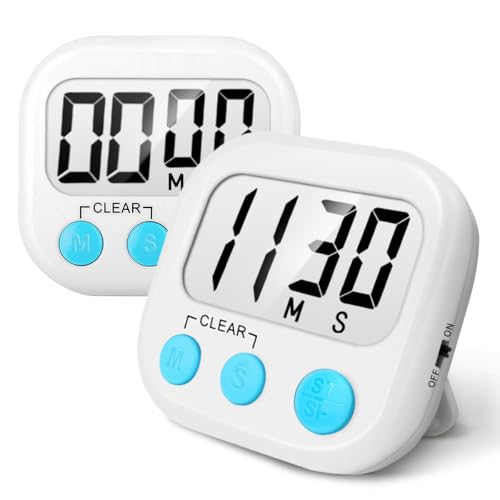
Uigos Digital Timer 2-Pack: Best Budget Option
Value is not about choosing the cheapest tool, but about finding the most dependable option for the investment. Buying a multi-pack of Uigos timers is much like purchasing a bulk pack of stitch markers; having spares ensures that one never runs out of resources during a critical moment.
These timers are magnetic, allowing for placement directly on an oven door or a metal fridge. This keeps the workspace clear, much like using a magnetic board to hold a paper knitting pattern at eye level.
Because they are sold as a pair, they are the ideal solution for multitasking without the price tag of a single, highly advanced unit. Use one for the oven and one for a proofing basket, and there will always be a reliable backup should one go missing in the kitchen shuffle.
What to Look For in a Multitasking Kitchen Timer
When evaluating a timer, consider the interface first. Much like the difference between a sharp point on a needle and a dull one, the input method defines the ease of use; look for tactile buttons rather than sensitive touchscreens that might be triggered by accidental contact with floury hands.
Battery life is another critical factor. A timer that dies mid-bake is as frustrating as running out of yarn in the middle of a bind-off row. Seek models that use standard, widely available batteries, ensuring longevity and ease of replacement.
Volume and alarm tone should also match personal preferences. Consider whether a harsh, abrupt beep will startle a household or if a softer, pulsing alarm is preferable for a calmer, more focused baking environment.
Digital vs. Analog: Which Timer Is Right for You?
Analog timers rely on a simple mechanical spring, offering a satisfying physical sensation that digital models lack. They are intuitive and require no batteries, making them reliable tools that can last for generations, similar to a well-maintained set of vintage knitting needles.
However, digital timers provide the precision that precise baking often requires. When a recipe demands timing to the second—or when tracking three or four separate items—digital is superior, as mechanical timers often lack the multiple channels needed for complex multitasking.
Decide based on the level of complexity in the kitchen. For a simple loaf of bread, an analog timer might suffice, but for intricate pastries requiring precise, staggered timing, a digital device is the industry standard for a reason.
Why a Dedicated Timer Beats Using Your Smartphone
Relying on a smartphone for baking timers is a common habit that often leads to disaster. A phone serves too many masters; a notification for an email or a text can easily bury the timer notification, or worse, one might accidentally swipe away the alarm without realizing it.
A dedicated timer removes the digital noise. It exists solely for one purpose: to ensure success in the kitchen. This separation of tools is essential for maintaining focus, much like keeping a digital device out of a meditative knitting session to ensure stitch count remains accurate.
Using a dedicated tool also protects the phone from flour, butter, and moisture. Keep the technology separate from the messy work, and both will last significantly longer.
Keeping Your Timer Clean in a Flour-Filled Kitchen
Baking involves fine particulates that can easily compromise electronic equipment. Treat a digital timer with the same care applied to high-quality knitting tools; avoid getting flour inside the button crevices, as this can lead to sticky keys and failed inputs over time.
Regularly wipe down the unit with a damp, lint-free cloth. If the timer has a magnetic backing, be sure to clean the surface where it attaches to avoid rust or buildup that might scratch oven surfaces.
For long-term storage, tuck the timer into a small storage bag or keep it in a drawer away from heat sources. Protecting the device ensures that the display remains clear and the electronic components stay free from the microscopic debris that eventually wears down poorly maintained tools.
Investing in a high-quality, dedicated timer will revolutionize the kitchen experience, providing the same level of precision and peace of mind found in a perfectly executed craft project. Whether choosing a basic unit or a multi-channel digital powerhouse, ensure the selected tool matches the complexity of the baking style. With the right equipment in hand, the process becomes smoother, more predictable, and ultimately more rewarding.