6 Best Portable Lights For Illuminating Workspace Corners
Brighten your desk with our top 6 portable lights for illuminating workspace corners. Enhance your focus and upgrade your productivity by reading our guide now.
Knitting in a dimly lit corner is the quickest route to eye strain and dropped stitches. When the ambient light fails to penetrate the intricate textures of a complex lace pattern or a dark, moody wool, the quality of the project inevitably suffers. Portable lighting solutions bridge the gap between a cozy, low-light environment and the precision required for fine motor work. Choosing the right illumination ensures that every yarn-over is placed correctly and every cable twist is perfectly aligned.
Glocusent LED Neck Light: Best for On-the-Go


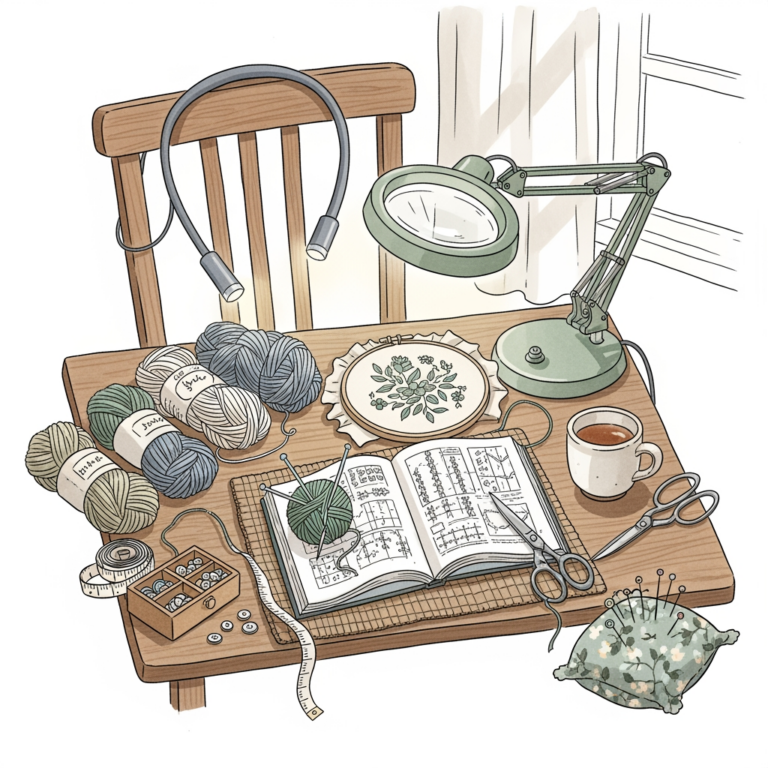
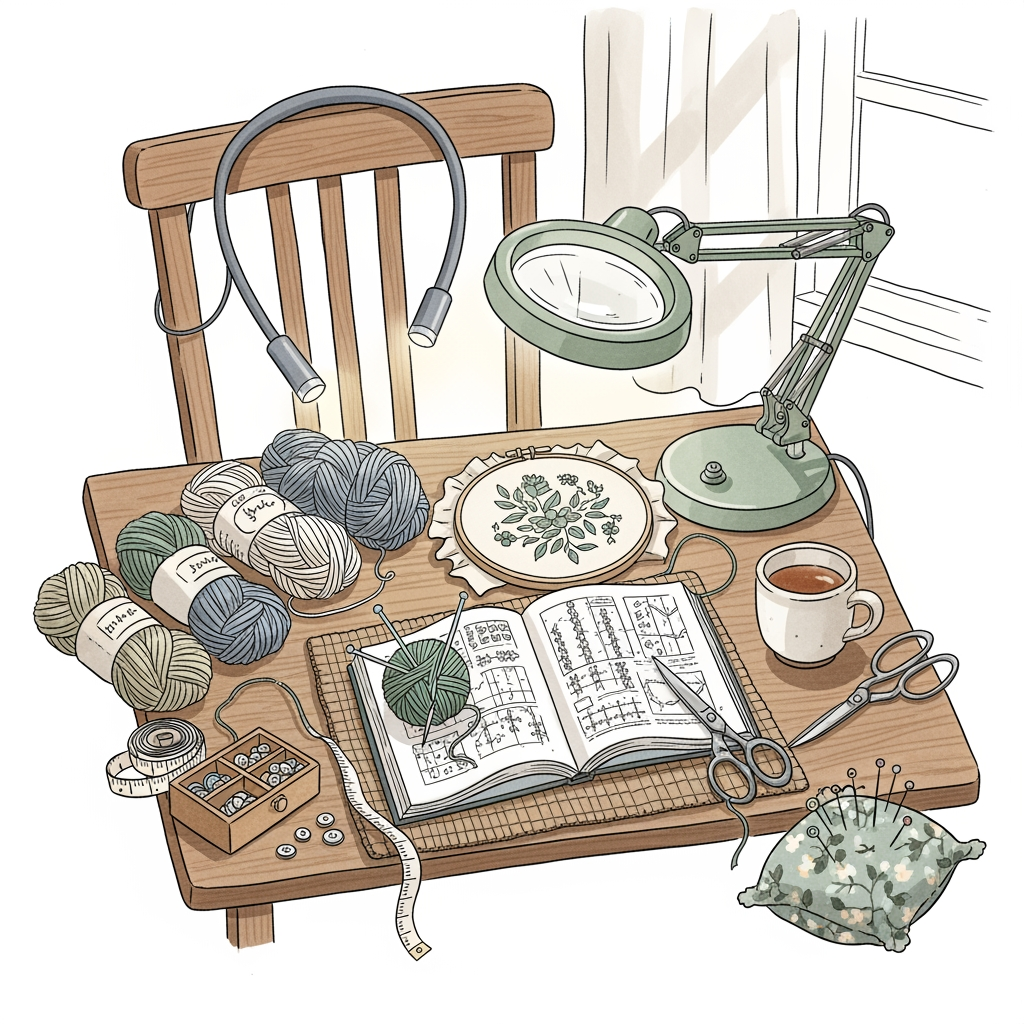
The neck light style is a game changer for knitters who prefer to move between the armchair, the sofa, and the local knit night. It rests comfortably around the collarbone, directing a focused beam exactly where the hands meet the needles.
This portability makes it ideal for traveling. Whether knitting on a plane or a dimly lit train, the beam remains steady even if the chair shifts or the lighting above is poor.
- Adjustable color temperature: Allows a shift from cool white for high contrast to warm amber to reduce eye fatigue during long sessions.
- Flexible arms: Permits precise angling to illuminate the space between the needle tips without causing glare on shiny metal needles.
The tradeoff here is the weight. While light, the battery pack resting against the neck can become noticeable after several hours of intensive knitting.
OttLite 13w Craft Lamp: Top for Color Accuracy
Color accuracy is the primary hurdle when working with subtle variegated yarns or deep, rich jewel tones. An OttLite lamp mimics natural daylight, which is essential for identifying the true hue of a fiber before committing to a project.
Without true-to-life light, it is easy to misjudge the contrast between two shades in a stranded colorwork project. What looks like a distinct pattern in low light can easily muddy into a flat grey once viewed in full sun.
- Natural daylight spectrum: Eliminates the yellow or blue casts that distort yarn color.
- Reduced glare: Minimizes the distracting reflections that occur when working with polished nickel or smooth wooden needles.
This is a stationary solution rather than a portable one. Use this for the primary knitting station where the heavy lifting of color selection and complex stitch identification occurs.
Vekkia Dual-Head Clip-On Light: Most Versatile
Clip-on lights offer the ultimate flexibility for those who work in cluttered workspaces. By securing the base to a side table or the frame of a floor lamp, the light source becomes an extension of the workspace furniture.
The dual-head design is particularly helpful for wide-swath projects. When working on a large blanket or a shawl with a wide wingspan, the twin heads provide even coverage across the entire needle surface.
- Multiple brightness levels: Essential for transitioning from broad daylight to late-night knitting.
- Rechargeable batteries: Reduces the need for proximity to a wall outlet, maintaining a clean workspace.
Be cautious of the clamping mechanism. If the surface is too thick or uneven, the light may slip or tilt during a knitting session, requiring constant readjustment.
Brightech Litespan Floor Lamp: For Your Whole Space
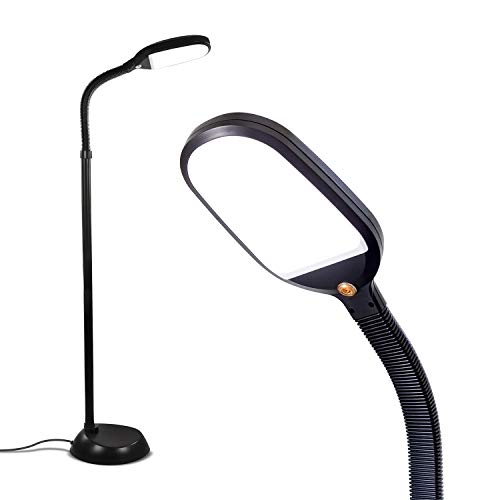
For the dedicated knitter with a permanent “knitting nook,” a floor lamp is the gold standard. It provides a broad, overhead wash of light that eliminates shadows across the entire lap area.
Shadows are the enemy of fine detail work. When a lamp is too close or improperly angled, the hands can cast a shadow directly over the stitch currently being worked, leading to missed yarn-overs or accidental increases.
- Height adjustability: Allows the head to be positioned high enough to clear the head while seated.
- Stable base: Prevents accidental tipping, which is a common concern in homes with curious pets or active children.
This is a significant investment in space. It is best reserved for those who have a dedicated area where they consistently spend time crafting.
LuminoLite Rechargeable Book Light: Best Budget Pick

Simple, compact, and effective, a small rechargeable light is often enough for a quick session. It clips directly onto the needle case or a nearby magazine, providing a concentrated beam of light exactly where needed.
While it lacks the broad coverage of a floor lamp, its small footprint makes it a favorite for those who knit in bed or on a crowded sofa. It keeps the workspace clear and allows for a focused, singular point of interest on the knitting itself.
- Compact size: Fits easily into a project bag or notions pouch.
- Long battery life: Provides sufficient power for several hours of dedicated knitting between charges.
Do not expect this to illuminate a dark room. It acts as a spotlight for the needles, not a general room light, making it a perfect supplement for travel or tight spaces.
CeSunlight Magnifier Lamp: For Fine Detail Work

The magnifier lamp is a necessity when working with fine-gauge yarn or intricate lace. When knitting socks on 2.0mm needles or working with lace-weight mohair, seeing the structural integrity of the stitch is critical.
The combination of magnification and focused lighting helps identify the “leg” of the stitch. This prevents errors when picking up dropped stitches or executing complex decreases in a pattern with high complexity.
- Built-in lens: Provides distortion-free viewing of tight, delicate stitches.
- Combined functionality: Saves space by combining the light source and magnification tool into one unit.
These lamps can be heavy and require a sturdy mounting surface. Ensure the desk or table is stable enough to support the arm’s weight without sagging over time.
How to Pick the Best Light for Your Craft Nook
Selecting the right light requires an honest assessment of the knitting habits. Start by identifying the primary project type: lace, cables, or colorwork all require different lighting intensities.
Consider the “reach” of the light. If the knitting projects are expansive, such as sweaters or afghans, choose a floor or dual-head lamp that covers a larger diameter of the workspace.
- Portability: How often is the workspace changed?
- Color Temperature: Is high contrast or color accuracy the priority?
- Stability: Will the lamp be moved frequently, or will it remain stationary?
Do not ignore the weight of the light fixture. If a lamp is too heavy for the clipping surface, the annoyance of it falling will eventually prevent it from being used at all.
Lumens and Kelvin: What Do The Numbers Mean?
Understanding light terminology is crucial to avoiding buyer’s remorse. Lumens measure the total brightness of the light, while Kelvin measures the color temperature.
For knitting, aim for a higher Kelvin rating—between 4000K and 5000K—if the goal is clear, daylight-balanced vision. Lower Kelvin ratings, in the 2700K to 3000K range, produce a warm, yellow light that can obscure detail in dark yarns but provides a cozy atmosphere.
- Lumens: Look for 400–800 lumens for dedicated desk or task lighting.
- Kelvin: 4000K is the sweet spot for natural-looking, high-clarity lighting.
Always check for flicker-free certification. A flickering light, even at a frequency the eye can’t immediately see, leads to rapid eye fatigue and headaches during long knitting sessions.
Neck, Clip-On, or Floor Lamp: Which Type Is Best?
The choice between lamp styles often comes down to the physical configuration of the knitting space. Neck lights are ideal for those who change positions often, while floor lamps serve those with a fixed, designated spot.
Clip-on lights represent the middle ground, offering a portable solution that can be attached to various surfaces. If the environment is dynamic, prioritize a battery-operated or rechargeable clip-on for maximum utility.
- Neck Light: Maximum mobility, hands-free operation.
- Clip-On: Versatile, space-saving, and adaptable to various surfaces.
- Floor Lamp: Superior coverage, best for long-term project focus.
Consider the ergonomics. A neck light might cause tension in the shoulders if worn for hours, whereas a floor lamp places no weight on the body but requires proper positioning to avoid casting shadows.
Tips for Knitting With Dark or Fuzzy Yarns
Knitting with dark, saturated yarns like black or navy requires extra assistance. The lack of natural contrast makes stitch counting difficult, even in bright rooms.
Use a reflective surface behind the knitting to help visualize the stitches. Placing a white or light-colored towel over the lap significantly improves the ability to see the needle tips and the movement of the yarn.
- High-contrast light: Use a cool-toned, high-lumen light to emphasize texture.
- Magnification: Use a magnifying lens to isolate individual stitches when the yarn is fuzzy or mohair-based.
- Tactile feedback: Rely on the feel of the needle against the previous stitch to guide placement when visual cues are obscured.
Never try to power through a difficult dark yarn project in the dark. If the eyes begin to strain, stop and adjust the lighting or switch to a lighter project until a better light source is available.
Investing in a high-quality light source is as fundamental to the craft as choosing the right needles or yarn. By matching the lighting solution to the specific demands of the project, the knitting experience becomes more productive and significantly more enjoyable.