6 Best Sewing Machine Covers For Dust Protection
Keep your machine running smoothly with these 6 best sewing machine covers for dust protection. Read our expert guide now to find the perfect fit for your gear.
A sewing machine sitting exposed in a workspace is a magnet for fine lint, pet hair, and stray fibers that can wreak havoc on internal gears. Even if the machine is tucked away in a corner, dust settles into the bobbin case and tension discs, leading to skipped stitches or uneven thread delivery. Protecting the machine with a cover ensures that the delicate machinery remains clean and ready for the next project, whether that involves delicate lace weight wools or sturdy canvas. Investing in a cover is not merely about aesthetics; it is a fundamental maintenance practice that extends the lifespan of the equipment.
Teamoy Sewing Machine Cover: Best Budget Pick


The Teamoy cover serves as a reliable, no-nonsense solution for those who want immediate protection without a significant financial investment. It is constructed from a lightweight material that effectively blocks dust while remaining easy to fold and store when the machine is in use.
For knitters who often shift their workspace between a crafting table and a dining room surface, the simplicity of this cover is a major advantage. It does not add unnecessary bulk or weight to the setup.
The bottom-less design allows for a quick “drop-over” application, which encourages consistent use. Consistency is key; if a cover is too difficult to put on, it will inevitably end up in a drawer, leaving the machine vulnerable to dust buildup.
Luxja Sewing Machine Cover: Best for Storage
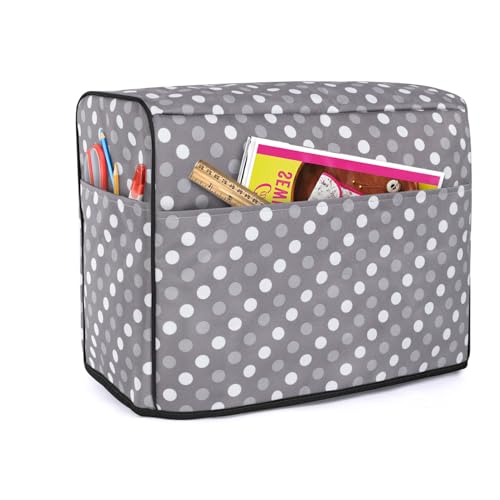
The Luxja model distinguishes itself by incorporating multiple pockets, making it an excellent choice for knitters who keep their sewing and knitting notions in one central station. These pockets can hold essential tools like scissors, seam rippers, or spare bobbins.
Organization is vital in fiber arts, where small accessories easily go missing. Having a dedicated place to store a pair of snips or a measuring tape right next to the machine saves time and prevents clutter from piling up on the workspace.
This cover is padded, which provides an extra layer of protection against minor bumps and knocks. While it won’t prevent major damage, the padding acts as a buffer for the casing, keeping the machine pristine.
HOMEST Sewing Machine Cover: Most Durable

If the workspace is a high-traffic area, the HOMEST cover is the preferred choice due to its robust, water-resistant material. It provides a sturdy barrier that can withstand the occasional spill or the accumulation of dust in a shed or garage-turned-studio.
Durability often means a stiffer fabric, which holds its shape well and won’t sag over the machine dials. This is beneficial for those who use machines with sensitive digital touchscreens or complex lever systems that require clearance.
While the material is heavy-duty, it remains flexible enough for easy handling. It is built for longevity, mirroring the durability expected from quality sewing and knitting machinery.
Yarwo Clear Vinyl Cover: Easiest to Use
The Yarwo Clear Vinyl cover is a favorite for those who value visual cues, as it allows for an instant view of the machine model and settings. It is constructed from a smooth, wipeable vinyl that prevents lint from clinging to the surface.
Visibility is a practical benefit; being able to see the machine helps in remembering which model is set up if there are multiple machines in a single room. The transparent nature also makes the workspace feel less confined compared to opaque, heavy fabric covers.
Vinyl is naturally water-resistant and serves as an excellent shield against liquid spills. A quick wipe with a damp cloth is all that is required to keep the cover looking clean and fresh.
B-Creative Quilted Cover: Best for Style
For those who view their sewing space as a sanctuary, the B-Creative quilted cover adds a touch of charm and texture. The quilted design is not just for appearances; the stitching provides structural integrity and a soft, protective layer.
Style often influences how much effort is put into maintaining a clean workspace. When tools look cohesive and well-cared for, the desire to maintain the surrounding environment increases, leading to better habits in machine maintenance.
This cover is available in various patterns, allowing it to blend seamlessly into a home’s decor. It proves that utility equipment does not have to be an eyesore in a living space.
ProCase Universal Cover: Most Versatile Fit
The ProCase Universal Cover is designed with an adjustable drawstring bottom, allowing it to accommodate a wide range of machine sizes and brands. This is particularly helpful for those who use both vintage metal-bodied machines and modern, plastic-cased embroidery machines.
Fit is often a source of frustration, as many machines vary in height and depth. A cover that is too loose can slide off, while one that is too tight can strain the zippers or seams, eventually leading to tearing.
The drawstring allows for a snug fit regardless of the machine’s dimensions. It seals the base, preventing dust from creeping up from the table surface—the most common entry point for debris.
How to Choose the Right Sewing Machine Cover
Choosing a cover requires evaluating the environment of the workspace and the frequency of use. If the machine is rarely moved, a heavy, quilted cover is ideal, but for those who travel for knitting guilds or sewing circles, a lightweight, foldable option is superior.
Consider the material’s interaction with the surrounding environment. In humid climates, a breathable fabric cover is often better than a non-porous vinyl, which can trap moisture against the machine’s metal parts.
Look for ease of access as the primary indicator of quality. If the cover has pockets, consider whether they will interfere with cords or foot pedals. Always check the manufacturer’s dimensions against the machine’s footprint before purchasing.
Measuring Your Machine for a Perfect Fit
Accurate measurement is the only way to avoid the headache of a return. Always measure the height, width, and depth of the machine at its widest points, including any protruding thread spool pins or balance wheels.
Do not assume the machine will fit based on brand names alone. Even within the same manufacturer, base dimensions can change significantly between a mechanical model and a computerized embroidery machine.
Add an extra inch to all measurements to account for ease. A cover that is slightly too large is functional, whereas one that is even a fraction of an inch too small will be impossible to use.
Fabric vs. Vinyl Covers: Key Differences
Fabric covers, particularly quilted cotton or canvas, are breathable and tend to look more like home decor. They are generally soft and can be laundered in a washing machine, which is a major advantage for those with pets who shed.
Vinyl covers provide an impenetrable barrier against dust and liquids. They are superior in environments where moisture or heavy debris is a concern, such as a basement craft room or a workshop.
Trade-offs exist between the two: fabric can attract pet hair that requires a lint roller, while vinyl can eventually become brittle if exposed to prolonged direct sunlight. Select the material based on the specific conditions of the intended storage area.
Cleaning and Storing Your Machine Cover
A sewing machine cover should be cleaned as part of the regular maintenance routine. Just as knitting needles are periodically polished and yarn is kept away from moths, covers need to be shaken out and wiped down to remove the very dust they are meant to trap.
For fabric covers, ensure they are completely dry before putting them back on the machine. Trapped moisture is the enemy of any metal component, as it can lead to oxidation or rust over time.
When the machine is in use, fold the cover neatly rather than wadding it into a ball. Proper storage preserves the fabric’s shape and keeps the workspace tidy, ensuring the cover is ready to be replaced as soon as the project is finished.
Protecting a sewing machine is an essential habit that safeguards the investment of time and resources poured into every fiber art project. By choosing a cover that fits both the machine and the workspace, the longevity of the equipment is significantly improved. A clean machine is a smooth-running machine, and that consistency is the foundation of every successful craft.