7 Best Ingredient Labels For Allergy Awareness
Navigate food safety with confidence. Discover our 7 best ingredient labels for allergy awareness to help you identify safe products quickly. Read the guide now.
When a garment is finished, the labor of love is complete, but the responsibility of the maker extends to the wearer’s health. Ingredient labels serve as a crucial safety bridge between the yarn stash and the skin, especially for those with sensitivities to wool, dyes, or processing chemicals. Clear labeling ensures that a precious handmade gift remains a joy rather than a source of irritation. Proper documentation turns a simple knit into a professional, safe, and thoughtful garment that stands the test of time.
EverEmblem Custom Cotton Labels: Best Overall
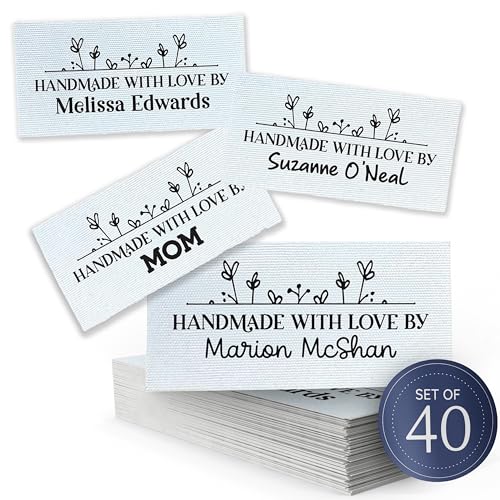

EverEmblem labels provide a soft, tactile experience that integrates seamlessly with delicate baby items or summer cotton knits. Because cotton is inherently hypoallergenic, these labels avoid the scratchiness often associated with stiff polyester blends.
The natural finish resists fraying when sewn into high-friction areas like a sweater collar or a hat band. This makes them an ideal choice for garments that undergo frequent blocking or machine washing.
When using these, ensure the edge is folded neatly to prevent any stray threads from catching on sensitive skin. While they offer a premium feel, they lack the structural rigidity of synthetic labels, so use a simple whip stitch to secure all four corners.
Wunderlabel Woven Labels: Most Professional Look

Wunderlabel excels in providing high-density weaving that makes text incredibly legible even at small scales. For knitters who want to include detailed fiber content or care instructions, the crispness of the weave ensures no confusion for the recipient.
These labels carry a distinct, high-end weight that elevates a hand-knit item to boutique quality. Because they are typically made from polyester or high-quality blends, they hold their shape through years of heavy wear and repeated laundering.
They are less flexible than cotton, so place them in areas where they will not rub against the neck or wrists. They provide an excellent “professional” finish that signals the garment was crafted with care and consideration.
Dutch Label Shop Care Labels: Best for Gifting

Dutch Label Shop specializes in clear, standardized symbols that are recognized globally, which is invaluable for gift-giving. A recipient might not know how to handle a delicate alpaca blend, but a simple icon for “hand wash cold” eliminates the guesswork.
The ability to customize these with specific allergy warnings—like “Contains Wool” or “Hypoallergenic Acrylic”—makes them a vital safety tool. This transparency helps avoid accidental exposure in households where fiber allergies are a serious health concern.
When ordering, prioritize the iron-on or sew-in options based on the base fiber of the project. Avoid ironing directly onto low-melt synthetics like mohair or certain acrylics, as the heat can damage the integrity of the stitches.
All This Wood Cork Tags: Best Eco-Friendly Pick
Cork tags offer a rugged, artisanal aesthetic that pairs beautifully with chunky wool sweaters or rustic, hand-dyed yarns. They are naturally antimicrobial and provide a sophisticated, textured contrast to soft, knitted fabric.
Because they are rigid, they are best suited for the hem of a beanie or the cuff of a cardigan rather than inside a collar. These tags do not irritate the skin because they sit on the exterior of the finished piece.
Be aware that these tags do not accommodate long lists of ingredients. Use them primarily for branding, and rely on a smaller fabric tag hidden inside the garment for specific allergy or fiber content disclosures.
Mayday Labels Vegan Leather Tags: Best for Bags
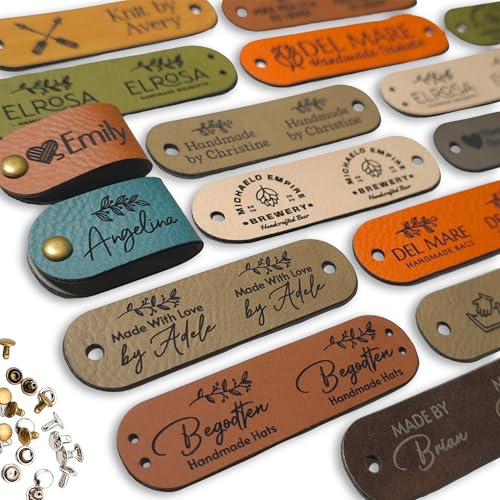
Mayday Labels provides a sleek, polished look that mimics the texture of leather without the use of animal products. They are remarkably durable, making them the perfect choice for project bags or heavy-duty knitted accessories that see a lot of outdoor use.
These tags hold up well against the elements and friction, remaining legible even after the yarn itself has started to pill. They provide a sturdy, permanent fixture that anchors a piece visually.
As with cork, these are strictly decorative. When utilizing them on a garment intended for someone with sensitive skin, ensure the hardware used for attachment is nickel-free to prevent contact dermatitis.
The Heart of Wander Pre-Made Tags: Best Value
The Heart of Wander offers a curated selection of pre-made tags that save time for makers who produce gifts in batches. These are ideal for the knitter who keeps a consistent stash of go-to fibers and needs a quick way to communicate care needs.
Value does not mean a sacrifice in quality; these tags are durable enough to survive the lifetime of a well-loved blanket or scarf. They provide a standardized, clean look that helps the maker maintain a cohesive brand identity.
Consider keeping a variety on hand for different fiber types. Keeping a stash of “Hand Wash Only” and “Machine Wash” labels ensures that every project leaves the needles with the correct safety information attached.
Spoonflower Custom Fabric: DIY Label Solution
Spoonflower allows for total creative control, enabling the knitter to print custom labels that include both care instructions and personalized messages. This is the ultimate solution for large projects or complex fiber blends where standard labels might not provide enough room.
Because the labels are printed on custom fabric, the softness can be controlled by choosing options like organic cotton sateen or Kona cotton. This is significantly more comfortable for the wearer than rigid, store-bought woven tags.
The tradeoff is the labor of cutting and folding these labels individually. Always use pinking shears to finish the edges to prevent the raw fabric from unraveling over time.
What to Include on Your Fiber Content Labels
A comprehensive label should serve as a safety manual for the recipient. At a minimum, always list the exact fiber percentage, as a sweater labeled “Wool” might actually be a blend with lanolin or silk, which can trigger different reactions.
Include symbols for washing, drying, and ironing temperatures. For items made from superwash wool, specify that they can be machine washed, as many recipients will be afraid to ruin the item and might not use it at all.
Finally, indicate if the yarn was dyed with natural or synthetic dyes. Some individuals have severe reactions to specific synthetic mordants or chemical residues, and this transparency is a courtesy that prevents health issues.
Common Fiber Allergies and Safe Alternatives
Wool remains the most common fiber allergen, often due to lanolin or the microscopic scales on the fiber shaft. For those with wool sensitivities, high-quality alpaca—which is lanolin-free—is often a safe substitute, though it can still be itchy if the micron count is too high.
Mohair and angora are frequently cited as irritants, not necessarily due to allergies, but due to their mechanical structure. These fibers can cause physical itching for almost anyone with sensitive skin regardless of their allergic status.
When selecting alternatives, focus on: * Cellulosic fibers: Cotton, linen, bamboo, and hemp are inherently non-allergenic. * High-grade acrylics: Modern microfibers offer warmth without the chemical profile of raw wool. * Silk: Generally safe for most, though always check for the presence of sericin, a natural gum that can cause reactions.
How to Attach Your New Handmade Item Labels
The placement of the label is just as important as the information it carries. Always attach labels to areas of low motion to prevent them from becoming a distraction or a physical irritant to the wearer.
Use a thread that matches the weight of the yarn to prevent the label from pulling or distorting the knitted stitches. For delicate lace or fine-gauge garments, use a thin, invisible nylon thread or a matching fine cotton thread.
If the label is large, consider sewing only the two side edges. This allows the label to “float” slightly against the fabric, which is often more comfortable than a label sewn flat on all four sides, which can create a stiff, scratching point.
Effective labeling is the final, vital step in the knitting process, ensuring that the warmth and comfort of your work can be enjoyed without reservation. By prioritizing both safety information and physical comfort, you guarantee that your handmade creations remain cherished assets for years to come.