
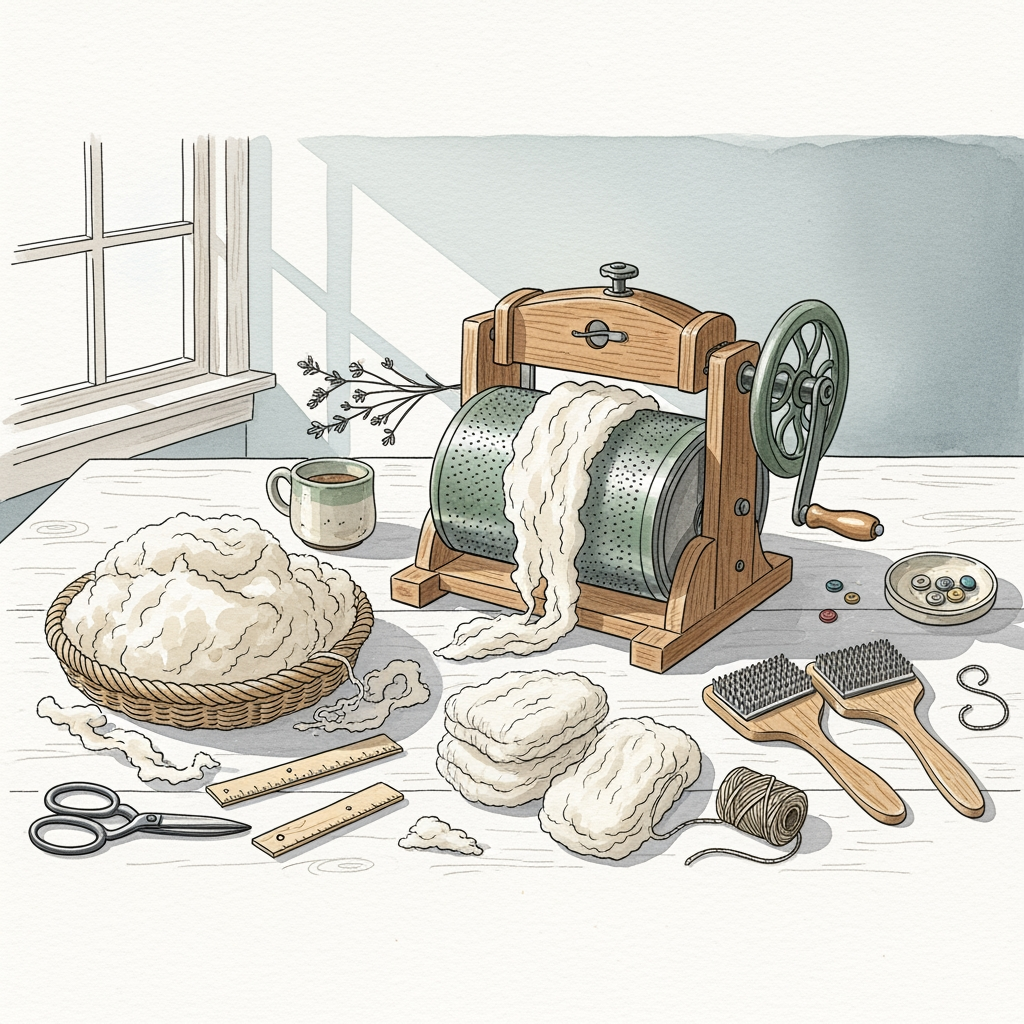
6 Best Wool Carders For Raw Fiber Slipper Projects
Find the 6 best wool carders for your raw fiber slipper projects. Compare top-rated tools and choose the perfect set to prepare your fleece today. Shop now.
Crafting durable, warm wool slippers starts long before the needles click together; it begins with the preparation of raw fleece into a consistent, lofty batt. Selecting the right carder dictates the final loft, density, and texture of the fibers, which directly impacts how well the slippers felt or withstand daily wear. Whether processing a heritage breed or a soft Corriedale, the tool chosen transforms raw, matted locks into a cohesive foundation for heavy-duty footwear. This guide evaluates the essential equipment needed to elevate raw fiber into a professional-grade slipper base.
Ashford Hand Carders: Best for Small Projects


Hand carders are the quintessential entry point for those wanting total control over the fiber alignment process. These tools rely on a pair of rectangular paddles covered in fine wire teeth that work in tandem to tease out tangles and align fibers.
For small batches of slippers or color-blending experiments, their portability is unmatched. They allow for an intimate understanding of the fiber’s crimp and staple length, ensuring that every ounce of wool is free of vegetable matter before spinning or felting.
Keep in mind that hand carders require a steady, rhythmic motion that can be physically demanding over long periods. They are ideal for refining small amounts of fleece but become inefficient when facing a mountain of raw fiber for multiple pairs of slippers.
Strauch Singlewide Drum Carder: The Workhorse
Drum carders replace the manual labor of hand cards with a mechanical system of rotating cylinders covered in carding cloth. The Strauch Singlewide is a formidable choice for those who move quickly from raw fleece to finished project, providing a consistent batt every time.
This machine excels at producing large, uniform batts that can be layered or felted directly for slipper insoles. The precision in the drum’s spacing allows for the processing of diverse fleece types without excessive fiber breakage, which is vital for maintaining the structural integrity of the yarn.
While the price point is higher, the efficiency gain is undeniable for those committed to frequent fiber processing. It serves as a long-term investment for any dedicated slipper maker who values time-saving performance over manual input.
Ashford Wide Drum Carder: For Large Slipper Batts

If the goal is to create dense, wide batts suitable for wet-felting slipper uppers, the Ashford Wide Drum Carder is the preferred instrument. Its increased width permits the creation of larger, singular pieces that minimize the need for joining seams.
Consistency is the hallmark of this model, as the wide drums handle dense volumes of wool without causing the “striping” effect seen in lesser machines. By ensuring an even distribution of fiber across the batt, this carder produces a product that felt evenly and resists tearing under the stress of daily foot traffic.
Remember that a larger drum requires a dedicated workspace and a sturdy table mount. The space trade-off is worth it for those who prioritize producing high-quality, seamless felted footwear in large batches.
Louet Roving Carder: Best for Blending Wools
The Louet Roving Carder is uniquely engineered for those who want to mix textures, such as blending coarse wool for durability with finer fibers for softness. Its specialized design creates a smooth, continuous roving that is perfect for spinning consistent, high-twist yarns.
Blending different fiber breeds is a tactical move for slipper construction, as it combines the structural resilience of rugged wools with the skin-friendly properties of finer fleeces. The carder’s configuration encourages a balanced blend that results in a stable, wear-resistant yarn.
This carder is less about sheer volume and more about the precision of the fiber mix. For knitters who want to engineer their own custom yarn blends, this tool provides the necessary control to achieve superior results.
Patrick Green Deb’s Delicate: Premium Pick
The Patrick Green Deb’s Delicate is built for the purist who demands the highest level of performance and durability. It features precision engineering that allows for the processing of even the most fragile or fine fleeces without stripping them of their character.
This carder is particularly effective for those handling luxury fibers or specialty wools intended for heirloom-quality slippers. It offers a gentle carding action that preserves the air-trapping loft of the fiber, which is essential for maximum warmth in cold-weather footwear.
While it sits at a premium price point, the build quality ensures it will outlast many standard options. It is a tool for the maker who views fiber preparation as an essential, high-craft aspect of the creative process.
Howard Brush Flick Carder: Prep Your Raw Fleece
Before the drum or hand cards even touch the fleece, the flick carder acts as the first line of defense. This single, small paddle is used to “flick” the tips of the raw wool, opening up the locks and removing debris before a full carding session.
It is indispensable for assessing the state of the raw fiber and cleaning out stubborn vegetable matter that might otherwise end up in the finished slipper. Spending extra time with the flick carder significantly reduces the wear and tear on the primary carder’s teeth.
A flick carder is an affordable, essential piece of kit for anyone working with raw, unwashed or minimally processed fleeces. It serves as the ultimate diagnostic tool for checking fiber health before committing it to a project.
Hand Carders vs. Drum Carders: Which is for You?
Choosing between hand carders and a drum carder depends entirely on the volume of slippers being produced and the amount of physical effort one is willing to expend. Hand carders offer unmatched tactile feedback and are excellent for small-batch experimentation or blending small amounts of color.
Drum carders, conversely, are designed for high-throughput production and consistent batt weight. They turn hours of labor into minutes, making them the clear choice for someone who wants to prep an entire year’s worth of supplies in a single weekend.
Consider the following when deciding: * Time: How much time is available for preparation versus actual knitting? * Physicality: Do wrist or shoulder issues make repetitive hand-carding motions difficult? * Scale: Are projects limited to single items or larger batches?
What TPI Means for Your Wool Slipper Project
TPI stands for Teeth Per Inch, a measurement that indicates how densely the wire teeth are packed on the carding cloth. A higher TPI is better for fine fibers like Merino, as it captures and aligns smaller hairs more effectively.
Conversely, a lower TPI is ideal for coarser, longer-stapled wools that might clog a fine-toothed carder. Using the wrong TPI for your fiber can lead to ineffective carding or, in the worst case, damage to the wool as it is torn apart by the teeth.
Always check the carder’s TPI rating against the staple length and micron count of the fleece being used. Matching the tool to the fiber is the difference between a smooth, airy batt and a tangled, broken mess.
How to Clean and Maintain Your Wool Carder
Proper maintenance is the secret to a long-lasting carder and high-quality fiber results. After every session, use a carder brush or a stiff pick to remove residual wool, ensuring no stray fibers remain caught in the wire teeth.
Occasionally, a deeper cleaning is required, especially if the wool contained residual lanolin or dirt. Wipe the drums or paddles with a damp cloth if the manufacturer allows, but always ensure the carder is completely dry before storage to prevent rust.
Periodically inspect the carding cloth for bent teeth, which can catch on fiber and create uneven patches. Keeping the hardware tightened and the moving parts lightly lubricated will ensure that the machine operates smoothly for years to come.
From Raw Fleece to Slipper Batt: A Quick Guide
The transition from raw fleece to a usable batt is a structured sequence that ensures durability and warmth. First, skirt the fleece to remove the dirtiest bits, then wash and dry the fiber thoroughly before any carding begins.
Once clean and dry, use the flick carder to open the locks, followed by the main carding process to align and blend the fibers into a light, fluffy batt. The resulting batt can then be spun into yarn or directly felted into the thick, protective sole of a slipper.
Remember that patience is the most important component of the entire process. A well-prepared batt creates a superior yarn, which in turn leads to a more resilient, longer-lasting, and warmer slipper project.
Mastering the mechanics of fiber preparation turns raw material into professional-grade supplies, giving you complete authority over the quality of your finished slippers. By matching the right tool to the fiber type and project scale, you ensure that every pair you knit possesses the ideal loft, warmth, and structural integrity. Treat your carding equipment with care, and it will serve as the foundation for countless successful projects for years to come.
