6 Best Craft Labels For Branding Items Worth Using
Elevate your small business with these 6 best craft labels for branding items. Read our expert guide to choose the perfect professional solution for your goods.
A handmade garment represents hours of labor, careful gauge calculations, and a significant investment in quality fiber. Choosing the right branding label is the final step in elevating a project from a hobbyist item to a professional-grade piece. The right label anchors the maker’s identity to the work while adding a sophisticated finishing touch that survives laundering and wear. Selecting an appropriate tag requires balancing aesthetics with the physical properties of the yarn and the intended use of the finished object.
Wunderlabel Woven Tags: Best Overall Quality
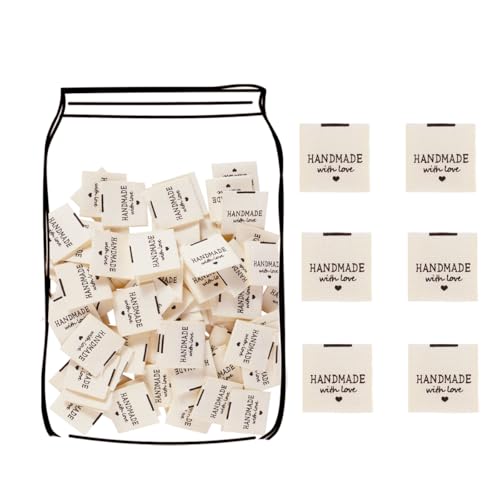

Wunderlabel sets the industry standard for durability and classic aesthetic appeal. Their high-density woven tags maintain crisp lettering and sharp graphics even after dozens of machine wash cycles, which is critical for garments made from resilient wools or acrylic blends.
These tags excel in garments that undergo heavy friction, such as sweaters or everyday scarves. Because the design is woven into the fabric rather than printed on top, there is no risk of flaking or fading over time.
Consider these tags when the goal is a professional, high-end look that mimics commercial ready-to-wear clothing. The tradeoff is a slightly stiffer edge compared to printed labels, so always ensure the tag is folded or secured with a soft hem stitch to prevent skin irritation.
The Dutch Label Shop: Widest Material Options

The Dutch Label Shop offers unmatched versatility for makers who specialize in diverse fiber categories. They provide a massive range of finishes, including satin, damask, and recycled polyester, allowing for a custom feel that matches the drape of the yarn.
If a project involves fine lace or delicate alpaca, a soft satin label prevents the tag from distorting the fabric’s drape. Conversely, heavier woolen coats or blankets benefit from their sturdier damask options, which provide a clean, architectural structure to the finishing work.
The primary benefit here is the ability to customize every design element to suit specific garment shapes. It is worth noting that more complex customization requires longer lead times, so plan ahead during the final stages of a project’s blocking phase.
EverEmblem Faux Leather: Best for Vegan Makers
EverEmblem provides a sophisticated, animal-friendly alternative to traditional leather branding. These tags offer the tactile, rustic aesthetic of real leather without the concerns regarding wash-fastness or animal byproducts that often complicate vegan knitting projects.
Faux leather tags are particularly striking on items with high-contrast colorwork or rustic, thick-spun yarns. They offer a rigid focal point that anchors the piece, acting as a visual “logo” that sits perfectly on the brim of a hat or the hem of a cowl.
Because these tags are generally non-porous, they are incredibly easy to clean. Use caution when attaching them to very light-colored garments, as the dark faux leather can sometimes bleed if not properly heat-set or sourced from high-quality suppliers.
All This Wood Cork Labels: Top Eco-Friendly Pick
Cork labels represent a growing trend in sustainable fiber arts, offering a lightweight and completely organic branding solution. These tags are naturally flexible and possess a unique, earthy texture that complements natural fibers like sheep’s wool, linen, and hemp.
These labels are exceptionally lightweight, which is a major advantage for delicate shawls or baby items where a heavy metal or leather tag might weigh down the fabric edge. They sit flat against the knitting, ensuring they do not catch on jewelry or other accessories.
While they are surprisingly durable, they are not intended for high-heat industrial drying. To extend their lifespan, hand-wash the finished garment and lay it flat to dry, mirroring the care required for the hand-knitted item itself.
Sterling Name Tapes: Most Budget-Friendly Choice
Sterling Name Tapes offer a no-nonsense, functional solution for makers who prioritize utility over elaborate branding. These are often produced as simple, sew-on strips, making them an excellent choice for labeling large batches of gifts or donation items.
These labels are straightforward and easy to manage, lacking the bulk of woven tags or leather patches. They are ideal for projects where the goal is identification rather than decorative flourish, such as children’s mittens or basic home goods.
The tradeoff for their low price point is a more utilitarian look. They work best when tucked discreetly into a seam or a hidden internal facing rather than being displayed as a prominent exterior design element.
Zappy Dots Metal Tags: Best for Bags and Purses
Zappy Dots metal tags bring a structural integrity to non-garment fiber projects. For knitters crafting handbags, pouches, or market bags, a metal tag provides a professional “hardware” look that signifies high-quality construction.
These tags are designed to be mechanically attached rather than sewn, which is a significant advantage for dense fabric structures like felted wool or heavy canvas linings. They stay secure through constant use and do not fray or pill, unlike fabric-based tags.
Keep in mind that metal adds weight and can occasionally cause wear on delicate fibers if placed in a high-friction area. Position these tags on thicker, structural parts of the bag, such as the base or the reinforced strap attachment points.
Woven vs. Printed vs. Leather: Which Is Right?
Selecting a material depends entirely on the intended wear and the fiber content of the piece. Woven tags are the “gold standard” for sweaters, offering a permanent, soft-to-the-touch finish that integrates into the knitting structure.
Printed tags offer the highest level of detail and color accuracy but are prone to fading over time. They are best reserved for light-use items like decorative pillows or wall hangings where high-resolution logos are required.
Leather and faux leather are the masters of impact and longevity on heavy-duty items. These labels communicate a rugged, artisanal quality that pairs perfectly with outerwear or winter accessories, provided the weight of the tag does not distort the stitch pattern of the garment.
How to Design a Label That Represents Your Brand
Design simplicity is the secret to a professional label. Avoid overcrowded layouts; a clean, legible font and a single icon or wordmark are far more effective at a small scale than a busy, complex image that disappears when compressed.
Consider the “negative space” of the label. When designing, remember that the label will be folded or sewn onto a textured surface, so prioritize high-contrast color choices that remain visible against various yarn colors.
Always order a sample size to test the scale. A design that looks large on a computer monitor may lose critical detail when shrunk to a one-inch tag. Focus on clarity and brand recognition rather than cramming information like website URLs or care instructions into such a confined space.
Best Ways to Securely Attach Your New Craft Tags
The method of attachment is just as important as the tag itself. For fabric labels, a simple whip stitch using a matching sewing thread is often enough, provided the stitch catches the very edge of the label to prevent curling.
For leather or metal tags, use a sturdy upholstery thread or a thin linen cord to avoid snapping under the tension of use. Always reinforce the attachment points by weaving the thread ends securely into the back of the knitted fabric to prevent the tag from pulling through the stitches.
If the garment is meant to be worn, ensure the tag does not cause a “bump” against the wearer’s skin. A small bit of interfacing can be added behind the tag on the inside of the garment to distribute the tension and keep the fabric looking smooth on the exterior.
Where to Place Labels on Knits, Bags, and More
Placement is a deliberate design choice that frames the quality of the work. For hats, the classic position is the center of the brim or a slightly off-center placement on the side.
On sweaters, the inside neckline is the traditional spot for identification, while a hem-side label adds a touch of modern branding. For bags and purses, place tags on the front pocket or the reinforced leather corner, where they mimic commercial accessory hardware.
Always avoid placing tags in areas subject to extreme stretching, such as the elbows of a sweater or the center of a large, heavy tote. Tension will eventually cause the label to pucker or rip the surrounding stitches, diminishing the professional aesthetic you worked so hard to achieve.
Investing in high-quality labels provides the necessary finishing touch that validates the effort behind every handmade creation. By choosing a material that complements the fiber and applying it with care, the transition from a pile of yarn to a professional product is complete. Remember that the label is the final signature on the work, serving as a lasting testament to the skill and time invested in the craft.