
6 Best Oil Finishes For Rustic Leather Goods To Use
Restore and protect your handmade items with our expert guide. Discover the 6 best oil finishes for rustic leather goods and start your next project today.
Leather gear serves as the essential infrastructure for any dedicated knitting practice, from the needle cases that protect precious hand-turned wood points to the project bags that house delicate lacework. Choosing the right finish is not merely about aesthetic appeal; it is a functional necessity to prevent oils from migrating onto fine wool or silk fibers. A well-conditioned piece of leather remains supple enough to fold into a notions pouch yet durable enough to withstand the rigors of a cross-country flight. Selecting the correct oil finish ensures that these investments remain heirloom quality for years to come.
Fiebing’s Neatsfoot Oil: Best Traditional Choice


Neatsfoot oil remains the gold standard for restoring dry, stiff leather that has lost its natural suppleness. This thin, highly penetrative oil works exceptionally well on older, vegetable-tanned leather project bags that may have become brittle from improper storage.
Because of its deep-reaching capabilities, it excels at softening fibers without leaving a heavy, sticky residue on the surface. If a leather needle organizer has become overly stiff, a light application of Neatsfoot oil will restore its ability to hinge and fold without cracking.
Exercise caution with the quantity used, as it can darken light-colored leathers significantly. Always test on an inconspicuous interior seam to gauge the color shift before applying it to the entire surface.
Obenauf’s Heavy Duty LP: For Serious Protection
Obenauf’s Heavy Duty LP is a blend of oils, beeswax, and propolis designed to create a long-lasting barrier against the elements. This is the ideal choice for rustic leather totes that travel outside the home and face exposure to humidity or accidental spills at workshops or retreats.
The thick, wax-heavy consistency provides a robust defense against moisture that could otherwise damage sensitive knitting tools kept inside. While it offers superior protection, its slightly tacky finish may require a longer buffing time to ensure it does not transfer to your hands.
For those who prioritize protection over a soft, buttery feel, this is the definitive choice. It creates a rugged, water-resistant surface that stands up to the constant wear and tear of a daily knitting commute.
Pure Tung Oil Finish: Best for a Natural Look
Pure Tung oil provides a matte, non-toxic finish that hardens slightly as it cures, offering a clean, natural look that does not feel like a chemical coating. It is the preferred option for makers who prefer a minimalist aesthetic for their hand-stitched leather needle cases.
Unlike petroleum-based oils, Tung oil is a drying oil that polymerizes upon exposure to air. This results in a durable finish that resists darkening and does not leave a greasy sheen that might attract lint or dust in a knitting bag.
While it requires more patience to apply and cure, the result is a sophisticated, understated sheen. It is an excellent choice for light-colored leathers where color change is undesirable.
Bickmore Bick 4: Best Conditioner & Finish Combo
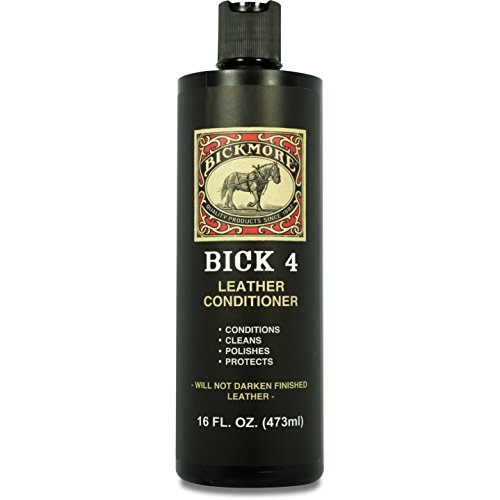
Bick 4 is a non-darkening conditioner that cleans and protects without the heavy waxes found in other products. It is arguably the most user-friendly option for those who want to maintain the original color and texture of their premium leather goods.
This product is particularly useful for light-colored or vegetable-tanned leather that you want to keep pristine. It effectively lifts surface dirt while replenishing the oils, making it a reliable maintenance choice for frequent use.
If you have a collection of high-end, smooth leather notions pouches, Bick 4 is the safest, most effective maintenance tool. It leaves a soft, natural finish that never feels waxy or slick, keeping the leather surface ready for daily handling.
Huberd’s Shoe Grease: The Ultimate Rustic Finish
Huberd’s Shoe Grease is formulated specifically for extreme conditions, utilizing a blend of pine tar and oils that excel at waterproofing. While the name suggests footwear, its heavy-duty nature is perfect for rugged, thick-cut rustic leather bags that see heavy use.
The inclusion of pine tar gives it a distinct, classic scent that many crafters find appealing. It offers unparalleled protection against moisture, which is vital if your project bags are often placed on floors or damp surfaces during group knitting sessions.
Because it is quite heavy, use it sparingly. It will darken the leather, giving it a deep, rich, vintage patina that feels earned and authentic.
Kiwi Mink Oil: Best Budget-Friendly Option
Kiwi Mink Oil is a widely available, cost-effective solution for providing both conditioning and basic water resistance. It is a solid entry-level choice for mass-produced leather knitting accessories that need a quick refresh without a significant financial investment.
It performs well for general maintenance, keeping leather pliable and resistant to drying out over time. It is important to note that it often contains silicones, which may not be ideal for high-end, full-grain leathers that require breathability.
Use this when you need a simple, reliable solution for utilitarian goods. It provides a decent barrier against light moisture, ensuring your needles and hooks stay dry in standard storage conditions.
How to Pick the Right Oil for Your Leather Goods
Selecting the correct product depends entirely on the finish of the leather and the environment in which it lives. Vegetable-tanned leathers are porous and will drink up heavy oils, while chrome-tanned leathers are sealed and require less frequent, lighter conditioning.
Consider the following factors before purchasing: * The Goal: Are you looking to soften, protect, or simply clean? * The Color: Expect oils to darken light leather; always test a spot first. * The Environment: Does the bag sit on damp floors or travel in all weather? * The Material: Is it delicate goatskin or heavy-duty harness leather?
If the leather feels dry or “thirsty” to the touch, opt for a penetrating oil like Neatsfoot. If it is being used in a rugged environment, prioritize a wax-heavy blend like Obenauf’s.
Applying Oil Finishes Without Making a Mess
Successful application relies on moderation and patience. Never apply oil directly to the leather; instead, put a small amount onto a soft, lint-free cotton cloth or an old wool swatch.
Rub the oil into the cloth, then use circular, light motions to work it into the leather evenly. Starting from an edge or an inconspicuous spot ensures you do not end up with an uneven dark patch in the middle of a panel.
Allow the leather to absorb the product for several hours before handling it further. If any residue remains, buff it gently with a clean cloth until the surface feels dry to the touch, ensuring no excess remains to rub off onto your yarn.
Leather Oils vs. Creams: What’s the Difference?
Leather oils are designed to penetrate deep into the fibers, which makes them ideal for softening stiff or aged items. They are generally liquid, which makes them easy to spread but requires careful application to avoid oversaturation.
Creams, by contrast, act as a balance between light conditioning and surface protection. They sit closer to the surface, providing a gentle sheen and a protective layer without the extreme darkening effect that can occur with heavy, liquid oils.
For most knitters, a cream is the safer, more versatile choice for regular maintenance. Oils should be reserved for cases where you specifically need to restore flexibility to a stiff, neglected piece.
Will Oiled Leather Stain Your Yarn or Projects?
The risk of oil transfer is a legitimate concern for anyone storing expensive hand-dyed wool or fragile silk lace. If leather is over-oiled, the excess will inevitably migrate, potentially ruining the aesthetic of a light-colored project stored inside.
To prevent this, always ensure a “curing” period after application. Wipe the leather down thoroughly after conditioning, and let it sit for at least 24 hours before putting any yarn inside.
For maximum safety, store your projects inside a secondary cotton muslin bag before placing them into a freshly oiled leather carrier. This simple extra layer acts as an insurance policy, protecting your handiwork from any residual oil that might remain deep in the leather pores.
Properly maintained leather is a companion to your knitting, not an adversary. By selecting the right oil for your specific gear and applying it with care, you preserve the integrity of your tools and the safety of your fiber. Take the time to understand your materials, and they will serve you reliably for decades to come.