6 Best Pencil Holders For Creative Workspaces To Try
Organize your desk with our top 6 pencil holders for creative workspaces. Upgrade your studio aesthetic and boost your productivity by finding your fit today.
A chaotic workspace is the enemy of a successful knitting project, especially when measuring gauge or tracking complex lace charts. Whether juggling multiple sets of circular needles or keeping highlighters ready for row tracking, the right storage solution prevents unnecessary interruptions. Selecting a dedicated organizer transforms a scattered table into a functional studio where focus remains on the stitches. These six holders provide the structure needed to keep essential tools within reach and ready for use.
The Crafter’s Companion Desk Caddy: Best Overall


This caddy is engineered specifically for those who balance multiple tools simultaneously. It features a tiered structure that allows for easy access to markers, cable needles, and row counters without the usual digging required by deep, single-compartment cups.
For knitters working on large projects, like stranded colorwork or complex intarsia, having tools grouped by category is essential. The layout accommodates longer items like tapestry needles and stitch holders, keeping them upright and visible.
The primary trade-off is its footprint; it demands significant desk real estate. However, for the serious maker, the ability to grab a tapestry needle or a locking stitch marker without glancing away from a pattern is worth the space.
Yamazaki Tosca Pen Stand: Elegant & Minimalist
Minimalism in a workspace often reduces visual clutter, which helps during high-focus sessions like picking up a dropped stitch in a mohair lace shawl. The Yamazaki Tosca offers a clean, architectural silhouette that fits into a tidy, organized studio.
Constructed with wood accents and a powder-coated finish, it provides a stable weight that prevents tipping when stuffed with long-handled tools. It excels for those who prefer keeping only a few essential items—a pen, a crochet hook for dropped stitches, and a favorite pair of snips—at the ready.
While the capacity is limited, the aesthetic appeal encourages a curated tool set. If the habit is to hoard every tool ever purchased, this stand will quickly become overcrowded. It is best suited for those who practice “mise-en-place” by keeping only the tools needed for the current project on the desk.
Delfonics Roll-Up Pen Case: Best for Portability
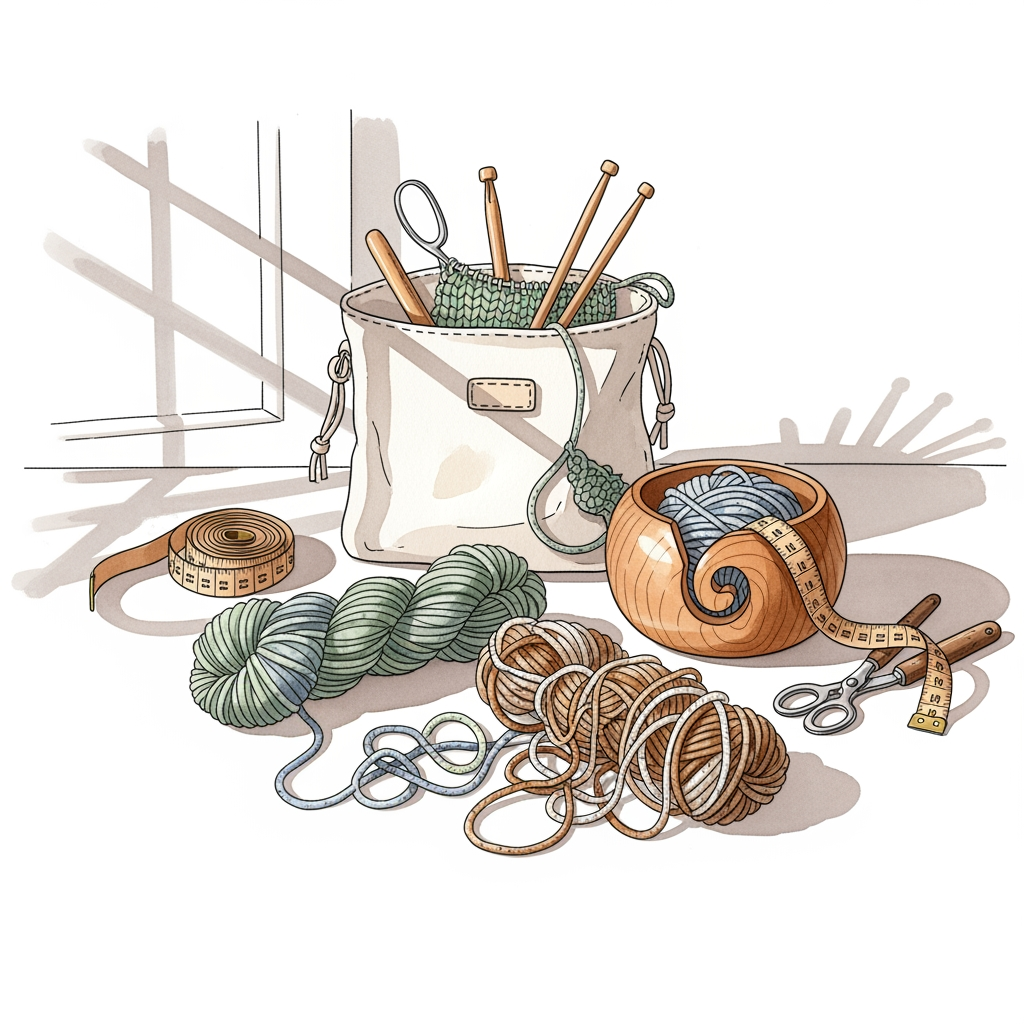
Knitting frequently happens away from the desk, whether at a guild meeting, in a waiting room, or traveling to a retreat. The Delfonics roll-up case protects delicate tools like specialized crochet hooks or high-end scissors during transit.
When unrolled, it functions as a flat storage station, keeping tools laid out horizontally. This is particularly useful for DPNs (double-pointed needles) that might otherwise slide around or get damaged in a standard upright cup.
The fabric construction is soft and won’t dull the points of steel needles, unlike hard plastic or metal containers. Be aware that constant rolling and unrolling can cause wear on specific materials over time, so select a high-quality canvas or synthetic blend for durability.
SimpleHouseware Mesh Desk Organizer: Top Budget Pick
Functionality often beats fancy design, especially when tools like stitch markers and row counters seem to multiply on their own. The mesh design offers total visibility, allowing a glance to confirm if a specific needle size is missing before beginning a new cast-on.
This organizer is highly modular, often featuring side pockets that are perfect for smaller accessories like darning needles or elastic bands. It handles the “spillover” of a growing craft habit better than many high-end, singular-compartment options.
While mesh is utilitarian, it can snag delicate yarns or fibers if placed too close to a knitting project. Always ensure the workstation layout keeps the organizer a few inches away from active knitting to avoid accidental snags.
iSkelter Classic Station: Best for Tech Integration
Many knitters today use tablets or smartphones to follow digital patterns and complex charts. The iSkelter station bridges the gap between traditional manual tools and modern digital aids by incorporating dedicated slots for screens.
The wood construction is both durable and aesthetically grounding, providing a tactile experience that complements the organic nature of wool. It keeps a device at the perfect viewing angle for following chart repeats without neck strain.
This is an investment piece that prioritizes ergonomics. If the workspace setup involves a heavy reliance on digital pattern tracking, the cost of this station is offset by the improvement in posture and workflow efficiency.
Appointed Studio Ceramic Holder: Best Aesthetic
Ceramic holders provide a heavy, weighted base that is crucial when storing long, metal circular needles that might otherwise topple a lighter container. The Appointed Studio holder offers a timeless look that anchors a desk while holding a significant number of pens and markers.
The wide mouth of a ceramic cup allows for quick, blind retrieval of tools, a small but helpful feature when concentration is locked on a difficult section of a pattern. The material is easy to clean, which is helpful if any crafting adhesives or lotions used during knitting sessions happen to make a mess.
Because ceramic can be fragile, it is best for a stationary desk setup rather than a mobile craft kit. Keep it away from the edge of the table, especially if a large, heavy project is being blocked nearby, to prevent accidental knocks.
Choosing a Holder: Material, Size, and Capacity
Selecting the right tool for organization requires assessing current habits and space constraints.
- Weight: Always choose a heavier material like ceramic or weighted metal if storing long needles, as they act as a lever that can tip over light containers.
- Visibility: Open-mesh or low-profile designs are best if the goal is to see exactly which size needles or markers are currently available.
- Portability: Use fabric rolls for moving tools between locations to protect needle tips and sharp scissors.
Avoid the temptation to buy the largest organizer available if the desk space is limited. A smaller, more efficient setup often forces better organization, preventing the accumulation of unused or broken tools.
Organizing Your Holder for Maximum Creative Flow
To maintain creative flow, group tools by their utility rather than by size or color. Keep items used in every project—such as snips, a measuring tape, and a crochet hook for dropped stitches—in the most accessible slot.
Use secondary spaces for project-specific items like cable needles, stitch markers for specific pattern repeats, or highlighters for paper charts. Periodically emptying and resetting the holder ensures that defunct markers or snapped needles are removed.
Strive for a “grab-and-go” layout. If a tool requires two hands to pull from the holder, it is poorly positioned for the pace of an active knitting session.
Wood vs. Metal vs. Fabric: Which Is Right for You?
Material choice impacts not just the look of a workspace, but the longevity of the tools themselves.
- Wood: Offers a warm, traditional feel and is generally gentle on metal needle tips. It is perfect for those who value aesthetic harmony in their studio.
- Metal: Highly durable and often magnetic, which is a major advantage for keeping track of small metal stitch markers or darning needles.
- Fabric: Provides the best protection against surface scratches and is the only logical choice for travel-heavy knitters.
Consider the climate as well. In very dry environments, static-prone plastic containers can become a nuisance when handling synthetic fibers or wool-nylon blends. Natural materials like wood or sturdy canvas are superior in these conditions.
Beyond Pens: Storing DPNs, Hooks & Other Tools
Thinking beyond pens allows for more creative use of desk organizers. A deep, sturdy cup is the ideal home for double-pointed needles (DPNs) stored upright, preventing the points from getting bent or creating a hazard.
Small hooks used for picking up stitches or weaving in ends benefit from the side slots found on many multi-compartment organizers. If a tool is long and thin, vertical storage is almost always superior to horizontal storage to prevent bending.
Ensure that the organizer has enough depth to keep long tools stable. If the holder is too shallow, DPNs or crochet hooks will shift and spill, creating a frustrating mess rather than a streamlined workspace.
A well-organized desk does not guarantee perfect tension or error-free knitting, but it does remove the friction that leads to unnecessary frustration. By choosing an organizer that suits the specific needs of a fiber artist, you gain the freedom to focus entirely on the rhythm of the needles. Invest in a system that grows with your projects, and you will find that the time saved searching for a cable needle is time better spent on the craft itself.