
6 Precision Craft Knives For Antique Paper Restoration
Restore delicate documents with confidence. Discover our top 6 precision craft knives for antique paper restoration and upgrade your toolkit today. Shop now.
Restoring antique paper requires the same patience and precision as working with fine, lace-weight mohair. Much like choosing the right needle size to maintain consistent tension, selecting the correct blade determines the success of a delicate repair. A dull or improper tool can tear fragile fibers just as easily as a rough needle can split a delicate silk ply. These six precision knives offer the control necessary to preserve history without causing further damage.
Swann-Morton No. 3 Scalpel: The Professional Pick


The Swann-Morton No. 3 is the industry standard for archival conservation. Its surgical-grade steel offers a level of sharpness that makes standard craft blades seem blunt by comparison.
Because the handle is slim and balanced like a pair of high-end carbon fiber knitting needles, it allows for incredible dexterity. It is the ideal choice when trimming edge frayed paper or performing delicate surgery on book spines.
However, the lack of a protective cap requires extra caution during storage. This tool is best for those who prioritize clinical precision over convenience.
X-ACTO #1 Precision Knife: The Versatile Classic

The X-ACTO #1 is the reliable workhorse of the craft world, found on workbenches everywhere for a reason. Its lightweight aluminum body provides a comfortable grip that mimics the feel of a standard crochet hook.
This knife is perfect for general trimming and cutting stencils or templates for project blocking. It is widely compatible with a variety of blade shapes, making it a flexible addition to any toolkit.
The main tradeoff is the screw-type chuck, which can loosen over time if not tightened properly. Ensure the blade is secure before starting any intricate work to avoid slips.
OLFA AK-4 Cushion Grip Knife: Best for Comfort

Extended sessions of paper restoration can lead to hand fatigue, much like knitting long-distance on small-diameter circular needles. The OLFA AK-4 addresses this with a contoured, cushion-grip handle that reduces pressure.
The design includes a built-in anti-roll device, preventing the knife from sliding off the table when set down. This feature is invaluable when juggling multiple tools, such as tweezers or archival tape, during a complex repair.
While slightly bulkier than a standard scalpel, the ergonomics are superior for those who spend hours working on large archival projects. It is a solid investment for long-term comfort.
Fiskars Fingertip Knife: For Unmatched Control

The Fiskars Fingertip Knife utilizes a unique design that allows the user to hold the tool directly above the blade. This mimics the control one feels when guiding yarn through the fingers during complex colorwork.
Because the contact point is so close to the paper, it provides unparalleled tactile feedback. It is the best choice for maneuvering around delicate illustrations or tight corners where a long handle might get in the way.
The ergonomic, finger-loop design can feel unconventional at first. It takes a brief period of adjustment to master, but the result is a level of precision that standard handle shapes cannot match.
Slice Ceramic Precision Knife: The Safest Blade
Ceramic blades are an interesting innovation for the restoration enthusiast because they stay sharp significantly longer than steel. They are also non-conductive and chemically inert, preventing any potential reaction with sensitive antique materials.
The rounded edge of the blade helps prevent accidental gouges, much like using a blunt-tipped tapestry needle prevents splitting yarn. It is an excellent choice for those who are nervous about working with razor-sharp steel.
Note that ceramic blades, while harder, are more brittle than steel. They should never be used for prying or high-torque applications, as the tip can snap under pressure.
Excel Blades K1 Knife: Top Budget-Friendly Option
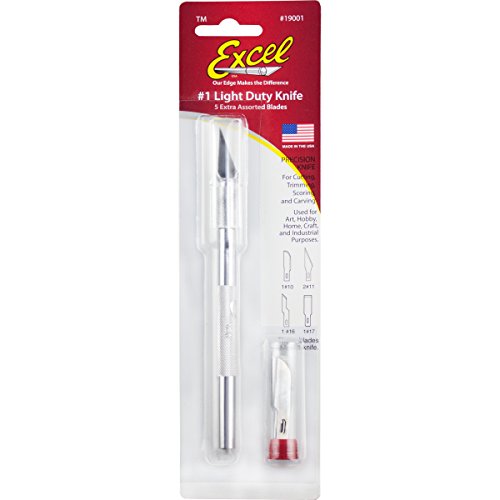
The Excel Blades K1 is a straightforward, no-nonsense tool that delivers consistent performance at an accessible price point. It is effectively the direct competitor to the X-ACTO line, offering a reliable locking mechanism that holds blades firmly in place.
For those just starting their restoration journey, this knife provides a solid foundation without a high financial commitment. It handles standard #11 blades with ease and features a durable finish that resists wear.
If you are a casual restorer, this tool is likely all you will ever need. It does the job cleanly and effectively, leaving more room in the budget for quality archival papers and adhesives.
Choosing Your Blade: Scalpel vs. Angled vs. Pointed
Blade shape is as critical as fiber content when determining the outcome of your project. An angled blade is the general-purpose choice, ideal for long, straight cuts across paper grain.
Pointed, triangular blades are necessary for piercing and working in tight, recessed areas, such as the gutter of a bound book. These provide the same pinpoint accuracy needed for grafting live stitches in a lace project.
Scalpel-style blades are best for scraping away excess old glue or surface debris. Match the blade geometry to the specific task to ensure the paper remains undisturbed and structurally sound.
Key Safety Tips for Handling Ultra-Sharp Blades
Precision blades are designed to cut through material with minimal resistance, which means they can cut through skin even faster. Always cut away from your body, maintaining a clear path for the knife.
Treat these blades with the same respect you would give a pair of sharp-tipped embroidery scissors. Never leave an open blade unattended on a desk, especially if there are pets or curious children nearby.
A dull blade is actually more dangerous than a sharp one because it requires more force to cut. When you feel the blade dragging or tearing the paper instead of slicing cleanly, change it immediately.
How to Properly Change and Dispose of Old Blades
Changing a blade should be done with a controlled motion, never using excessive force that could lead to a slip. Use a pair of needle-nose pliers to remove the old blade if the chuck is too tight.
Always dispose of used blades in a puncture-proof container, such as a dedicated sharps bin or a heavy-duty plastic bottle. Never throw loose blades directly into the trash, as they pose a significant injury risk to waste management staff.
Mark the container clearly as containing sharp objects. Proper disposal is a non-negotiable part of maintaining a responsible and professional workspace.
Why a Self-Healing Cutting Mat Is Non-Negotiable
A self-healing mat is the foundation of any restoration setup. Its surface is designed to allow the blade to penetrate without dulling the edge, preserving the sharpness of the tool.
Much like a blocking mat provides a stable surface for pinning wet wool, a cutting mat ensures the paper remains flat and stationary. The grid lines on these mats also assist in making perfectly straight cuts and measuring adjustments.
Over time, the mat will show wear, but it will protect your tabletop and your blades indefinitely. It is the most important accessory for ensuring your tools and your antique materials remain in pristine condition.
Restoring antique paper is a meditative craft that rewards those who invest in the right equipment and take the time to refine their technique. By choosing high-quality precision knives and following proper safety protocols, you ensure that these precious documents survive for generations to come. Treat every cut with the same care you would give a fine heirloom project, and the results will speak for themselves.

