7 Daylight Bulbs For Accurate Color Matching To Use
Discover the top 7 daylight bulbs for accurate color matching in your workspace. Compare our expert picks and upgrade your lighting setup for perfect results now.
Choosing the right yarn for a complex colorwork sweater often feels like a gamble when viewed under yellow-tinted household lamps. Many makers have suffered the disappointment of realizing a chosen contrast color clashes only after finishing the project under natural daylight. This guide identifies the best light sources to ensure every shade of hand-dyed wool or silk appears exactly as intended. Invest in the right spectrum, and watch those subtle tonal shifts finally come to life.
GE Reveal HD+ LED: Best for All-Around Use


The GE Reveal line utilizes a unique filter coating that removes the yellow, dulling light common in standard incandescent bulbs. This creates a crisp, clean aesthetic that makes distinguishing between similar hues, like navy and black, significantly easier.
For the knitter working with variegated yarns, these bulbs provide enough clarity to identify individual color transitions without eye strain. They serve as a reliable middle ground for those who need a home lighting solution that functions well for both general living and detailed needlework.
While they are excellent for daily tasks, they lack the extreme precision required for high-end color grading. They remain the go-to choice for the hobbyist who wants a better view of their stitches without committing to specialized professional gear.
OttLite ClearSun HD LED: The Crafter’s Choice
OttLite has long been a staple in craft rooms because of its specific focus on reducing glare and visual fatigue. The ClearSun technology mimics the balanced spectrum of the sun, which is critical when matching the delicate undertones of hand-dyed superwash wool.
When working on dark-colored projects like a brioche cowl in charcoal, the high-definition output helps define the stitch geometry. This clarity prevents the common error of dropping stitches because the fabric looks like a featureless black mass under standard lighting.
The trade-off is a slightly cooler, brighter light profile that may feel stark in a cozy living room setting. Use these bulbs in dedicated task lamps positioned directly over the work to maximize the benefit during long sessions.
Philips Ultra Definition LED: Clearest Whites

If the project involves high-contrast stranded colorwork, such as traditional Fair Isle, the Philips Ultra Definition bulbs excel. They offer an exceptionally high color rendering index that prevents whites from appearing yellowish or grays from taking on a muddy cast.
These bulbs are particularly useful when selecting buttons or ribbons to finish a garment. Matching the exact shade of white in a pearl button to the cream-colored fiber of a cardigan requires this level of color fidelity.
They perform consistently across various dimming levels, allowing for adjustments when the eyes grow tired after hours of concentration. These are ideal for the maker who demands perfection in every material choice.
Waveform CENTRIC DAYLIGHT: Pro-Level Accuracy
Waveform Lighting sets the industry standard for color critical environments by producing a full-spectrum light that closely matches the output of high noon sun. This is the gold standard for those who sell their work or perform professional dyeing services.
The spectral power distribution is exceptionally smooth, meaning there are no gaps in the colors being emitted. This prevents “metamerism,” where two colors appear to match under one light but look completely different when moved to a window.
These bulbs command a higher price point than standard options. However, for the serious knitter who spends time curating large stashes, this investment prevents costly color-matching mistakes that ruin hours of intricate labor.
Cree Lighting A19: Best Value Daylight Bulb
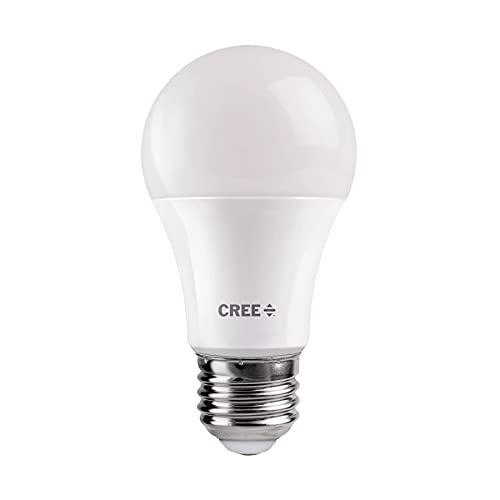
For the budget-conscious knitter who needs to swap out every bulb in a craft room without breaking the bank, the Cree A19 is the most practical choice. It offers a surprising amount of color accuracy for a standard hardware store purchase.
It provides a daylight-balanced light that is far superior to the “soft white” bulbs that make color selection nearly impossible. It is perfectly adequate for basic knitting, crochet, and general sewing tasks.
While it does not reach the professional spectrum levels of more expensive specialized bulbs, it represents a massive upgrade from standard residential lighting. This is the perfect entry-level option for upgrading a workspace on a modest budget.
Sylvania TruWave LED: Easiest on the Eyes
Sylvania’s TruWave technology is engineered to reduce blue light spikes, which often cause eye strain during intense sessions of lace knitting or fine-gauge work. It creates a comfortable, natural-feeling glow that mimics the way light filters through a window.
Many knitters find that after several hours of working with 2.25mm needles, their eyes struggle to focus. These bulbs help mitigate that fatigue by providing a stable, flicker-free light source that remains consistent throughout the night.
Because the focus is on comfort, the colors are represented with high accuracy without feeling overly clinical. It is a fantastic choice for a bedroom or dedicated knitting nook where ambiance matters as much as color.
SunLike Natural Spectrum: Ultimate Color Purity
SunLike technology is unique because it uses a violet chip rather than the blue chip found in most LEDs to produce white light. This results in a spectrum that is remarkably close to natural sunlight, revealing the deepest, most subtle nuances in fiber dyes.
If a project involves complex gradients or highly saturated yarns, these bulbs will show the exact depth of the dye lot. This helps in spotting potential color bleeding or inconsistency before the yarn is knit into the final fabric.
These bulbs are best utilized in high-quality lamps rather than general overhead fixtures. For the discerning artist who works with hand-painted luxury fibers, they offer unparalleled visual performance.
What Kelvin and CRI Mean for Your Yarn Stash
Understanding light starts with two primary numbers found on almost every bulb package: Kelvin (K) and Color Rendering Index (CRI). Kelvin measures the warmth or coolness of the light, while CRI measures how accurately the light reveals the true colors of an object.
- Kelvin (K): For knitting, aim for 5000K to 6500K. This range represents “daylight” and provides the neutral foundation needed to see colors as they truly exist.
- CRI: Always look for a bulb with a CRI of 90 or higher. A higher CRI ensures that the subtle differences between plum and deep violet are visible, rather than appearing as the same flat shade.
Avoid bulbs below 4000K for color-sensitive work, as they will add a heavy yellow cast to the yarn. Think of the light as a primary tool, just as important as the needles or the blocking mats.
Bulb vs. Task Lamp: Which Do You Really Need?
A high-quality bulb in a poor fixture will rarely yield the desired results. Overhead room lighting is excellent for general visibility, but it often creates shadows directly over the hands where the yarn is being manipulated.
A dedicated task lamp allows the light source to be positioned at the correct angle to hit the stitches directly. This minimizes the “shadow effect” that often hides dropped stitches or uneven tension in dark yarns.
The most effective approach is to combine the two: install daylight-balanced bulbs in the room’s main fixtures to provide a base level of neutrality, and add an adjustable task lamp with a high-CRI bulb for close-up precision. This dual-layer strategy ensures that the entire workspace remains color-accurate.
Avoid These Common Color Matching Light Mistakes
The most common error is relying on a mix of different light sources in the same room. If a cool daylight lamp is placed next to a warm incandescent light, the resulting color perception will be skewed and inconsistent.
Another mistake is failing to test the yarn in multiple locations. Always verify the color match by taking the skeins to a window with indirect natural light before committing to a final purchase or project design.
Finally, do not underestimate the impact of light glare on textured yarns. Highly reflective fibers like silk or rayon will react differently under high-intensity bulbs compared to matte wools; adjust the lamp angle to avoid “hot spots” of reflected light that can blind the eyes.
Investing in these lighting solutions transforms the way yarn is perceived and handled. When the light source is calibrated for truth, the fear of mismatching colors during a project vanishes. Trust the spectrum, and the finished results will speak for themselves.