
6 Best Utility Trays For Organizing Workspace Tools
Declutter your desk with our top 6 picks for the best utility trays for organizing workspace tools. Streamline your workflow and shop our expert recommendations.
A cluttered workspace is the silent enemy of a successful knitting project. When your stitch markers vanish into the abyss of the sofa and your tapestry needles play hide-and-seek, the flow of your knitting rhythm suffers. Investing in a dedicated utility tray transforms a chaotic heap of notions into a curated toolkit that supports your creative process. Here are six standout options designed to bring order to your fiber arts studio.
The Cocoknits Maker’s Board: Best Magnetic Tray
The Cocoknits Maker’s Board utilizes an ingenious magnetic surface that anchors steel tools exactly where they are needed. This board acts as a central hub, allowing you to secure your pattern, keep your needles visible, and prevent stitch markers from rolling off the table during complex lace charting.
Because the surface is magnetic, it excels at holding onto the small steel accessories that usually disappear, like row counters or cable needles. If you frequently work with charts, the ability to pin your place with magnetic strips is a game changer for maintaining pattern consistency.
This system is not for someone who needs a “grab-and-go” solution for travel, as it is a structured, semi-permanent workspace piece. It is, however, the ultimate tool for those who prefer to keep their primary knitting desk organized and frustration-free.
Della Q Maker’s Canvas Cubby: Best for Portability
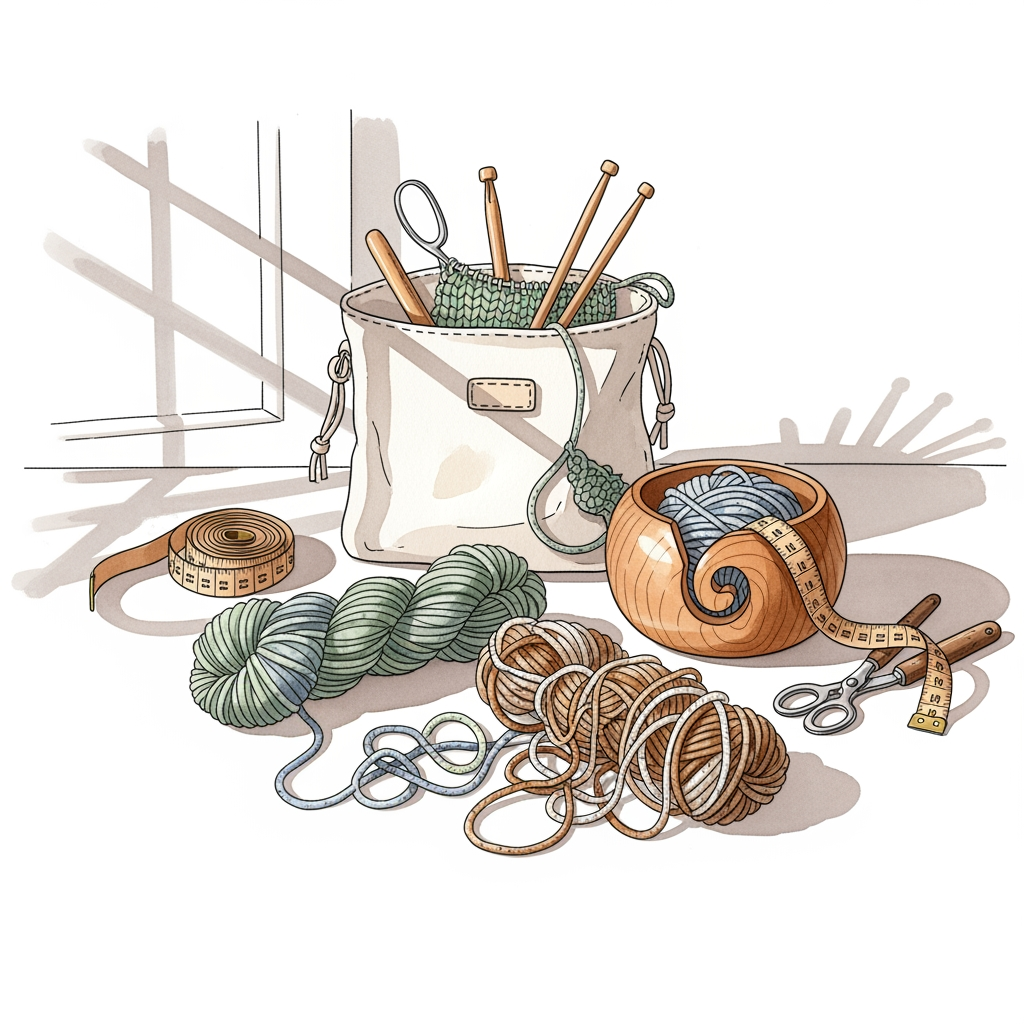
The Della Q Maker’s Canvas Cubby is constructed from durable waxed canvas, making it an ideal choice for the nomadic knitter who moves between the living room and the knitting group. Its flexible walls allow it to collapse when not in use, yet it stands sturdily when filled with essential tools.


This organizer shines when your current project requires multiple needle sizes, a measuring tape, and various fiber swatches. The open-top design provides quick visibility, ensuring you aren’t digging through a closed bag for a specific tapestry needle when you need to weave in an end.
While it lacks the rigid compartments of a plastic organizer, its soft structure is gentler on your hands and easier to tuck into a larger project bag. It is best suited for makers who value a balance between casual accessibility and high-quality construction.
Akro-Mils Plastic Organizer: Best Budget-Friendly Pick
The Akro-Mils plastic organizer brings industrial-grade efficiency to a knitting workspace at a fraction of the cost. These partitioned drawers are perfect for sorting notions by size or type—separating locking stitch markers from split-ring ones, or organizing needle gauges.
Using clear, stackable plastic drawers allows for immediate identification of supplies without opening a single lid. This is particularly helpful when working on colorwork projects where you might have dozens of bobbins or small yarn scraps that need careful management.
The trade-off for the low price point is a lack of aesthetic flair, and the plastic can feel utilitarian or clinical compared to artisan accessories. For the knitter who demands pure functionality and wants to see everything at a glance, however, this remains an unbeatable organizational standard.
The Go-To Tray by Erin.Lane: Best Large Capacity
The Go-To Tray by Erin.Lane is designed with the prolific maker in mind, offering a spacious interior that easily accommodates bulkier accessories like full-sized scissors, circular needle cases, and large tapestry looms. It acts as a stationary landing zone for all the tools that accumulate during a massive multi-month sweater project.
Deep walls prevent tools from sliding out, and the structural integrity of the fabric ensures it maintains its shape even when weighed down by heavier metal tools. It is an excellent choice for keeping your main work table clear while maintaining close access to a wide array of support tools.
If you are someone who keeps a singular, minimalist kit, this tray might be overkill. But for those managing large-scale projects involving many different needle types and notions, this provides the generous footprint necessary to prevent workspace overflow.
Yazzii Crafter’s Companion: Most Stylish Organizer
The Yazzii Crafter’s Companion blends high-end design with incredible utility, featuring multiple clear vinyl pockets that protect your delicate tools. It presents your notions beautifully, turning your collection of stitch markers and crochet hooks into a display that inspires rather than clutters.
The vinyl windows mean you can verify the contents of your tray without disturbing the arrangement. This is especially useful for maintaining a collection of luxury knitting needles where you want to ensure the tips aren’t rubbing against one another or becoming damaged.
While it sits at a higher price point, the quality of the zippers and the durability of the exterior fabric justify the investment for long-term use. This tray is meant for the knitter who treats their tools as investment pieces and wants an organizer that matches the quality of their craftsmanship.
Clover Dome Threaded Case: Best for Small Notions
The Clover Dome Threaded Case is a specialized piece of equipment designed to keep small, loose notions secure through a unique locking mechanism. The interior rotating base allows you to sort small items like beads, stitch markers, or yarn needles into separate, easy-to-access segments.
Its compact, circular footprint is perfect for small side tables where desk space is limited. Because it locks securely, it is a reliable choice for knitters who have pets or small children, ensuring that sharp needles or tiny beads stay contained and accounted for.
The dome shape does limit the size of the tools it can hold, meaning it is not designed for scissors or longer crochet hooks. It excels as a companion piece to a larger tray, specifically acting as the “notions vault” for your smallest, most easily lost items.
Choosing the Right Tray for Your Knitting Workflow
Selecting the right tray begins with an honest assessment of your knitting environment and habits. A stationary knitter who works at a dedicated desk will have vastly different needs than someone who knits in bed, on the train, or during travel.
Consider the “reach test”: if you have to stand up or leave your chair to find your row counter or scissors, your organization system is failing you. The goal is to keep your most-used tools within a short arm’s reach of your active hands.
Finally, match the tool to the storage solution. If you use mostly circular needles, a deep tray with open space is better than one with tiny, rigid compartments that might bend your needle cables over time.
Fabric vs. Plastic Trays: Which Material is Best?
Fabric trays, such as those made from canvas or high-quality cotton, offer a softer aesthetic and are generally more forgiving if dropped. They are excellent at protecting the finish on bamboo or wooden needles, as they provide a cushioned environment that won’t scratch delicate materials.
Plastic organizers provide superior visibility and are much easier to sanitize or clean if a spill occurs. They also tend to be modular, allowing you to customize the size of your compartments to fit specific types of notions like buttons or cable needles.
Ultimately, the choice comes down to the environment. If you want a workspace that feels like a cozy, integrated part of your home, go with fabric. If you want a lab-like efficiency where every millisecond of searching is eliminated, choose plastic.
How to Organize Your Tray for Maximum Efficiency
Efficiency in a knitting tray is achieved by grouping tools based on frequency of use. Keep your most essential items—a tapestry needle, a row counter, and your current stitch markers—in the most accessible, front-and-center position.
Reserve the secondary spaces for tools that are project-specific, such as cable needles, stitch holders, or needle gauge tools. Avoid the “junk drawer” effect by periodically auditing your tray; if a tool hasn’t been used in three months, it belongs in long-term storage, not your daily work tray.
Create “kits” within your tray. By placing your scissors, measuring tape, and stitch markers in one corner, you create a memory-based system that allows you to reach for items without even looking.
What to Look for in a Notion and Tool Organizer
When evaluating an organizer, look first at the stability of the base. An organizer that tips over when you remove one heavy item is more frustrating than having no organizer at all.
Second, consider the interior surface texture. Avoid materials that have a lot of “catch” points if you use fine yarns, as even a small stray thread can snag on a rough organizer interior.
Finally, prioritize modularity or size versatility. Your knitting needs will evolve as you move from simple scarves to complex lace or stranded colorwork; ensure your storage solution can grow alongside your skill level.
A well-organized tray does not just store your tools; it protects your focus and ensures that the transition between steps in your pattern remains fluid. When your notions are neatly arranged, you spend significantly more time knitting and far less time searching, which is the hallmark of a truly efficient and satisfied fiber artist.
