6 Best Archival Pens For Acid-Free Journaling Worth Using
Protect your memories with our top 6 archival pens for acid-free journaling. Explore our expert recommendations to find the perfect permanent tool for your pages.
Documenting the intricacies of a complex lace pattern or tracking yarn usage across a multi-year sweater project requires reliable tools. Just as a project’s long-term integrity depends on the quality of the fiber, a record’s longevity depends on the ink sitting on the page. Archival-quality pens prevent the frustration of fading notes or yellowing pages over the years. Choosing the right pen ensures that vital details like gauge, yarn substitution, and modifications remain legible for generations.
Sakura Pigma Micron: The Gold Standard Fineliner
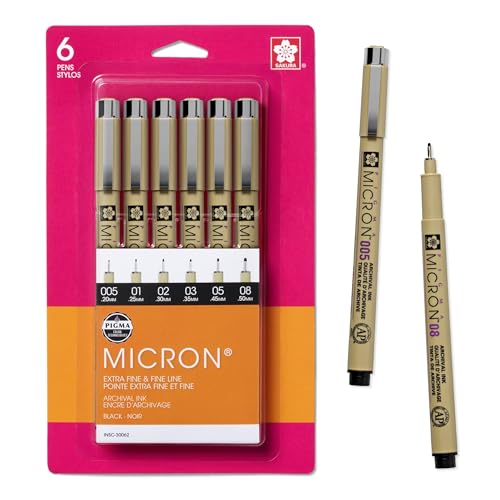

The Sakura Pigma Micron is widely considered the industry benchmark for archival documentation. Its pigment-based ink is chemically stable, waterproof, and fade-resistant, meaning notes taken on a project’s start date will look identical years later.
These pens excel because they offer a consistent flow, crucial when marking up intricate charts or drafting complex cable sequences. The tip is remarkably durable, though it can fray if pressed too firmly against textured paper.
For those who rely on detailed schematics, the variety of nib sizes allows for precision in tight margins. If the goal is a clean, permanent journal that survives the wear and tear of a project bag, these pens remain the most dependable investment.
Staedtler Pigment Liner: A Worthy Micron Rival

Staedtler Pigment Liners offer a slightly stiffer nib than their competitors, providing a level of control that appeals to knitters who favor clean, sharp lines. The ink performance is comparable to other archival standards, drying quickly enough to prevent smudging when sketching out colorwork motifs.
A standout feature is the “dry safe” capability, which prevents the ink from drying out quickly even if the cap is left off for a few hours. This is particularly useful during intense, late-night knitting sessions where attention shifts frequently between needles and a notebook.
While the barrels feel slightly more utilitarian than decorative, their construction is robust. They represent an excellent alternative for those who find other brands too soft or prone to pooling ink on specific paper stocks.
Faber-Castell Pitt Pen: Rich India Ink Option
Faber-Castell Pitt Pens utilize professional-grade India ink, known for its intense opacity and deep black finish. Because India ink is naturally lightfast and permanent, these pens are ideal for long-term project journals that might be exposed to varying levels of sunlight or humidity.
The nibs range from very fine to brush-like, offering versatility for those who like to sketch their garments or create artistic title pages. The ink flows smoothly, feeling almost fluid on the page, which can be a welcome change from the scratchier feel of smaller fineliners.
However, the heavier flow means these pens can sometimes bleed through thinner journal pages. Always verify the weight of the paper before committing, as these pens favor high-quality, heavy-duty journals over standard notebook filler.
Copic Multiliner SP: The Best Refillable Choice
The Copic Multiliner SP is the ultimate choice for the knitter who prefers to minimize waste and invest in a long-term tool. These aluminum-bodied pens are fully refillable and offer replaceable nibs, making them a sustainable alternative to disposable options.
Beyond the ecological benefit, the metal body provides a weighted, balanced feel that mimics the comfort of a high-quality knitting needle. The archival ink is consistent, and the precision of the nibs is exceptionally high, perfect for creating detailed gauge swatches or complex stitch diagrams.
While the initial cost is higher, the long-term utility is unmatched for those who plan to keep a lifetime of knitting records. Replacing a nib is far more cost-effective than buying a new pen every few months.
Uni Pin Fineliner: Top Archival Pen on a Budget
The Uni Pin Fineliner is a workhorse that punches well above its price point. Its ink is resistant to both water and light, ensuring that your shorthand notes regarding yarn yardage and row counts don’t fade into obscurity.
The nibs are reliable and maintain their shape surprisingly well, even when used on the rougher recycled papers often found in sustainable crafting journals. They provide a smooth, skip-free experience that competes directly with more expensive brands.
For the knitter who keeps a notebook in every project bag, these are the ideal choice to stock up on. They offer professional-grade archival quality without the need for a significant financial commitment.
Zebra Sarasa Clip: Best Archival Gel Pen Pick
Gel pens are rarely associated with archival standards, but the Zebra Sarasa Clip is a notable exception. These pens use a pigment-based ink that is water-resistant and fade-proof, providing the ease of a gel pen with the permanence of a technical pen.
The flow is smooth and consistent, making them perfect for quick, stream-of-consciousness journaling or rapid notation during a project. The retractable design adds a layer of convenience, eliminating the risk of losing a cap in the depths of a yarn bin.
While the nibs are not as fine as traditional fineliners, the comfort of a gel ink delivery system is difficult to beat. They are the best choice for those who value speed and ease of use above precise, architectural line work.
Why Acid-Free Matters for Your Project Journals
Acid-free paper and ink are essential because acidic components break down over time, causing paper to yellow and become brittle. When recording the history of a hand-knitted heirloom, you want the documentation to be as durable as the wool itself.
Using non-archival pens introduces acid directly to the page, which will eventually eat through the fibers. This can turn precious memories of custom yarn blends and modifications into crumbling scraps of paper.
Investing in archival tools ensures that your records survive for the next generation. It is the simple difference between a temporary note and a permanent historical record.
Pigment vs. Dye Ink: What’s the Real Difference?
The fundamental difference lies in how the ink interacts with the surface and light. Dye-based inks are dissolved in liquid, meaning they soak into the fibers and remain susceptible to light-fading and water damage.
Pigment inks, by contrast, consist of tiny, solid particles suspended in a medium. These particles sit on the surface of the paper rather than soaking in, creating a bond that is significantly more resistant to UV radiation and moisture.
For a permanent journal, pigment is the only viable choice. It provides the stability required for long-term document preservation and clarity.
Choosing the Right Nib Size for Notes & Charts
Selecting the correct nib size is all about the density of information you need to record. A 0.03mm or 0.05mm nib is perfect for tiny marginal notes or squeezing complex pattern charts into small spaces.
For standard writing, a 0.3mm or 0.5mm nib provides the best balance of readability and comfort. A thicker line is generally more durable and less prone to tearing paper if the hand tends to be heavy.
Consider the complexity of the project: intricate lace or colorwork requires finer lines for accuracy, while simple garter stitch scarves can be easily documented with a bolder nib. Always match the tool to the scale of the information being recorded.
How to Test Pens on Your Favorite Journal Paper
Not every pen works perfectly on every paper, and the marriage of the two determines the outcome. Start by writing a few lines in an inconspicuous area of your journal, such as the very back page or a corner of the inside cover.
Let the ink sit for a few minutes before testing it with a damp cotton swab. This will reveal if the ink is truly waterproof or if it will blur when exposed to the inevitable coffee spill or humid storage conditions.
Turn the page to check for “ghosting” or “bleeding”—the tendency of ink to show through or soak into the back of the paper. A great pen is useless if the paper cannot handle its ink flow, so always prioritize the compatibility of the two mediums.
A well-kept journal is as vital to a knitter’s library as a well-stocked needle case or a curated stash. By choosing pens that prioritize archival safety and reliability, you ensure your hand-crafted legacy remains as vivid and detailed as the day you cast on. Pick the tool that matches your recording habits, and trust the process of documenting your work for the long haul.