7 Best Hosiery Drying Clips For Small Spaces To Use
Maximize your laundry area with these 7 best hosiery drying clips for small spaces. Click here to discover efficient, space-saving solutions for your home today.
Hand-knitted socks represent dozens of hours of labor, yet their longevity often hinges on how they are dried after a wash. Traditional tumble drying can felt wool, destroy elasticity, and lead to disastrous shrinkage that renders a perfectly fitted heel useless. Utilizing the right hosiery drying clip ensures that air circulates through every fiber while maintaining the structural integrity of the stitches. Selecting the appropriate tool for small spaces requires balancing drying capacity with the delicate care that luxury fibers like merino or mohair demand.
iPEGTOP Stainless Dryer: Best for Durability


Stainless steel resists the oxidation that often plagues plastic clips in humid laundry environments. For those working with high-twist merino or wool blends, the non-porous surface of stainless steel prevents snagging on delicate fiber ends.
These racks are ideal for knitters who prioritize longevity. Because the clips are welded onto a robust frame, there is little risk of them snapping off when subjected to the weight of a damp, heavy wool sock.
While stainless steel can be heavier than plastic alternatives, the structural integrity is worth the extra weight. It remains the top choice for those seeking a “buy it once” solution for their fiber care collection.
JOMARTO Foldable Hanger: Top Pick for Travel
Travel knitting is a staple of the craft, but maintaining garments on the road presents unique challenges. The JOMARTO foldable hanger collapses into a slim profile, making it a perfect companion for knitting retreats or hotel stays.
The compact design does not sacrifice function, allowing for enough clip density to dry a full pair of socks without crowding. When finished, it tucks away into any carry-on or project bag.
Avoid using hotel towel racks, which often have rough finishes that can pull at loose yarn ends. This foldable option provides a clean, dedicated space that keeps your handiwork away from questionable hotel surfaces.
LEJIA 36-Clip Rack: Best High-Capacity Option
If a knitting queue is perpetually full and multiple projects require blocking simultaneously, the LEJIA rack is a lifesaver. It maximizes vertical space, turning a small corner of a laundry room into a high-efficiency drying center.
Managing thirty-six clips allows for drying several pairs of socks, lace shawls, or small accessories at once. The tiered arrangement ensures that each item gets sufficient airflow without overlapping, which is vital for preventing mildew in humid climates.
The primary trade-off is the footprint; ensure there is adequate ceiling height before installation. It is best suited for those who treat laundry day as a systematic rotation of finished hand-knits.
SUNWUKING Clothesline: Most Versatile Budget Pick
Sometimes the simplest tool is the most effective for fiber care. The SUNWUKING clothesline system offers a flexible approach, allowing for custom spacing between items of different weights and sizes.
When blocking socks, varying the spacing is essential. A heavy, worsted-weight wool sock needs more airflow than a lightweight fingering-weight lace sock, and this system adjusts to those needs instantly.
It is an affordable entry point for beginners who have not yet invested in specialized racks. Be mindful of the tension when setting it up to ensure the line does not sag, which could warp the shape of wet, heavy garments.
OSTO Tiered Mesh Dryer: Best for Delicate Knits
Mesh drying is the gold standard for luxury fibers that tend to lose shape when hung vertically. The OSTO tiered dryer provides a flat surface, which is critical for preventing the “stretching” effect that occurs when gravity pulls on wet wool.
This is the preferred method for high-end fibers like cashmere or alpaca that lack memory and can easily lose their form. The tiers allow for a large surface area without taking up permanent floor space in a small apartment.
While it lacks the clips found on other models, it offers superior protection for intricate lace work. For complex colorwork, flat drying also ensures that tension remains even across the entire surface.
Polder Wall-Mount Dryer: Best Accordion Style
The accordion-style wall mount is a clever solution for those lacking dedicated laundry space. It retracts flush against the wall when not in use, making it virtually invisible in a small living area.
Its rigid structure provides a stable platform for multiple socks or small items. The metal bars are smooth, meaning there is no risk of snagging even the most delicate hand-dyed silk blends.
When mounting this, ensure it is placed near a window or a vent. Because it rests close to the wall, adequate airflow is the only factor preventing a long drying time for denser, hand-knit socks.
OXO Good Grips Clip Ring: Best for Everyday Use
For the knitter who needs a quick, reliable way to hang individual socks, the OXO clip ring is unparalleled. The clips feature a soft-touch finish that prevents the marring of delicate yarn fibers.
The circular design is inherently space-saving, spinning easily to catch a breeze from an open window. It is built to hold items securely without requiring excessive force, which is ideal for those with limited hand strength.
It is a low-tech, high-utility tool that prioritizes ergonomics. While it holds fewer items than a large tiered rack, its ease of use makes it the best choice for daily maintenance of active knitting projects.
How to Properly Air Dry Your Hand-Knit Socks
- Gently squeeze out excess water: Never wring or twist the socks, as this breaks down the fiber structure and twists the yarn ply. Use a clean, dry towel to roll the socks up like a burrito and press firmly to absorb moisture.
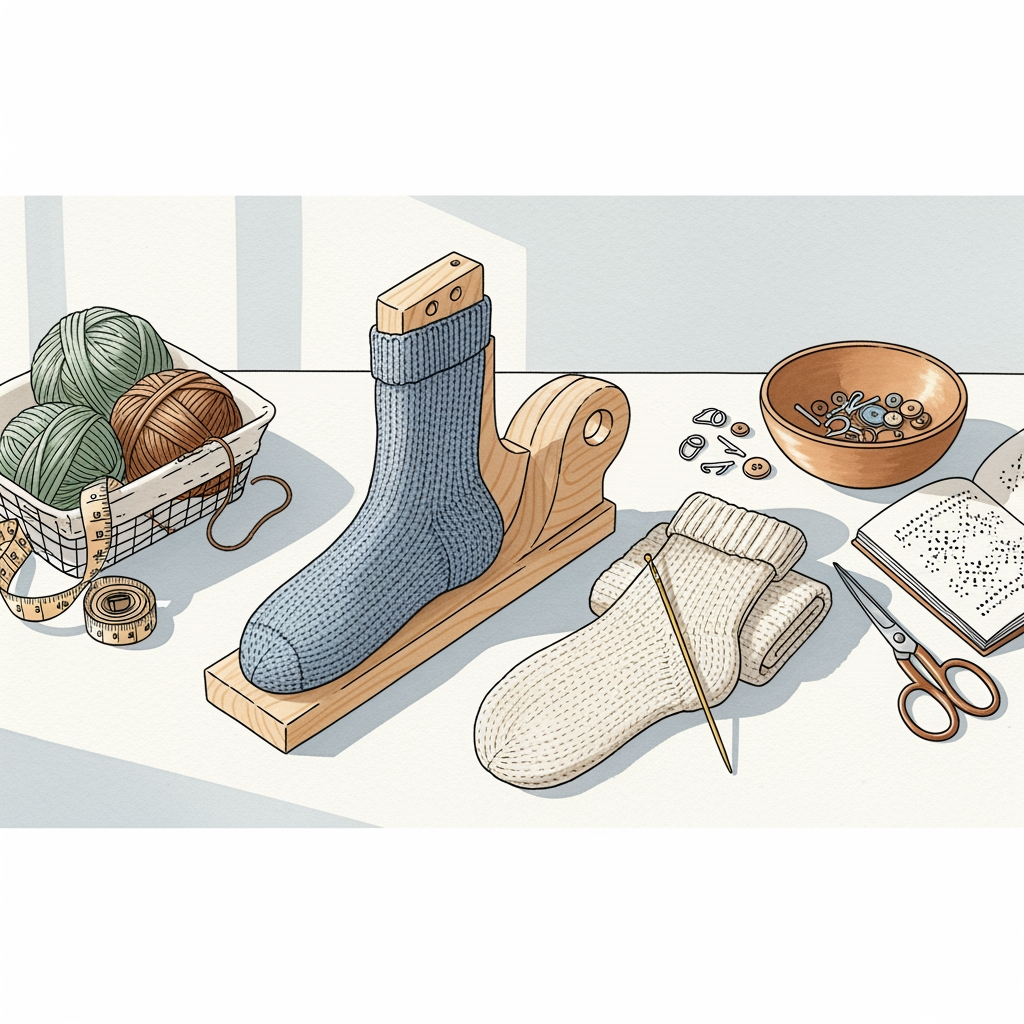
- Use blockers: If the sock has intricate cables or lace, slip on a pair of sock blockers to maintain the intended stitch definition while drying.
- Choose the right orientation: For most socks, clipping by the toe is best to keep the cuff from sagging. If the cuff is delicate or ribbed, however, clipping it at the toe prevents any unwanted vertical elongation of the stitch pattern.
- Avoid direct sun: Sunlight can bleach natural fibers and dry them out, making them brittle over time. Always air dry in a well-ventilated, shaded area.
Choosing Your Dryer: Clip Strength and Spacing
- Clip Strength: Ensure the clip provides enough tension to hold the garment securely without leaving permanent indentations. If a clip leaves a deep mark in the yarn, it is too tight for delicate, high-twist merino.
- Spacing Requirements: Airflow is the most important factor in preventing odors. If the drying rack forces items to overlap, the center of the garment will stay damp too long, increasing the risk of mold.
- Weight Considerations: Always account for the weight of the yarn. A superwash wool sock will hold more water than a non-superwash option, requiring a sturdier clip and more support.
Plastic vs. Metal Clips: Which Is Right For You?
Plastic clips are lightweight and generally inexpensive, making them accessible for beginners. They are suitable for most synthetic and superwash wool projects, though they are prone to degradation from UV light if used outdoors.
Metal clips offer superior durability and are less likely to harbor bacteria or odors over time. They are the professional choice for those who wash and block hand-knits regularly and want to avoid the brittleness of aged plastic.
Ultimately, the choice depends on the fiber. If the project consists of expensive, delicate fibers, lean toward smooth, stainless steel clips to minimize the risk of catching on the yarn.
Proper care through mindful drying is the final step in a successful knitting project. By selecting a rack that matches the specific needs of the fiber and the limitations of the space, every hand-knit item will maintain its beauty and shape for years to come. Regardless of the chosen method, prioritize airflow and gentle support to ensure the hard work invested in the needles survives every wash.