7 Best Craft Needles For Hand Sewing Worth Owning
Upgrade your sewing kit with our expert guide to the 7 best craft needles for hand sewing. Discover high-quality options for every project and shop them today.
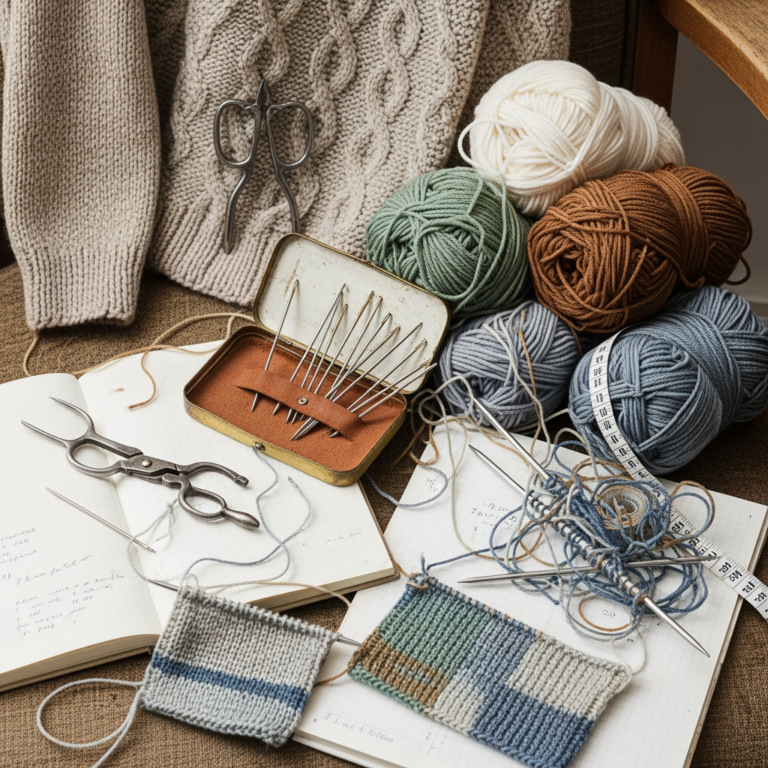
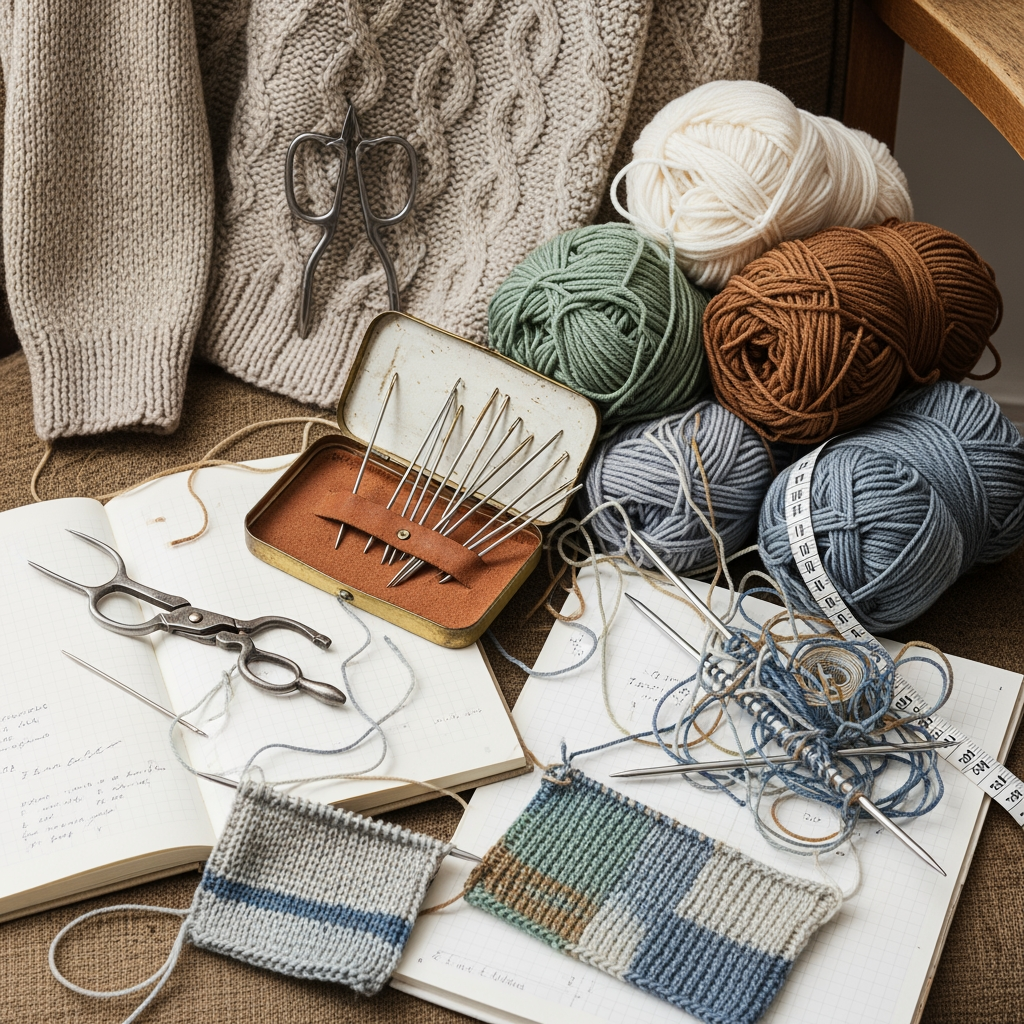
Hand sewing is an essential, yet often overlooked, extension of every knitter’s toolkit. Whether weaving in ends on a complex fair isle sweater or attaching buttons to a delicate cardigan, the right needle can transform a chore into a seamless professional finish. Using an ill-suited needle leads to split yarn fibers, hand fatigue, and frustration that risks damaging finished work. Investing in high-quality tools ensures that the time spent on every stitch is honored by the quality of the final construction.
Tulip Hiroshima Needles: The Ultimate Luxury Pick


Tulip Hiroshima needles are widely considered the gold standard for those who view sewing as a tactile craft. These needles are manufactured in Japan using a specialized process that ensures a perfectly polished surface and a remarkably smooth eye.
The primary benefit lies in the needle’s tip, which is sharp enough to pierce through dense fabric without snagging. Because the surface is so exceptionally smooth, these needles glide through wool, silk, and cotton with almost no resistance. This reduces the strain on fingers during long finishing sessions.
While they carry a higher price point than mass-market options, the durability is unmatched. They resist bending and oxidation significantly better than standard steel needles. For projects involving expensive fibers like cashmere or hand-dyed silk, these are the safest and most reliable choice.
John James Needles: Best All-Purpose Assortment

John James is a heritage brand that provides the most reliable workhorse needles for the average maker. Their assorted packs are a staple in sewing kits because they offer a range of sizes and types to cover almost any unexpected repair.
These needles are characterized by their consistent quality and predictable geometry. Whether needing a fine needle for delicate seams or a sturdier option for heavy-duty basting, the variety packs ensure the right tool is always at hand.
The trade-off with these needles is that they lack the ultra-fine surface treatment found in luxury Japanese brands. However, for general-purpose repairs or simple construction, their reliability is difficult to beat. They remain the standard against which most other needles are measured for value.
Clover Gold Eye Sharps: Easiest Needle to Thread

Thread tension and visibility are the biggest hurdles for many makers, especially when working with dark yarn or metallic threads. Clover Gold Eye Sharps are engineered specifically to solve the struggle of getting the thread through the needle eye.
The gold coating is not merely aesthetic; it provides a high-contrast background that makes the eye easier to spot against fabric. The geometry of the eye is also slightly elongated, allowing for thicker threads or folded strands to pass through with minimal fraying.
These needles are particularly useful for those who struggle with eyesight issues or general hand-eye coordination. By eliminating the frustration of threading, the focus remains entirely on the stitching process. These are highly recommended for beginners building their first dedicated sewing kit.
Bohin Tapestry Needles: Perfect for Finishing Knits
Finishing a knitted project requires needles that can navigate between stitches without piercing the yarn itself. Bohin Tapestry needles feature a blunt, rounded tip that allows the needle to glide through the loops of a knit fabric effortlessly.
The large eye of a tapestry needle is designed to accommodate heavier yarn weights, such as worsted or bulky wool. Because the tip is not sharp, it prevents the needle from splitting the plies of the yarn during the weaving process, which is critical for maintaining the integrity of the knitted texture.
Bohin stands out for its high-grade nickel plating, which prevents the needle from dragging against the fiber. This creates a smooth, snag-free experience when burying ends on the wrong side of a project. Always keep a set of these on hand for the final steps of every garment.
Dritz Doll Needles: Essential for Soft Sculpture
When attaching limbs or managing deep-seated buttons on thick items, standard needles are simply too short. Dritz Doll Needles are extra-long, straight needles that provide the reach necessary for structural sewing in heavy items.
These needles are indispensable for knitters who create toys or structured items where stitches must travel through deep layers of stuffing or fabric. Their length allows for “anchoring” techniques that would be impossible with a standard two-inch needle.
The trade-off is their length, which makes them prone to bending if significant force is applied at an awkward angle. Use them with care and maintain a straight path through the work to prevent deformation. They are a specialized tool that, once required, makes all other options seem inadequate.
C.S. Osborne Curved Needles: For Upholstery
Curved needles are the secret weapon for closing seams where access is limited to only one side of the fabric. C.S. Osborne is the industry standard for these tools, providing a level of strength and curvature that is unmatched for upholstery or repair.
The curve allows the sewer to scoop through multiple layers of fabric without needing to exit the needle fully through the other side. This is vital when working on bags, pillows, or structured knitted accessories that cannot be turned inside out.
Using a curved needle requires a shift in technique, as the stitching motion follows an arc rather than a straight line. Practice on scrap fabric is recommended to understand how the curve interacts with seam allowances. Once mastered, they turn complex assembly jobs into quick, efficient tasks.
Olympus Sashiko Needles: Best for Visible Mending
Visible mending has become a vital skill for sustainable knitters, and Olympus Sashiko needles are designed for the rhythmic, running-stitch style of Japanese embroidery. These needles are long and incredibly sturdy, allowing for multiple stitches to be loaded onto the shaft at once.
The tip is sharp but not aggressive, making it ideal for passing through thick denim or multiple layers of knitted fabric. The eye is also large enough to handle specialized sashiko thread or heavier embroidery floss, which is often used in modern mending.
These needles are built for speed and efficiency in long, decorative stitching lines. They offer excellent control for those looking to patch holes or reinforce high-wear areas on garments. They are the best choice for anyone looking to incorporate artistic, functional repair into their wardrobe.
Decoding Needle Types: From Sharps to Tapestry
Choosing the right needle starts with understanding the anatomy of the tool and the nature of the project. Using the wrong type can cause permanent damage to delicate hand-knits or fail to penetrate dense fabrics effectively.
- Sharps: These have a pointed tip, intended for woven fabrics where the needle must pierce the thread. Avoid using these on knit fabric, as they will split the yarn.
- Tapestry/Darning: These are blunt and rounded, designed to move between stitches. Use these for weaving in ends on sweaters, hats, and scarves.
- Chenille: Similar to sharps but with a larger eye and thicker body. These are excellent for heavy-duty sewing or using bulky ribbons.
- Betweens: Shorter needles used for fine, detailed work like quilting or delicate finishing.
The needle shape dictates the needle’s behavior. Always select a blunt tip for knit goods to preserve the yarn’s structure, and reserve sharp needles for woven fabric or heavy-duty repairs on non-knitted materials.
How to Match Your Needle Size to Fabric or Yarn
The goal of matching a needle to your material is to ensure the hole created is just large enough for the thread to pass through without causing damage or leaving gaps. A needle that is too large will leave unsightly holes in your work, while one that is too small will cause the thread to fray and knot.
If the yarn is thin and delicate, such as lace weight or fingering, select a finer needle with a smaller diameter. For heavy, worsted, or chunky yarns, a larger tapestry needle is necessary to prevent the thread from snapping or getting stuck in the eye.
A reliable test is to see if the yarn fills the eye of the needle comfortably without being cramped. If the yarn is struggling to fit through the eye, it is time to size up. Conversely, if the needle creates a visible gap in the fabric as it passes through, size down.
Do You Need a Needle Threader? Here’s the Deal
Needle threaders are often viewed as a “beginner” tool, but they are a pragmatic solution for any maker, regardless of experience level. When working with fine silk, mohair, or textured metallic threads, a threader prevents the frustration of fraying and saves precious time.
Wire loop threaders are the most common, but they are delicate and can break with frequent, rough use. If you frequently use threaders, look for durable, high-quality wire versions or flat metal plate threaders that offer more resistance to bending.
Whether you rely on a threader or manual threading is a matter of personal preference, not skill. If a threader helps keep your project moving and prevents you from losing patience, it is a tool worth owning. Prioritize speed and accuracy to maintain the flow of your craft.
Building a collection of specialized needles is one of the most cost-effective ways to improve the quality of your finished fiber arts projects. By selecting high-quality tools that match the specific requirements of your yarn and fabric, you ensure that the time invested in knitting is protected during the finishing phase. Choose needles that feel comfortable in your hand and allow for the precision your work deserves.