6 Best Button Boxes For Collection Sorting To Organize
Tired of messy supplies? Discover our top 6 best button boxes for collection sorting to organize your craft room efficiently. Shop our top picks and declutter today!
Every serious knitter eventually faces the inevitable accumulation of buttons harvested from moth-eaten cardigans or gathered as treasures from estate sales. These small, essential finishing touches deserve more than a chaotic jumble in a plastic baggie at the bottom of a notions bin. Proper organization ensures that the perfect toggle or shank button is ready the moment the final stitches of a project are cast off. Selecting the right storage solution transforms a cluttered stash into a curated inventory ready for the next garment assembly.
Akro-Mils Drawer Cabinet: For Serious Collectors


The Akro-Mils cabinet is the gold standard for knitters who treat buttons with the same reverence as luxury hand-dyed yarns. These cabinets feature semi-transparent drawers that allow for instant visual identification of contents without needing to open every single compartment.
For a collection that spans decades—ranging from delicate 1940s glass buttons to modern, bulky wooden toggles—the ability to stack and label these units is a significant advantage. The drawers are robust enough to hold heavier metal buttons without bowing, ensuring the cabinet remains functional even under the weight of a large hardware collection.
Keep in mind that these cabinets occupy significant shelf space. They are best suited for a dedicated craft room or a permanent sewing corner rather than a project bag that moves between the sofa and the local knitting circle.
ArtBin Solutions Box: Best Portable Organizer

Portable organizers are essential for makers who often find themselves finishing projects away from their primary workspace. The ArtBin Solutions box utilizes adjustable dividers, allowing the user to customize compartment sizes for oversized coat buttons or long rows of smaller shirt buttons.
This box is particularly useful for those who engage in on-the-go button shopping at flea markets or antique fairs. The secure latches prevent the dreaded “spill catastrophe,” where a meticulously sorted collection gets mixed into a chaotic pile during transport.
The primary trade-off is the thickness of the plastic dividers, which can occasionally slip if not seated perfectly in their grooves. Ensure that the dividers are snapped firmly into place before adding small items to prevent migration between compartments.
Elizabeth Ward Bead Box: For Tiny Button Stashes
The Elizabeth Ward Bead Box system is a masterclass in modular organization for those who prioritize sorting by specific criteria like color, size, or material. These boxes contain individual, removable containers that make it easy to pull out just the “blue ceramic” or “small shell” section while working on a garment.
For knitters working with intricate, fine-gauge lace or delicate baby garments, having small, easily accessible containers is a game-changer. It allows the maker to lay out three or four potential button options directly on the fabric to test for color harmony and scale without dumping a whole storage bin.
Because these containers are quite small, they are not designed for large, chunky sweater buttons. Reserve this system for the finer details of a stash, such as shank buttons for cardigans or heirloom-quality accents.
Creative Options Thread Box: A Unique Sorting Idea
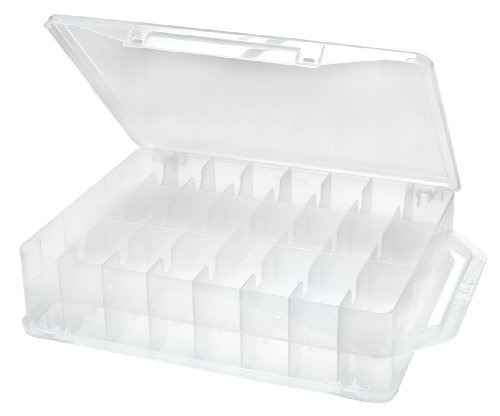
While intended for sewing thread, the Creative Options Thread Box is surprisingly effective for storing shank-style buttons. The vertical posts that typically hold thread spools act as perfect anchors for buttons with large eyelets or heavy shanks.
Using this method prevents buttons from stacking atop one another, which can lead to scratching or chipping on delicate finishes. It creates a vertical display that mimics a high-end haberdashery, making it easy to scan the entire collection at a glance.
The limitation here is strictly based on the size of the button shank and the diameter of the thread post. If the buttons have traditional two- or four-hole designs rather than shanks, this storage method will not be effective.
mDesign Stackable Organizer: Best Budget-Friendly Pick
The mDesign stackable organizer provides a clean, minimalist aesthetic for those just beginning to build a button collection. These clear, drawer-style bins are inexpensive and fit perfectly inside standard shelving units or beneath a desk.
For a knitter who is just starting to save buttons from old projects, these boxes offer enough structure to separate types without requiring a large initial investment. They stack cleanly, allowing the system to grow as the stash inevitably expands over time.
Because these units often lack individual compartment dividers, they are best paired with small, clear zip-top bags. Placing buttons into labeled bags before dropping them into the drawer keeps the collection from becoming a jumbled mess of mixed types.
Glenor Co Glass Lid Box: Best Display-Worthy Case
The Glenor Co glass lid box is the choice for the collector who views their button stash as a piece of functional art. With a velvet lining and a windowed top, this case protects buttons from dust while allowing them to serve as a visual inspiration for new knitting projects.
This style of storage is ideal for high-end or vintage buttons that are sensitive to air exposure or physical impact. The soft interior prevents the scratching of wood, resin, and delicate plastics, which is crucial for maintaining the luster of high-quality materials.
The glass lid is a beautiful feature but makes the box less durable for storage in deep drawers or heavy-traffic areas. Use this for a curated selection of “prized” buttons rather than a catch-all for every stray plastic button salvaged from mass-market apparel.
How to Choose the Right Box for Your Button Stash
The selection process should always start with an inventory assessment. Determine if the stash consists of a few dozen high-quality pieces or hundreds of mismatched spares.
- For large, varied collections: Choose modular drawer systems like Akro-Mils.
- For high-value, delicate buttons: Choose lined, glass-top boxes.
- For travel and accessibility: Choose snap-shut boxes with adjustable dividers.
Consider the physical space available in the workspace. A large cabinet might be efficient, but if it requires constant dusting, the effort might outweigh the convenience. Always prioritize ease of access, as a system that is difficult to navigate will eventually be ignored, leading to a return to clutter.
Smart Ways to Sort Your Button Collection
Sorting by color is the most intuitive method for many knitters, as it aligns with how yarn stash is often organized. However, for functional purposes, sorting by size and hole count is more practical when searching for a replacement for a specific cardigan.
Create a hybrid system that groups buttons by utility first—such as “large coat buttons,” “standard cardigan buttons,” and “tiny shirt buttons”—and then sub-sorts by color within those categories. This dual approach ensures that when a pattern calls for 20mm buttons, the search is narrowed down immediately.
Do not overlook the value of a “miscellaneous” bin for buttons that do not fit into the primary categories. This prevents the primary storage from becoming crowded with items that are unlikely to be used in standard projects.
Clear vs. Opaque: Which Box Style Is Better?
Clear containers allow for instant visual auditing, which is an enormous advantage when trying to match a button to a newly completed project. The ability to see the button through the plastic saves time and prevents unnecessary handling of the inventory.
Opaque or wooden boxes offer better protection against light-induced fading. Some vintage plastics, certain natural shells, and vibrant dyed buttons can lose their intensity if exposed to consistent direct light over many years.
If the collection is stored in a room with a window, choose opaque or dark-colored bins. If the buttons are stored in a closet or a drawer, clear bins are the superior choice for workflow efficiency.
Caring for Vintage and Delicate Buttons in Storage
Vintage buttons often possess fragile finishes, such as hand-painted details or intricate metal filigree, that require a gentle touch. Store these items individually or wrapped in acid-free tissue paper to prevent them from rubbing against one another and causing surface wear.
Avoid storing metal buttons alongside materials that might react to oxidation, such as certain plastics or porous natural woods. If a button has an unknown chemical composition, a dedicated, separate compartment is the safest course of action to prevent potential degradation.
Finally, keep all button storage in a cool, dry place. Humidity can wreak havoc on vintage metal shanks, causing rust that can bleed into the surrounding fabric of a finished sweater. A small silica packet tucked into a closed bin can provide an extra layer of protection against moisture damage.
Ultimately, the best organization system is one that aligns with the rhythm of the individual knitting process. Whether a knitter chooses a high-capacity cabinet for a massive hoard or a single elegant box for a prized few, the objective is to clear away the clutter and focus on the joy of completing a garment. With an organized stash, those final stitches—and the buttons that accompany them—will always be the perfect finishing touch.