6 Foam Boards For Lightweight Framing To Consider
Discover 6 durable foam boards for lightweight framing projects. Explore our top expert recommendations and choose the perfect material for your next display today.
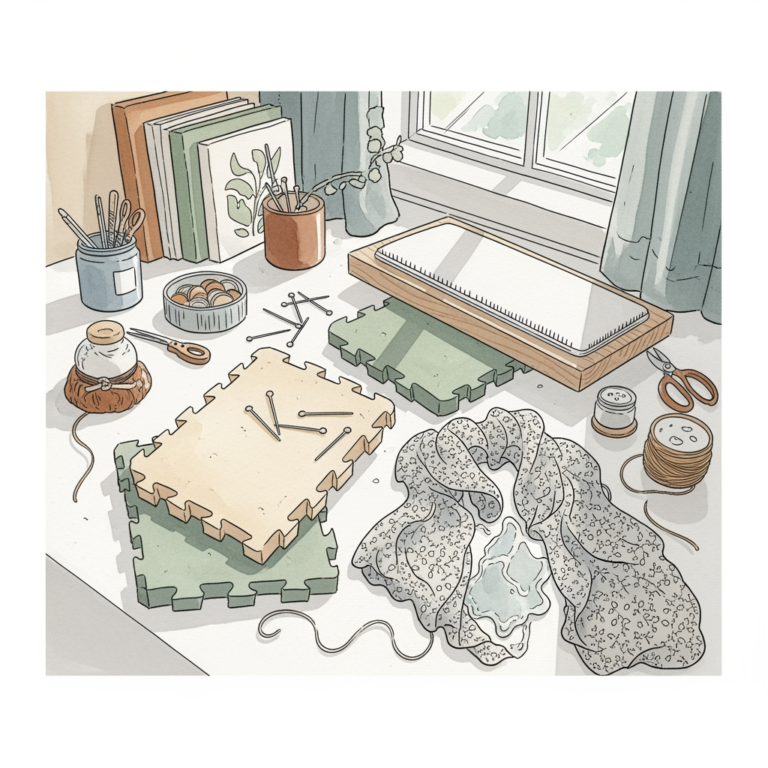
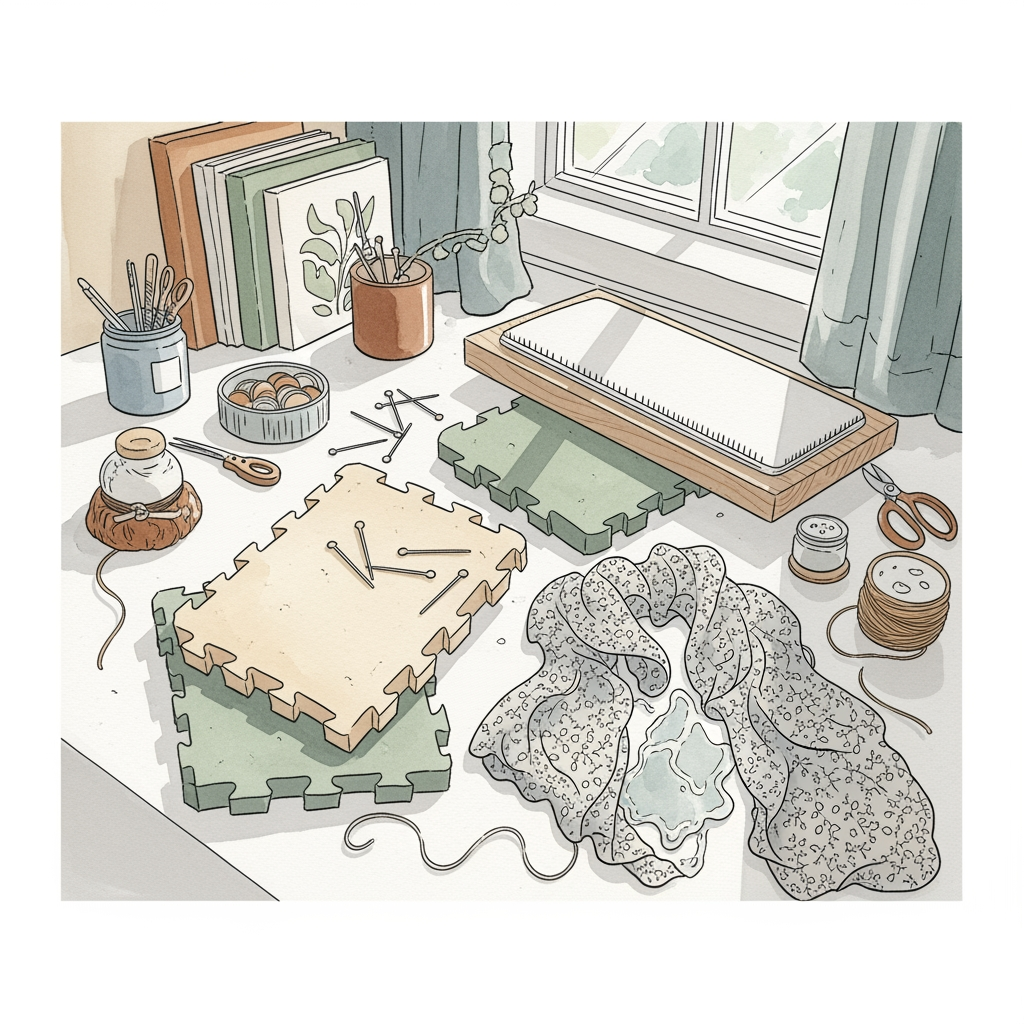
Blocking transforms a jumbled, uneven piece of knitting into a polished, professional garment. Without a flat, reliable surface, the delicate process of setting stitches into their final shape becomes an exercise in frustration. Choosing the right foam board depends on the scale of the projects and how frequently blocking is required. Investing in a quality surface ensures that the time spent on a complex lace shawl is never undermined by an uneven finish.
Knit Picks Blocking Mats: Best for Most Projects


These mats are the industry standard for a reason: they are thick, durable, and interlock with precision. The density of the foam provides enough resistance to hold T-pins securely without causing the mat to crumble over time.
For knitters who tackle a mix of sweaters and scarves, the modular nature of these squares is invaluable. The ability to configure the mats into long, narrow rectangles for shawls or a large square for a pullover is a major practical advantage.
The grid printed on the surface is a helpful guide for squaring off edges, though users should always verify dimensions with a measuring tape for high-stakes projects. These are a dependable, middle-of-the-road choice that balances durability with ease of storage.
Cocoknits Knitter’s Block Kit: The Premium Choice

The Cocoknits system elevates the blocking experience by pairing high-quality, heat-resistant tiles with a set of specialized accessories. The inclusion of T-pins and specialized pins, along with a waterproof storage bag, makes this a cohesive, professional-grade workstation.
The aesthetic of these mats is cleaner than typical craft-store alternatives, and the material is notably resilient to moisture. This is a significant factor when dealing with delicate fibers like lace-weight mohair or hand-dyed wool that require thorough soaking.
Choosing this kit is an investment in the long-term enjoyment of the craft. It removes the friction of searching for lost pins or mismatched boards, allowing focus to remain entirely on the tension and drape of the finished fabric.
Knitter’s Pride Blockers & Mat Kit: Best Starter Set

Beginners often find themselves overwhelmed by the sheer number of accessories needed for finishing, from blocking wires to rust-proof pins. This kit streamlines the process by bundling essential tools with a set of modular mats that are easy to manage.
The mats themselves are lightweight and feature a reliable interlocking mechanism that stays flush even under tension. This is critical for preventing “dimples” or gaps between tiles that can distort the shape of a blocking piece.
Because this kit includes everything needed to get started, it is the most logical purchase for someone transitioning from basic scarves to more complex garments. It eliminates the guesswork of buying components separately.
BalanceFrom Puzzle Mats: The Ultimate Budget Hack
Often found in the fitness section of hardware stores, these interlocking gym mats are an excellent alternative for knitters working on a strict budget. They provide an expansive, thick surface that is more than capable of handling heavy woolens or large blankets.
The trade-off is the lack of a printed grid, which requires the manual use of a ruler or a measuring tape to ensure symmetry. Furthermore, the foam may be slightly less dense than premium knitting-specific brands, meaning pins might require careful placement to avoid slipping.
This is a functional, no-frills solution for those who prioritize square footage over precision features. It serves the purpose perfectly as long as the user is comfortable marking their own guides or measuring as they go.
Scheepjes Blocking Mats: Ideal for Lace Projects

Lace knitting demands a surface that can withstand the intense, directional tension of wires. The Scheepjes mats are engineered with a specific density that prevents the edges from curling upward when aggressive tension is applied to fine, delicate yarns.
These mats are particularly effective for blocking circular shawls or complex motifs where consistent, even tension is non-negotiable. The material is durable enough to resist the repeated puncture marks created by the use of blocking wires.
If the primary focus is on intricate lace that requires aggressive stretching to open up the eyelets, these mats offer the necessary structural integrity. They are a tool designed for the specialized needs of the lace maker.
Lykke Crafts Blocking Mats: For the Style-Conscious

Lykke Crafts is known for blending utility with a sophisticated, minimalist design language. These mats follow that trend, offering a clean, understated look that appeals to makers who value the visual experience of their workspace.
Beyond the appearance, the mats function with high consistency. They are designed to be lightweight yet firm, making them easy to transport to a local knitting group or a retreat.
Choosing these is an acknowledgment that the process of knitting is as important as the outcome. They provide a reliable, aesthetically pleasing platform that turns a chore like blocking into a more enjoyable event.
What to Look For: Grids, Thickness, and Material
When selecting a board, the primary concern is the thickness of the foam. Anything less than half an inch may allow pins to pierce all the way through, potentially scratching the floor or furniture beneath.
Grids are a convenience, not a necessity, but they significantly speed up the process of squaring off a hem. Always check if the grid is printed on both sides or if it is heat-transferred, as some cheap prints can rub off onto light-colored yarns when wet.
The material should ideally be non-absorbent. If the foam soaks up the excess water from a freshly blocked garment, it can lead to mildew and unpleasant odors. A closed-cell EVA foam is the industry standard for a reason.
How to Properly Care for and Store Your Foam Boards
Maintenance is simple but essential for longevity. After every blocking session, wipe the surface down with a damp cloth to remove any yarn debris or dye transfer that might have occurred.
Ensure the mats are completely dry before stacking them for storage. If moisture is trapped between the tiles, the edges will eventually warp, leading to an uneven surface for future projects.
Keep the boards away from direct heat sources like radiators or intense, direct sunlight. Excessive heat can cause the foam to lose its shape or become brittle over time, compromising the accuracy of the grid.
Blocking 101: Pins, Wires, and Basic Technique
Blocking is the act of washing and setting the fiber to its intended dimensions. Start by soaking the garment in lukewarm water with a wool wash, then gently squeeze out excess moisture—never wring or twist the fabric.
Lay the piece flat on your foam boards and begin by pinning the corners first to establish the shape. If blocking lace, thread wires through the edges before pinning to ensure the points are even and smooth rather than scalloped.
Always use stainless steel or rust-proof pins to prevent permanent staining of your work. If using wires, ensure they are also high-quality, corrosion-resistant stainless steel to avoid damaging the yarn fibers.
FAQ: Can You Steam Block on These Foam Boards?
Steam blocking is a common technique for protein fibers like wool, but it requires caution when using foam boards. Most EVA foam mats can withstand light steam, but prolonged exposure to direct, high heat will melt or warp the foam permanently.
If steaming is necessary, keep the iron hovering at least an inch above the surface and use a pressing cloth as a buffer. Never press the hot iron plate directly onto the mat.
If a project requires aggressive steam setting, look for specialized, high-heat-resistant boards rather than standard foam mats. For the majority of blocking tasks, a cold soak is safer for both the fiber and the equipment.
Investing in a reliable set of blocking boards is one of the most practical steps a knitter can take to elevate the quality of their work. While budget options exist for those starting out, the long-term benefits of a durable, grid-lined, and moisture-resistant surface make a high-quality kit a worthwhile addition to any fiber artist’s toolkit. Choose the material and size that best fits the types of projects currently on the needles, and enjoy the satisfaction of a professionally finished garment every time.