6 Best Led Light Strips For Internal Illumination
Upgrade your home ambiance with our expert review of the 6 best LED light strips for internal illumination. Read our guide to find your perfect lighting today.
Precision lighting is as vital to a knitter as the right needle material or a consistent tension technique. Poor visibility leads to missed dropped stitches, incorrect cable crosses, and, most frustratingly, eye strain that cuts late-night knitting sessions short. Investing in the right internal illumination transforms a dark craft corner into a professional studio. These six options cater to different workspaces, ensuring that every loop and yarn-over is clearly visible.
Govee Smart LED Strip Lights: Best Overall


When versatility and color accuracy are the priority, these strips lead the pack. They offer a vast spectrum of whites, ranging from cool daylight for discerning dark-colored wools to warm tones for cozy evening sessions.
The app-based controls allow for granular adjustments, meaning the lighting can shift as the project progresses. For instance, high-contrast cool light makes it easier to track stitches on a dark navy mohair, while warmer light is less fatiguing for long marathons of stockinette.
These strips are best for permanent setups around crafting tables or shelving units. The reliable adhesive backing and high luminosity make these the definitive choice for dedicated knitting nooks.
Lunsy LED Sewing Machine Light: Budget Pick

This light is designed to be small, focused, and incredibly bright. While intended for sewing machines, its flexible gooseneck and compact footprint make it a secret weapon for precision knitting tasks.
It shines a concentrated beam exactly where the needles meet the yarn. This is invaluable when picking up stitches along a delicate edge or working with complex lace charts that require constant cross-referencing.
Because it attaches directly to a surface via adhesive or magnets, it keeps the workspace clutter-free. For those on a budget, this is the most practical way to eliminate shadows on the needle tips.
Luminoodle Light Rope: Most Portable Option
Portability is essential for knitters who move between the living room, the travel bag, and the stash room. The Luminoodle offers a diffused, rope-style glow that doesn’t produce the harsh glare of raw LED chips.
The flexible silicone casing allows it to be draped over a floor lamp or tucked into a project bag for easy setup. It provides a soft, ambient wash that reduces contrast-related eye fatigue without requiring a permanent installation.
While it lacks the brightness for highly intricate colorwork on black yarn, it is perfect for everyday projects. Choose this option if the knitting space changes frequently.
LIFX Lightstrip: Best for True Color Work
Color fidelity is the hallmark of the LIFX system. If a project involves stranded colorwork with subtle shifts in hue, accurate lighting prevents the accidental pairing of mismatched dye lots.
These lights offer a superior range of whites, allowing for a precise match to natural daylight levels. This is the only way to ensure that a finished project looks the same under artificial light as it does in sunlight during blocking.
The setup is robust and high-quality, though it comes at a higher price point. If the primary focus is complex colorwork, the color-rendering capabilities of these lights justify the investment.
WOBANE Under Cabinet Lighting Kit: For Shelves
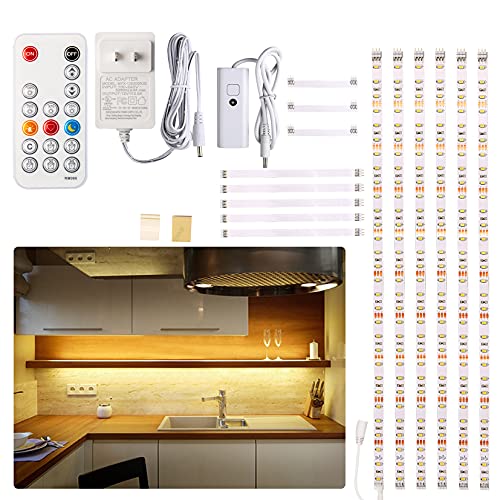
Yarn stashes often hide in deep, dark cabinets, making it difficult to find the right weight or fiber composition. Under-cabinet strips provide a crisp, clean light that illuminates every skein on the shelf.
These thin, low-profile strips disappear under the shelf edge, leaving only the light to do the work. This visibility helps prevent “stash amnesia,” where yarn buried in the back is forgotten for years.
Installation is straightforward, usually involving simple peel-and-stick backing. They are the most effective solution for keeping a large, organized yarn library accessible.
Philips Hue Lightstrip Plus: Most Adjustable
Integration is the standout feature of this system. It syncs with smart home setups, allowing for automated lighting schedules that match the natural flow of the day.
The strip is expandable and dimmable, meaning it can be customized to fit everything from a tiny corner desk to a massive craft wall. It transitions smoothly from intense work lighting to soft, ambient mood lighting for winding down after a long project.
Though the ecosystem is an investment, the quality of light is unmatched in terms of longevity. For the serious maker who wants a fully automated, professional-grade studio, this is the gold standard.
How to Choose the Right Light for Your Craft Space
Selecting the right light requires looking at more than just brightness. Consider the “color temperature,” measured in Kelvins (K), which dictates how accurately yarn colors appear to the eye.
Daylight bulbs (around 5000K to 6500K) are essential for distinguishing between navy, black, and charcoal, or for seeing the delicate twist of a fine silk yarn. Soft white bulbs (around 2700K) are better for reducing blue light exposure before sleep.
Look for a high Color Rendering Index (CRI) of 90 or above. A high CRI ensures that the yarn color you see while knitting is the color the finished item will actually be.
Why Color Temperature Matters for Your Yarn Stash
Knitting with dark yarns—black, deep espresso, or indigo—is notoriously hard on the eyes. Using a light with a high color temperature helps define the individual stitches, preventing skipped loops.
Conversely, working with light-colored, fluffy yarns like angora or mohair can cause glare under very cool, bright lights. In these cases, a slightly warmer light can reduce the harsh reflection off the fibers.
Always consider the fiber content. Superwash wool and synthetic acrylics reflect light differently than matte, high-twist cottons. Match the lighting temperature to the yarn’s reflective properties to maintain constant clarity.
Clever Ways to Light Up Your Crafting Nook
Effective lighting is rarely about one single source. Combining an overhead light for general visibility with a localized strip light for the hands creates a professional environment.
Use diffusers to soften the light if it feels too intense. A strip light mounted behind a knitting chair or underneath a shelf can provide excellent backlighting, which helps reveal the texture and drape of a project in progress.
Think about the angle. A light source placed slightly to the side of the knitting needles creates just enough shadow to help visualize the depth of the stitches. Layering light sources creates a more comfortable environment than a single harsh beam.
USB vs. Battery-Powered Lights: Which Is Best?
USB-powered lights provide consistent, high-intensity illumination without the need for frequent battery changes. They are ideal for permanent workstations where a power outlet is nearby.
Battery-powered options offer unmatched convenience for mobile knitting, but they often dim as the charge fades. This subtle decrease in brightness can lead to eye strain without the knitter realizing why.
Choose USB for reliability on long-term projects and battery power only for short-term travel needs. For consistent tension and stitch accuracy, always prioritize a steady power source over the convenience of batteries.
Proper lighting is not a luxury; it is a fundamental tool for every knitter, regardless of experience level. By choosing the right illumination for specific project needs, you protect your vision and ensure that every stitch is placed with confidence. Whether illuminating a deep yarn stash or focusing on intricate cable work, a well-lit space is the mark of a master maker.