6 Best Quilting Clips For Binding Heavy Layers
Struggling with thick fabric? Discover the 6 best quilting clips for binding heavy layers securely. Improve your sewing precision and shop our top picks today.
Binding a quilt is the final act of devotion that turns a stack of fabric layers into a finished heirloom. When working with heavy batting and multiple seams, keeping the binding perfectly aligned can feel as difficult as managing an unruly mohair yarn over-dyed in loose, slippery plies. Relying on the right tools makes the difference between a crisp, professional edge and a lumpy, frustrating finish. These six clips provide the structural support needed to keep bulky layers obedient during the sewing process.
Clover Jumbo Wonder Clips: The Gold Standard


Clover Jumbo Wonder Clips are the industry benchmark for a reason. Their wide opening accommodates the loftiest wool batting or multiple layers of thick denim quilts without sacrificing grip.
The flat base is a key design feature, ensuring the quilt rests level on the machine bed while moving under the presser foot. This stability mimics the way a high-quality circular needle allows stitches to glide effortlessly without catching on the join.
Because these clips apply consistent pressure across a wider surface area, there is less risk of fabric distortion. For projects involving heavy, high-loft batting, these are the most reliable option for preventing shifts in the binding.
Madam Sew Magic Clips: Best Bulk Value Option
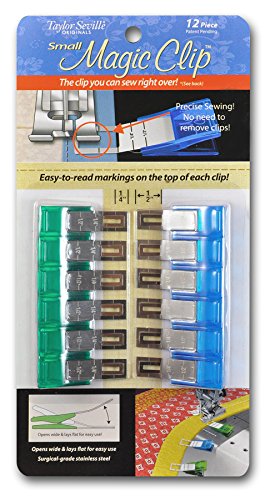
When tackling a large-scale project like a king-sized quilt, the sheer number of clips required can be daunting. Madam Sew Magic Clips provide a cost-effective solution for makers who need to secure the entire perimeter at once.
While the spring tension is slightly lighter than the premium options, they hold standard cotton layers with ease. These are ideal for the initial stage of binding where you need to hold the edges in place before beginning the stitching process.
The transparency of these clips is a subtle but helpful advantage. You can check the alignment of your seam allowance through the plastic, much like checking the stitch count on a transparent acrylic knitting needle.
Fons & Porter Binding Clips: For Mitered Corners
Mitered corners are the hallmark of a polished binding, but they are notoriously difficult to secure under tension. Fons & Porter Binding Clips are specifically shaped to handle the extra bulk inherent in those corner folds.
The unique geometry of these clips allows them to hug the corner tightly, keeping the mitered fold crisp while the needle maneuvers around it. This is similar to using a pointed dpn (double pointed needle) to hold a cable cross in place during a complex cabled sweater pattern.
These clips prevent the fabric from “traveling” or shifting during that critical turn. By locking the corner in place, they allow for a steady, rhythmic sewing speed that is essential for a clean result.
Dritz Quilting Binding Clips: A Reliable Classic

Dritz has a long history in the sewing notions market, and their binding clips reflect a design centered on utility and longevity. These clips are characterized by a strong, snappy spring mechanism that resists opening once set.
If you find that your clips frequently slip off when manipulating a heavy quilt through the neck of your sewing machine, this extra tension is a lifesaver. They are robust, compact, and designed to endure the wear of hundreds of projects.
The trade-off is that they require a bit more finger strength to open compared to lighter models. For makers with hand fatigue or arthritis, consider whether the trade-off in grip is worth the extra exertion.
Taylor Seville Long Clips: For Even Pressure
Taylor Seville Long Clips offer a unique profile that extends further into the binding than a standard clip. This extra length helps distribute the tension evenly along the edge of the quilt, preventing “puckering” or “bunching” between the clip placements.
The long, slim design is particularly useful when working with slippery fabrics like rayon or silk bindings. The increased surface area provides more friction, ensuring the layers stay aligned even if the fabric wants to slide.
Think of these as the equivalent of a long cable needle; they span a greater distance to ensure everything remains connected. When you need absolute control over a tricky border, the length of these clips provides superior security.
MumCraft Multipurpose Clips: Best Budget Pick

MumCraft clips have become a staple in studios because they offer a balance of price and performance that is difficult to beat. They feature a flat base and a solid spring that handles most standard quilt weights with no issue.
While they may lack the specialty design of corner-specific clips, their versatility is a strength. They work equally well for binding quilts, holding hem fabric in place, or even managing yarn tangles in a knitting basket.
If you are just starting your quilting journey, a large pack of these is the most logical first investment. They remove the barrier to entry by providing a functional, reliable toolset without the need to purchase specialized, high-end hardware.
How to Choose the Right Clip for Your Project
Selecting the correct clip depends entirely on the thickness of the quilt sandwich and the specific weight of the binding fabric. For a quilt with thick polyester batting, prioritize clips with wider jaw openings to prevent the clips from popping off prematurely.
Assess your own hand comfort, as repetitive clipping can be taxing on the joints. If you are working on a very large piece, ensure you have enough clips to secure at least two sides at once, which prevents the quilt from dragging and distorting the edges.
- High-Loft Batting: Choose Jumbo-sized clips.
- Slippery Fabrics: Choose clips with a wider footprint for more surface friction.
- Detailed Corners: Choose specialized, narrow-profile clips.
- Large Projects: Prioritize value packs to allow for full-perimeter clipping.
Clips vs. Pins: Which Is Better for Thick Layers?
Using steel pins on a thick quilt is often a recipe for frustration, as the pin can bend or, worse, draw blood when it pulls through the layers. Clips offer a safer, more efficient alternative that does not compromise the integrity of the fabric or the batting.
Pins require you to pierce the fabric, which can be difficult with dense, quilted layers. Clips simply clamp the edges together, leaving no holes and allowing you to adjust the binding position instantly without unpinning and re-pinning.
However, clips can occasionally get in the way of the presser foot, whereas pins can be left in place until the last possible second. The consensus among experienced makers is that for binding, the ease and safety of clips far outweigh the minor inconvenience of removing them as you sew.
How Many Clips Do You Really Need for a Quilt?
The number of clips required is proportional to the size of the quilt and the complexity of the binding. A general rule of thumb is to have at least one clip every three to four inches of binding.
For a standard throw-sized quilt, aim for a minimum of 50 clips to ensure the fabric remains taut and aligned. If you are working on a queen or king-sized project, having 100 or more clips allows you to prep the entire perimeter before you even sit down at the machine.
Do not be afraid to use more clips on the corners, where the fabric is most prone to shifting. Having an abundance of clips on hand reduces the mental load, allowing you to focus on the stitch rather than managing the fabric’s movement.
Tips for Clipping Your Binding for Even Results
Always start by aligning your binding and clipping the corners first to establish the anchor points. This prevents the fabric from creeping or stretching unevenly as you move around the perimeter.
When you reach a corner, use extra clips to create a crisp, sharp miter. If the binding feels loose, increase the frequency of your clips in that section rather than tightening the individual clip tension, which could cause the fabric to buckle.
Finally, place your clips with the flat side against the sewing machine bed to ensure smooth feeding. Keeping your work level and supported on a table rather than letting it drape off the side of the machine will prevent the weight of the quilt from pulling the binding out of alignment.
Investing in quality clips is a foundational step in elevating the quality of your finished quilts. By selecting the right tool for the weight of your layers, you ensure the binding remains a perfect, stable frame for your hard work.