7 Best Looms For Weaving Projects Worth Using
Explore our expert guide to the 7 best looms for weaving projects. Find the perfect tool to elevate your craft and start your next textile creation today.
Weaving is a natural evolution for any fiber artist who has spent years perfecting their gauge and obsessing over fiber content. Moving from yarn to fabric requires a shift in perspective, moving from a single continuous strand to the interplay of warp and weft. Selecting the right loom is the first step in translating those years of stitch expertise into woven cloth. This guide breaks down the best equipment to bridge the gap between yarn enthusiast and weaver.
Ashford SampleIt Loom: Best for Total Beginners


The Ashford SampleIt is essentially the gateway drug of the weaving world. Its compact footprint and straightforward rigid heddle system make it incredibly approachable for someone accustomed to standard knitting needles.
The loom is designed for small-scale projects like scarves, mug rugs, or fabric swatches. By limiting the width, it removes the intimidation factor often associated with larger floor looms.
Consider this the “swatch-making” station of the weaving world. Just as a knitter tests their gauge before committing to a sweater, a weaver uses the SampleIt to test color combinations and texture before a larger project.
Schacht School Loom: The Ultimate Beginner Frame Loom

Frame looms represent the simplest form of weaving, functioning similarly to a basic tapestry frame. The Schacht School Loom stands out for its high-quality construction and stability, which many cheaper alternatives lack.
This loom is ideal for those who prefer an intuitive, tactile experience over the mechanical process of threading a rigid heddle. It forces the weaver to interact directly with the warp, helping to build a foundational understanding of how fibers cross and tension.
While it lacks the speed of a shed-based loom, it is perfect for wall hangings and decorative fiber art. If the goal is to master basic tabby weaves without complex setup procedures, this is the tool.
Schacht Flip Rigid Heddle Loom: Best Versatility

The Schacht Flip is the gold standard for those who want a serious weaving machine that folds up when not in use. It is a true workhorse, capable of producing everything from delicate lace-weight scarves to heavy, textured rugs.
Its folding mechanism is a massive advantage for crafters living in smaller spaces. Unlike a fixed loom that dominates a room, the Flip can be tucked into a closet, keeping the workspace clutter-free.
The rigid heddle allows for tensioning that rivals larger floor looms. When you move to more complex yarns—such as linen or silk—the precision of this loom helps maintain even selvedges and consistent width throughout the project.
Ashford Inkle Loom: Best for Weaving Belts & Bands

Inkle looms are highly specialized, designed for the narrow, warp-faced weaving often seen in straps, belts, and guitar slings. The tensioning system is precise, allowing for very tight, sturdy fabrics that hold up to heavy use.
Knitting often leaves makers with ends of high-quality wool or cotton that aren’t quite enough for a garment. An inkle loom is the perfect destination for those leftover bits of sturdy, high-twist yarn.
The mechanics are different here, as the tension is adjusted via a tension peg. This creates a drum-tight warp, which is exactly what is needed for durable, non-stretchy bands.
Mirrix Saffron Pocket Loom: Best for Tapestry on the Go
The Mirrix Saffron is a heavy-duty, professional-grade tool shrunken down to a portable size. It utilizes a shedding device, which allows for much faster weaving than a standard frame loom, yet it fits easily into a project bag.
Tapestry weaving is a slow, methodical process that benefits from the ability to work in short bursts. Having a loom that travels well means that time spent waiting in a car or at an appointment can become productive studio time.
Because it is made of metal rather than wood, there is no risk of warping or splintering over time. It is a lifetime investment for a fiber artist who prioritizes durability and portability.
Beka Rigid Heddle Loom: Best Budget-Friendly Pick

The Beka loom offers a sturdy, functional design at a price point that makes the hobby accessible to those hesitant to spend hundreds of dollars. It provides the full rigid heddle experience without the premium finish of boutique models.
While it may lack some of the advanced ergonomics of higher-end looms, it performs the fundamental task of weaving perfectly. It is an excellent choice for a knitter who wants to experiment with weaving without sacrificing their yarn budget.
Maintenance is simple: keep the wood clean, and ensure the tensioning knobs remain clear of dust. It is a solid, no-frills entry point that doesn’t sacrifice the quality of the final fabric.
Schacht Baby Wolf Loom: The Best Compact Floor Loom
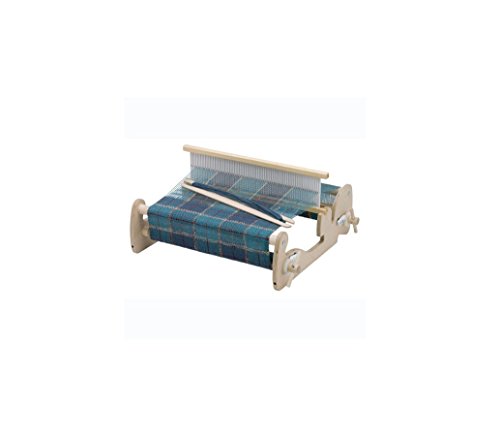
The Baby Wolf is the final destination for the serious hobbyist who is ready to move beyond the rigid heddle. This is a multi-shaft jack loom, allowing for intricate pattern weaves that are simply impossible on simpler equipment.
Moving to a floor loom is like moving from knitting flat on needles to using a high-end, computerized knitting machine. It opens up a massive world of twill, overshot, and complex draft patterns.
Despite being a floor loom, it is remarkably compact. It handles long, complex warps with ease, making it the perfect tool for weaving yardage for custom-made garments.
How to Choose the Right Weaving Loom for Your Craft
Selecting a loom depends entirely on the end goal. If you want to weave decorative wall hangings, a simple frame loom is sufficient. If you want to create fabric for garments, look toward rigid heddle or floor looms.
Consider your storage space first. A loom that is difficult to set up or store will inevitably gather dust.
Finally, factor in the complexity of the patterns desired. If you enjoy chart reading and complex lace patterns in knitting, you will eventually find yourself wanting the multi-shaft capabilities of a floor loom.
Frame vs. Rigid Heddle vs. Floor Looms Explained
- Frame Looms: These are basic frames with no shedding device. They are slow and best for tapestry or weaving small, unique art pieces.
- Rigid Heddle Looms: These utilize a “heddle” to lift and lower threads, creating a shed. They are the best balance of speed, cost, and versatility for most weavers.
- Floor Looms: These utilize foot pedals (treadles) to operate multiple shafts. They provide the most control and the ability to create complex, repetitive patterns across large lengths of fabric.
Essential Weaving Tools and Accessories to Get Started
To begin weaving, you need more than just the loom itself. A sturdy shuttle is essential for passing the weft through the warp, and a threading hook is necessary for setting up the loom initially.
- Stick Shuttles: Used to hold and pass the weft yarn.
- Pickup Stick: Used to manually pick up specific warp threads to create patterns.
- Warping Board: Required to measure the warp threads to the correct length before mounting them.
- Tapestry Needle: Essential for finishing ends and performing hem stitching.
Invest in a quality warping board early on; it is the most critical tool for ensuring your warp tension remains consistent from start to finish. Without an even warp, no loom—no matter how expensive—will produce a professional-quality piece of cloth.
Choosing a loom is a personal process that should mirror your growth as a fiber artist. Start with a tool that solves an immediate creative itch, and allow your studio to evolve as your skills demand more sophisticated machinery.