6 Best Toggle Buttons For Decorative Bag Closures
Discover 6 best toggle buttons for decorative bag closures to elevate your handmade designs. Explore our top hardware picks and start your next project today.
Selecting the right hardware for a handmade bag is just as critical as choosing the correct yarn weight for a sweater. A toggle closure serves as both a functional security feature and a structural design element that defines the overall aesthetic of a project. When the wrong closure is chosen, the weight of the bag can cause it to sag or slip open unexpectedly. This guide explores the best toggle options to ensure your hand-knit or crocheted bags remain as secure as they are beautiful.
Juliette Carved Wood Toggles: Best Artisan Pick


Juliette carved wood toggles bring an immediate sense of heirloom quality to any handmade bag. These pieces often feature intricate floral or geometric patterns that pair beautifully with cable-knit wool or thick, rustic tweed bags.
Because wood is an organic material, each toggle possesses unique grain variations that add a bespoke finish to high-end projects. Their warmth creates a tactile contrast against the cool, smooth texture of synthetic or plant-based fibers.
- Weight: Lightweight, making them ideal for delicate project bags.
- Vibe: Sophisticated, bohemian, and textural.
- Best for: Projects where the closure is intended to be the focal point of the design.
Be mindful that wood can sometimes have slightly rough edges depending on the finish. Before sewing these onto a finished bag, lightly sand any burrs to ensure they do not snag your delicate yarn loops.
Cocobolo Horn Toggles: Top Natural Material

Cocobolo horn toggles offer unparalleled durability and a luxurious, polished aesthetic. These are dense and heavy, providing a satisfying weight that helps keep the top of a bag closed through gravity alone.
The dark, rich tones of cocobolo complement deep, jewel-toned yarns like navy, forest green, or burgundy. Unlike lighter woods, horn is incredibly dense and resistant to splitting, making it a sound investment for bags intended for daily heavy-duty use.
- Durability: Exceptionally high; resistant to cracking and moisture.
- Texture: Naturally slick, allowing for smooth operation when opening and closing.
- Maintenance: Occasional conditioning with a tiny drop of mineral oil maintains the deep luster.
These toggles are a standout choice for high-traffic items like market bags or commuter totes. While they command a higher price, their longevity far outlasts many synthetic alternatives.
Streamline Metal Toggles: Sleek & Modern Bags
Metal toggles provide a crisp, industrial look that perfectly complements minimalist or modern knit designs. They are often finished in brass, nickel, or matte black, offering a sharp contrast to soft, matte yarn textures.
When using metal, ensure the finish is clear-coated or plated to prevent oxidation or color bleeding into the yarn over time. These toggles are usually slim in profile, which makes them an excellent choice for designs that require a low-profile closure.
- Weight: Heavier than wood or polymer, which may affect the drape of thin fabrics.
- Style: Modern, structured, and precise.
- Tradeoff: Metal can be cold to the touch and occasionally slippery if the bag is overstuffed.
Always check the inner edges of metal toggles for sharp seams or casting flash. A smooth toggle protects your yarn loops from abrasion, ensuring your bag’s closure lasts as long as the fabric itself.
Leather-Wrapped Toggles: Best for Rustic Looks

Leather-wrapped toggles bridge the gap between hard hardware and soft fiber accessories. They offer the structured shape of a toggle but with a softer, more forgiving surface that won’t scratch or abrade surrounding knit stitches.

They are the gold standard for rugged, outdoorsy projects like wool rucksacks or thick-gauge messenger bags. The combination of leather and yarn creates a classic, heritage look that improves as it ages and develops a natural patina.
- Durability: High, provided the leather is high-quality grain.
- Compatibility: Excellent for most yarn types, especially wool and wool blends.
- Warning: Avoid machine washing bags with leather toggles, as water can cause the leather to stiffen or bleed dye into the surrounding stitches.
For the most secure fit, choose leather toggles that feature a stitched core. These are less likely to deform under the tension of a heavy bag compared to purely glue-constructed versions.
Brighton Polymer Toggles: Maximum Color Pop
Brighton polymer toggles are the ideal choice when the design calls for a specific, vibrant color palette that natural materials cannot provide. These are often molded with clean, modern lines and offer a lightweight alternative for larger, oversized bags.
Polymer is remarkably resistant to environmental changes and does not splinter or rust. If you are creating a project for a child or a casual, light-hearted accessory, the endless color range of these toggles allows for perfect matching or intentional, high-contrast play.
- Weight: Very light; will not weigh down knit fabric.
- Customization: Available in a vast array of opaque and translucent finishes.
- Budget: Generally the most accessible option for large-scale projects or bulk manufacturing.
Keep in mind that polymer is susceptible to scratching over time. If the bag is destined for a rough environment, choose a matte or textured finish rather than high-gloss to hide potential scuffs.
Classic Duffle Coat Toggles: Budget-Friendly
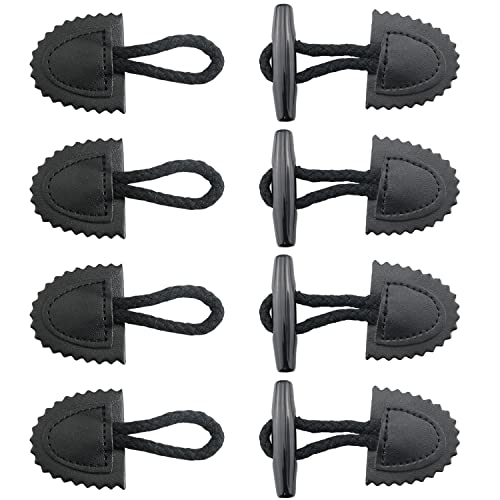
Modeled after traditional outerwear closures, these toggles are intentionally oversized and designed for high-stress applications. They offer a nostalgic, collegiate aesthetic that works exceptionally well on thick, chunky-knit winter bags.
These are typically sold in sets with accompanying leather or fabric tabs, making them extremely easy to attach. Because they are designed to hold coats closed against the wind, they provide the strongest security of any toggle style listed here.
- Security: Superior grip due to the long, tapered shape.
- Installation: Usually requires sewing through pre-punched holes in the tabs rather than the toggle itself.
- Best for: Heavy-weight projects made with bulky or super-bulky yarn.
These toggles are functional workhorses. While they may not provide the refined artisan look of carved wood, they are unmatched for structural stability on heavy-duty bags.
How to Pick the Right Toggle Size for Your Bag
Choosing the size of a toggle is an exercise in proportion and physics. A toggle that is too small for the bag’s loop will slip out constantly, while one that is too large will strain the fabric and cause the bag’s opening to warp.
As a general rule, the length of the toggle should be roughly 1.5 times the width of the loop when the loop is laid flat. If you are using a very thick, heavy yarn, increase the size of the toggle to ensure it can bridge the gap without getting buried in the stitches.
- Small (under 30mm): Best for small clutches or delicate embroidery-style bags.
- Medium (30mmâ50mm): The versatile standard for most everyday bags and purses.
- Large (over 50mm): Necessary for heavy totes and bags where the load causes the closure to experience significant tension.
Always test your chosen toggle with a test swatch of your bag’s yarn. If the toggle feels difficult to push through the loop, increase your loop size before finishing the bag.
Attaching Toggles: Loop vs. Sew-Through Holes
Toggle attachments fall into two categories: toggles with built-in sewing holes and toggles that require a separate loop or shank. Toggles with holes are sewn directly onto the fabric, which provides a very stable, fixed position.
If you choose a toggle without holes, you must sew a sturdy shank or create a leather tab to hold it in place. Using a shank creates a pivot point that allows the toggle to move freely, making it easier to thread through the closing loop.
- Sew-Through Holes: Best for fixed, non-moving decorative applications.
- Shank/Loop Mounting: Superior for functional closures where ease of use is the priority.
- Expert Tip: Always use a heavy-duty nylon or waxed thread when attaching toggles to prevent the weight of the bag from pulling through the stitches over time.
Never rely on the yarn itself to hold the toggle if the bag is intended to carry heavy loads. Use a reinforcing backing button on the inside of the bag to distribute the pressure and prevent the toggle from tearing through the knitting.
Making the Perfect Toggle Loop With Your Yarn
The loop is just as important as the toggle itself. It must be strong enough to withstand tugging and flexible enough to allow the toggle to pass through smoothly. A simple crochet chain is rarely strong enough for a functional bag closure.
Instead, use a reinforced technique like an i-cord or a braided cord made from your project yarn. If you are using a delicate yarn, carry a strand of nylon reinforcement thread alongside your knitting yarn to increase the tensile strength of the loop.
- I-Cord Loops: These are cylindrical, sturdy, and look professional.
- Crocheted Foundation Cord: A tighter, more dense option for smaller closures.
- Placement: Ensure the loop is secured to the bag fabric with a wide “tack” or cross-stitch to prevent it from pulling loose under load.
A well-made loop should have no stretch. If the loop is too elastic, the toggle will pop out the moment the bag is lifted.
Wood vs. Horn vs. Metal: Which Lasts Longest?
When comparing longevity, structural integrity is the primary factor. Horn and dense hardwoods are organic and can last for decades if kept dry, whereas metal can be vulnerable to corrosion if the plating wears off.
Polymer is the most stable material regarding environment, but it lacks the weight and “feel” of natural materials. If the bag will be frequently exposed to rain or damp conditions, non-porous metal or polymer is the better choice.
- Highest Longevity: Cocobolo horn or high-density, treated hardwoods.
- Most Environmental Resistance: Stainless steel or high-grade polymer.
- Lowest Longevity: Soft woods or plated base metals that can scratch or rust.
Ultimately, longevity is determined by the quality of the finish. A high-quality wood toggle with a durable varnish will easily outlast a low-grade, porous metal toggle that has not been properly sealed.
Selecting the right toggle is a final, vital step in elevating a project from a simple craft to a lasting accessory. By matching the weight, material, and attachment style to the specific needs of your bag, you ensure that the closure functions as reliably as it looks. Take the time to test your hardware before the final bind-off, and your finished piece will be both durable and professionally polished.