7 Best Foldable Laptop Trays For Couch Crafting
Upgrade your workspace with our top 7 foldable laptop trays for couch crafting. Browse our expert reviews and find the perfect ergonomic stand for your home today.
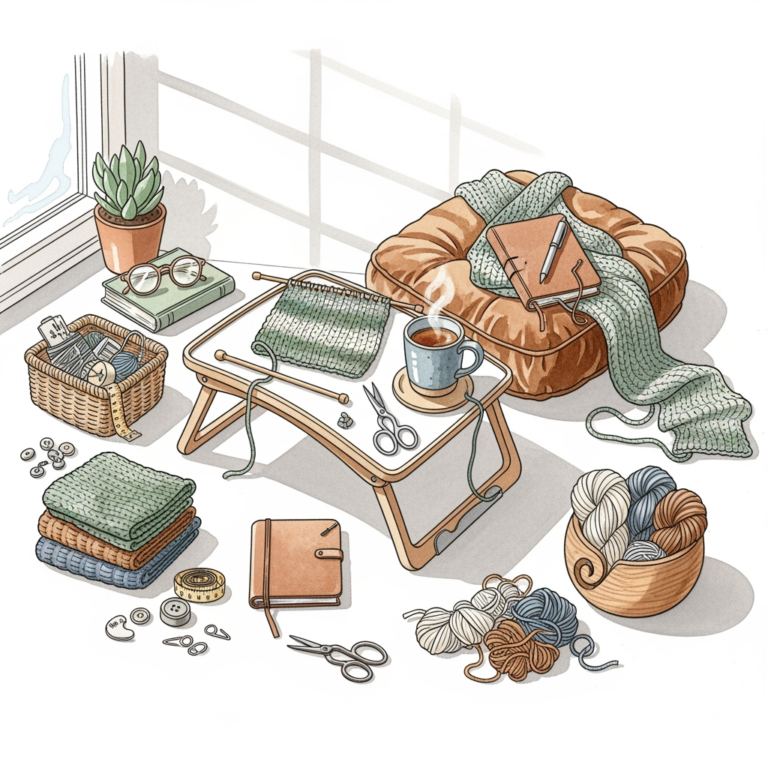
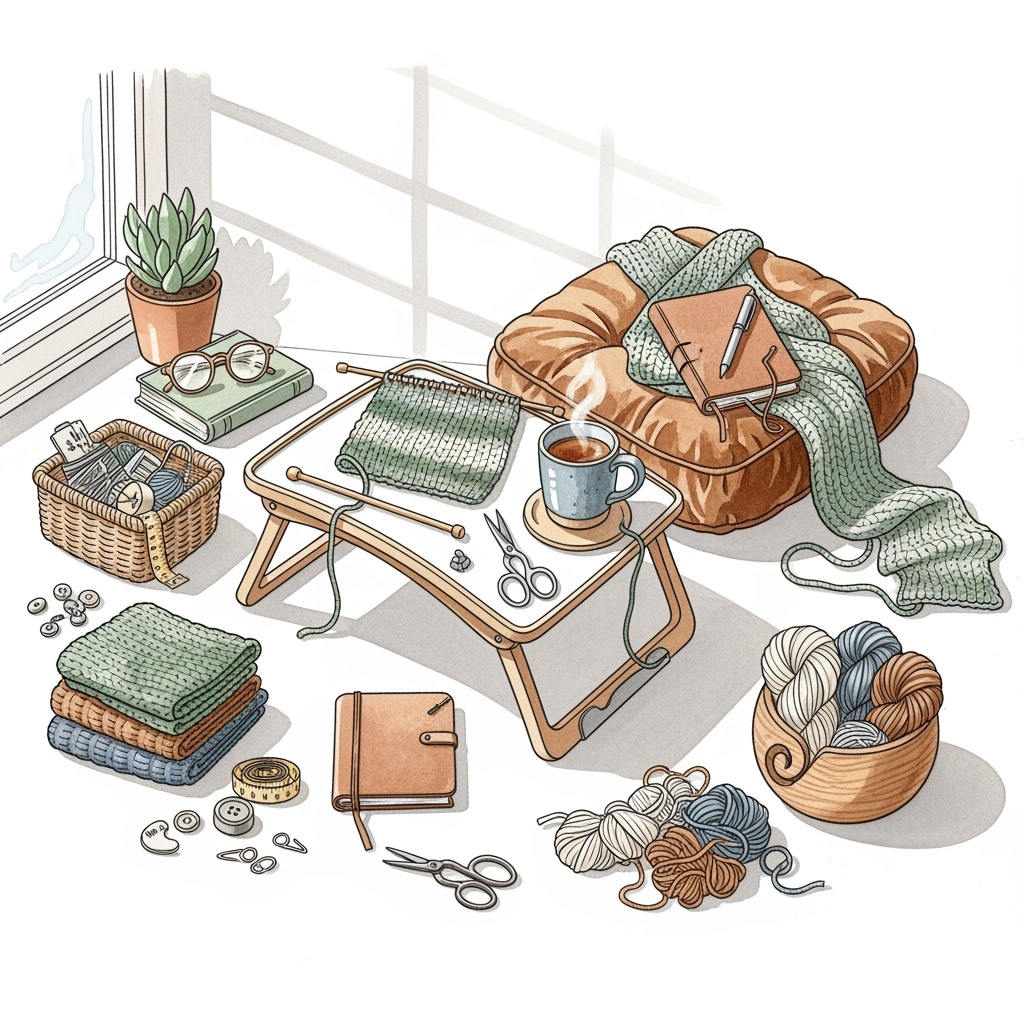
Couch crafting requires a delicate balance between total comfort and the ergonomic support needed for long hours of lace work or complex cables. A standard coffee table is often too low, forcing the shoulders to hunch and putting unnecessary strain on the neck and wrists. These foldable trays bridge the gap, bringing essential tools and project bags to a reachable, elevated position. Investing in the right surface transforms a marathon knitting session from a recipe for back pain into a restorative, productive experience.
Saiji Laptop Bed Tray: Best Overall Stability


Stability is the primary requirement when working with heavy projects, such as a weighted wool blanket or a cabled sweater on long circular needles. The Saiji tray provides a rigid, wobble-free surface that resists shifting even when a project bag is placed on one side.
This tray features a robust locking mechanism for its legs, ensuring they stay put on plush or deep-cushioned couches. If the knitting rhythm involves vigorous movement or if circular needles are frequently bumping against the tray, this level of structural integrity prevents accidental tool drops.
The surface material is smooth enough to allow for easy repositioning of notions cases but stable enough to keep a pair of scissors from sliding off during a change in posture. For the maker who values a rock-solid foundation for delicate needlework, this is the premier choice.
Cooper Mega Table: Best for Sprawling Projects

Large-scale projects, such as stranded colorwork shawls with multiple yarn bobbins, require a surface that can accommodate both the work-in-progress and the necessary accessories. The Cooper Mega Table offers a generous footprint that prevents yarn cakes from tangling with each other or falling into the couch crevices.
With enough room to spread out a printed pattern alongside a circular needle case and a stitch counter, this table acts as a portable craft station. It is particularly useful when working on multiple sections of a garment simultaneously, keeping charts visible and tools organized.
Because the surface is quite wide, it provides ample “landing space” for resting wrists or forearms during long sessions. This table is the ideal solution for the advanced knitter who treats the couch like a dedicated, sprawling studio space.
Songmics Bamboo Desk: Best Natural Aesthetic
Natural materials offer a tactile satisfaction that synthetic desks often lack, making the Songmics Bamboo Desk a favorite for those who appreciate the organic nature of wool and silk fibers. Beyond its aesthetic appeal, bamboo is lightweight yet surprisingly durable, standing up well to the occasional spill of tea or water.
The finish on bamboo surfaces is generally smooth, which is vital for preventing delicate lace yarn from snagging. This desk is specifically well-suited for makers who prefer to surround themselves with natural textures while working with luxury fibers like cashmere or mohawk blend yarns.
Care should be taken to ensure the edges are buffed, as natural materials can occasionally develop small splinters over time. For the knitter who prioritizes a serene, nature-inspired environment, this tray combines functional utility with a warm, artisanal feel.
Avantree Table: Most Adjustable & Ergonomic
Ergonomics are non-negotiable when knitting for extended periods, as repetitive motion can lead to significant strain. The Avantree table excels here because it offers precise height and tilt adjustments, allowing for a customized fit regardless of couch depth or seating position.
Tilting the surface slightly can bring the knitting work closer to eye level, which naturally encourages better posture. This adjustment is a game-changer for those tackling complex colorwork or embroidery, where visual accuracy is as important as stitch tension.
Be mindful that a tilted surface requires a reliable stopper to keep patterns and yarn balls from sliding off. If physical comfort and neck health are the primary motivators, the adjustability of this model makes it a top-tier investment.
HUANUO Lap Desk: Top Budget-Friendly Choice
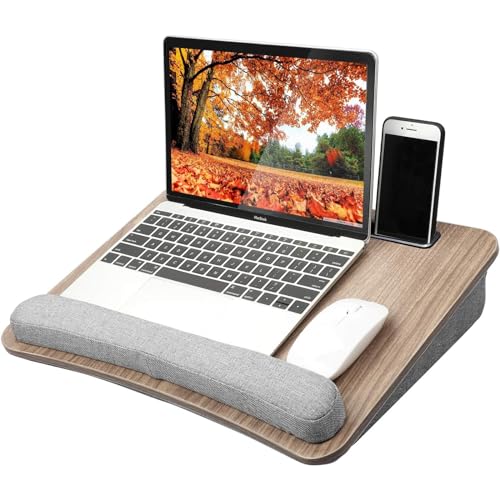
Not every project requires a full-scale table, and the HUANUO lap desk offers a practical, portable solution for smaller projects like socks, mittens, or baby booties. This model rests directly on the lap, providing a flat surface that is easier to navigate than the uneven terrain of a sofa cushion.
The cushioned base conforms to the body, making it feel less intrusive than a rigid table with folding legs. It is an excellent choice for a knitter who tends to shift positions frequently or who prefers to keep their project close to their lap rather than on an elevated platform.
While it lacks the height of a traditional tray, its simplicity and price point make it highly accessible. This is the go-to tool for the casual knitter or those working on smaller, low-bulk items who want a stable surface without the footprint of a full table.
Nearpow XL Table: Widest Surface for Tools
When working on a complex project that requires a dizzying array of notions—removable stitch markers, crochet hooks for dropped stitches, gauge rulers, and measuring tapes—a wide surface is essential. The Nearpow XL offers an expansive workspace that keeps every tool within peripheral vision.
The increased width also allows for a larger project bag to sit securely without interfering with the needles themselves. For knitters who frequently use multiple needles or who need a dedicated space for a tangle-free yarn bowl, the extra surface area prevents the workspace from feeling cramped.
One trade-off is that this table requires more room on the couch, which may limit seating space for others. This is the professional-grade choice for the knitter who keeps a full inventory of tools at the ready during a project.
Nnewvante Tray Desk: Most Lightweight & Portable
Portability is key for knitters who rotate between their living room, bedroom, and perhaps a travel destination or a local knitting group. The Nnewvante tray is exceptionally light, making it easy to collapse and store or move from room to room without effort.
Despite its weight, it remains sturdy enough for standard knitting tasks, though it may not hold up to very heavy projects that require a firmer base. The tray folds flat quickly, which is a major advantage for knitters living in smaller spaces where storage is at a premium.
If the goal is to have a simple, reliable surface that appears and disappears as needed, this is the most effective design. For the minimalist knitter who values speed and ease of movement, this tray is the perfect companion.
What Crafters Need in a Couch Crafting Tray
A successful craft tray must be more than just a flat board; it acts as an extension of the workbench. Look for features like a smooth finish to protect delicate yarns and a lip or edge to prevent needles and notions from sliding off.
Think about the weight of the projects typically worked on. A heavy, hand-spun wool sweater on a large wooden circular needle creates a different set of requirements than a light pair of cotton socks.
- Stability: Can the legs handle the weight of a heavy project bag hanging off the edge?
- Surface Texture: Is the surface prone to snagging fibers, or is it polished and safe for delicate lace?
- Foldability: Does it collapse small enough to slide under a couch when not in use?
Surface Grip: Keeping Your Notions in Place
One of the most frustrating experiences in crafting is losing a stitch marker or a tapestry needle in the couch cushions. Using a tray with a slightly grippy surface or adding a thin, non-slip mat can prevent this frustration entirely.
Avoid surfaces that are excessively sticky, as these can make it difficult to slide patterns or yarn cakes. A simple felt or silicone mat placed atop the tray often provides the perfect amount of friction for needles and notions.
Always evaluate how items interact with the surface before settling in for a long session. A bit of preventative grip is worth hours of not having to dig through sofa cushions for a lost needle.
Tray Height vs. Your Couch: Finding the Right Fit
The relationship between the tray height and the couch cushion depth is the most important ergonomic factor. If the tray is too high, it forces the elbows upward, creating tension; if it is too low, the neck will inevitably dip forward.
Measure the distance from the couch seat to the elbows while seated in a relaxed, knitting-ready position. Most adjustable tables can be dialed into this exact height, provided they have a sufficient range of motion.
Prioritize models that offer locking heights to ensure the table doesn’t collapse under the weight of the arms. Finding that “sweet spot” where the hands can knit comfortably without the shoulders shrugging is the secret to pain-free, long-term crafting.
Choosing the right couch craft tray is a matter of matching the tool to the specific habits of the maker. Whether a preference lies in the expansive room of a mega table or the portability of a lightweight tray, the ultimate goal is to foster a comfortable environment that encourages creativity. By prioritizing stability and ergonomic fit, these trays ensure that every stitch is placed with ease, allowing for years of enjoyable and productive crafting.