6 Tabletop Easels For Music Sewing To Organize Crafts
Discover the 6 best tabletop easels for music and sewing to organize your craft supplies efficiently. Read our expert guide and upgrade your workspace today.
Staring at a complex lace chart while trying to keep track of a row count often leads to unnecessary errors and fatigue. Proper pattern management is as vital to a successful project as choosing the right needle material or yarn weight. A dedicated tabletop easel keeps your instructions at eye level, saving your neck and reducing the chance of losing your place mid-row. Investing in a reliable stand transforms the crafting experience from a cluttered struggle into a focused, rhythmic practice.
Manhasset 53D: Best for Heavy Pattern Binders


The Manhasset 53D is built like a tank, designed to withstand the weight of even the thickest heavy-duty binders. If the current project involves a massive cable-knit sweater pattern with dozens of pages of charts, this stand will hold firm without buckling.
Many knitters keep their patterns in multi-ring binders with plastic sheet protectors to prevent staining from hand lotions or fiber dust. Lightweight stands often tip over under this kind of bulk, but the sturdy base of the 53D provides the necessary stability for heavy loads.
This is not a space-saver for a cramped coffee table, as it occupies a significant footprint. However, for a dedicated crafting desk, the stability is worth every inch of room.
A+ Book Stand: Best for Holding Tablets & Charts
Modern knitting often relies on digital patterns displayed on tablets, which require a stand that can handle both the weight and the specific angle of a touch screen. The A+ Book Stand features adjustable arms that accommodate the slim profile of an iPad or Android tablet without obscuring the navigation buttons.
This stand excels at holding digital devices securely while also being thin enough to prop up a printed chart when working on lace motifs. The clips are gentle on paper, ensuring that delicate printed patterns do not tear when shifted or turned.
Avoid placing this stand on a slick surface without a grip mat underneath. While it holds devices well, the base can slide if nudged by a ball of yarn rolling across the table.
Sun-Star Look-It Stand: Best Budget-Friendly Pick
The Sun-Star Look-It Stand proves that organization does not require a significant financial investment. It is a simple, no-frills tool that does exactly what it is designed to do: prop up a single page or a lightweight pattern booklet.
It is ideal for knitters who work on smaller projects like socks or hats where the pattern is limited to a few sheets. Because it is compact, it can easily tuck away into a knitting bag when traveling to a local knitting group or guild meeting.
Do not expect this stand to hold a heavy hardbound reference book. It is a lightweight solution intended for portability and basic pattern holding.
Wishacc Bamboo Bookstand: Most Portable Option
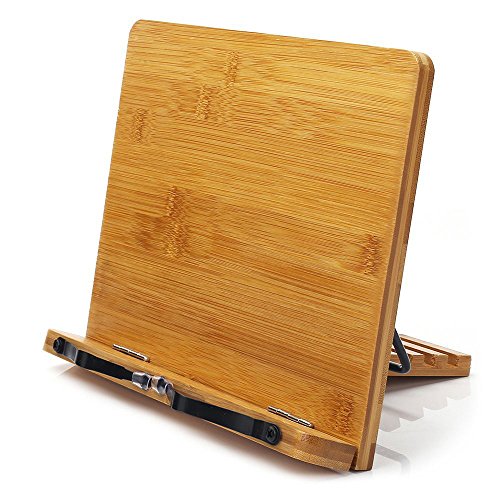
Bamboo is a prized material in the fiber arts world for its combination of lightness and durability, mirroring the properties of quality bamboo knitting needles. The Wishacc Bamboo Bookstand captures this utility, offering a folding design that lays flat enough to slip into a project tote bag.
The adjustable angle settings allow for precise customization, which is essential if overhead lighting causes glare on a digital screen or a laminated chart. Being able to change the viewing angle significantly reduces eye strain during long sessions of working through complicated stranded colorwork.
Take care to wipe down the surface occasionally, as natural bamboo can harbor dust from woolen fibers over time. Keep it away from humid environments to ensure the hinges remain smooth and responsive.
Readaeer Adjustable Stand: Most Versatile Pick

Versatility is the hallmark of the Readaeer Adjustable Stand, which functions as both a document holder and a stable platform for a laptop. This makes it an excellent choice for the multipurpose craft room where the workspace might transition from pattern drafting to pattern reading.
The metal construction provides a rigid support system that holds thick knitting books open without the pages flipping shut. When tackling a new technique from a comprehensive stitch dictionary, having a stand that can lay wide open is a major advantage.
While it is more robust than a basic wire stand, it remains simple to adjust. For those who frequently swap between different types of media, this is the most reliable “do-it-all” option.
Jaswig Nomad Stand: Best for Ergonomic Crafting
Ergonomics in the craft room is often overlooked until back pain or neck strain begins to interfere with productivity. The Jaswig Nomad Stand is engineered to raise your pattern to a height that promotes a natural, upright posture while you work.
Using this stand encourages you to sit correctly rather than hunching over your needles. By maintaining better alignment, you can sustain longer knitting sessions without the physical fatigue that usually sets in after a few hours of colorwork or complex cables.
The price point is higher than basic plastic stands, but it serves as an investment in long-term physical health. It is the premier choice for the dedicated maker who considers crafting a lifelong hobby.
How to Choose the Best Easel for Your Craft Space
Selecting the right stand depends largely on the physical nature of your patterns. If you primarily work from digital files, prioritize stands with cable management or open designs that don’t block charging ports.
Consider the surface area of your workspace. A large stand in a small area can cause more frustration than it solves. Assess how much physical weight your typical pattern binder has before committing to a lightweight, portable stand.
Always look for a design that allows for angle adjustment. Knitting requires looking down constantly, so being able to tilt your pattern upward can save your neck from hours of static, strained positioning.
Metal, Wood, or Bamboo? Picking Your Stand Material
Material choice is not just an aesthetic decision; it dictates the longevity and functionality of the stand.
- Metal: Offers superior weight and stability, ideal for heavy reference books and large binders.
- Bamboo: Lightweight, sustainable, and visually warm, making it perfect for portable setups.
- Plastic: Often the most affordable, but can be brittle and prone to sliding on smooth surfaces.
Choose metal if you are working with large, hardbound pattern collections. Opt for bamboo if you move your project from the living room to the kitchen table frequently.
Beyond Patterns: Using Your Easel for Organization
An easel is not restricted to holding only your current knitting pattern. Use it to prop up a row counter, a stitch marker kit, or even a small swatch board for color comparison.
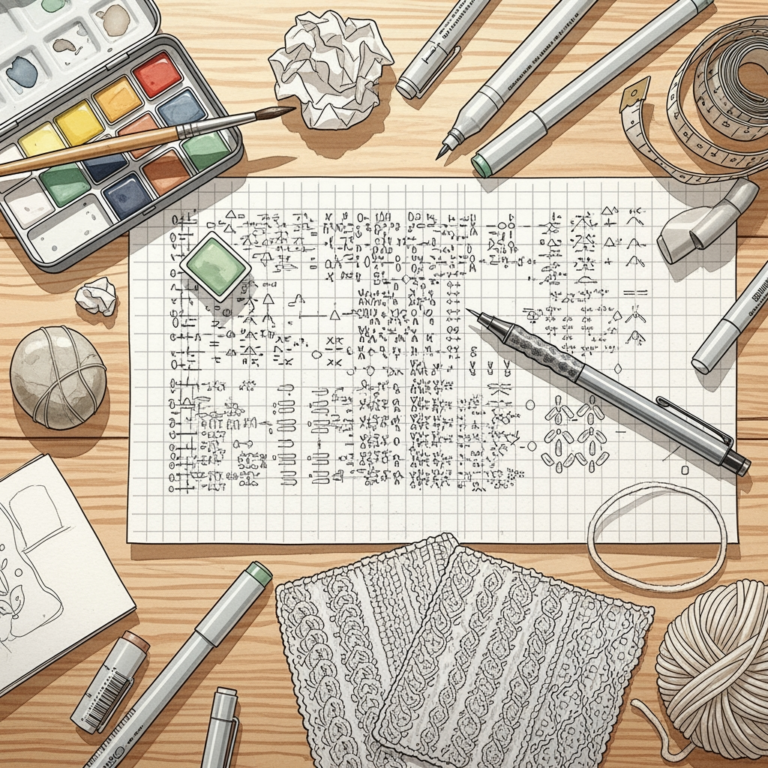
For those who enjoy designing their own patterns, an easel is essential for keeping a graph paper layout visible while working through a gauge swatch. It keeps your workspace clean, ensuring that your tools don’t get buried under piles of yarn or mislaid notes.
Keep the stand clean of stray threads and fiber lint. A quick dusting ensures that the grippers and shelves remain functional and don’t become clogged with roving or fuzz.
How to Keep Your Pattern Stand From Tipping Over
A top-heavy stand is a common grievance, especially when a heavy book is placed at an extreme angle. To prevent this, ensure the feet of the stand are placed on a non-slip surface, such as a felt mat or a silicone tray.
Distribute the weight of the book or binder evenly across the support shelf. If you notice a stand leaning, adjust the back prop to a lower, more stable angle rather than trying to force it to stand upright.
Counterbalance is the secret to stability. If your stand is too light, place a small, heavy item—like a decorative paperweight or a small container of stitch markers—on the back base to anchor it firmly.
Proper organization through the use of a reliable tabletop easel is a game-changer for any fiber artist. By elevating your patterns, you improve your posture and reduce the likelihood of costly errors in your stitch work. Experimenting with different materials and designs will eventually reveal the perfect match for your personal crafting style. With the right support in place, you can focus entirely on the meditative rhythm of your needles.