6 Best Tweezer Sets For Handling Small Beads And Findings
Discover the 6 best tweezer sets for handling small beads and findings with precision. Explore our expert recommendations and upgrade your jewelry toolkit today.
Incorporating beads into fine-gauge knitting or lace work transforms a simple garment into a heirloom-quality piece. However, managing microscopic seed beads alongside delicate silk or laceweight yarn requires tools that offer high visibility and absolute control. Precision tweezers act as an extension of the fingers, allowing for the placement of embellishments without snagging fragile fibers. Selecting the right set ensures that the technical hurdle of beadwork never distracts from the rhythm of the stitch.
Beadsmith Precision Tweezer Set: Best Overall


This set provides a balanced variety of tips that cater to almost every beadwork scenario in fiber arts. Having access to both fine-point and angled tweezers allows for quick switches when transitioning from placing beads on yarn to manipulating small findings like jump rings.
The stainless steel construction offers durability without unnecessary weight. These tools are non-magnetic, which is a critical feature when working with certain metallic beads that might otherwise stick to the metal of the tool itself.
For the knitter working with lace-weight mohair or fine silk, the precision of these tips minimizes the risk of catching a stray fiber. The bottom line: this kit is the most reliable “all-in-one” solution for a dedicated bead-knitter.
Xuron 450S TweezerNose Pliers: Hybrid Power
The Xuron 450S occupies a unique space between a pair of pliers and a set of precision tweezers. It offers the high-leverage grip of a plier while maintaining a slim, tapered profile that mimics the functionality of tweezers.
These are essential when dealing with heavier findings or securing small metal components onto a knitted base. They provide enough tactile feedback to prevent crushing delicate beads, which can happen with standard hardware-store pliers.
Because they feature a spring-loaded return, they reduce hand fatigue during long sessions of bead-heavy projects. If a project involves heavy metallic beads or securing findings on a chunky knit, these are the superior choice.
Beadalon Knotter Tool: Ideal for Tiny Knots
While not a traditional pair of tweezers, the Beadalon knotter tool functions as an essential partner for precision work. It simplifies the process of tying tight, secure knots between beads, a technique often required when incorporating jewelry components into fiber art.
Working with slippery fibers like rayon or mercerized cotton makes knotting difficult. This tool ensures that each knot sits exactly where intended, preventing the “drift” that often ruins the symmetry of a beaded border.
Pairing this with a set of fine tweezers creates a complete system for high-end finishes. Use it when precision placement is required but standard finger-tying lacks the necessary tension control.
SE Cross-Locking Tweezer Set: Best for Holding
Cross-locking tweezers, also known as “reverse-action” tweezers, stay closed until pressure is applied. This design is a game-changer for knitters who find it difficult to hold a bead steady while simultaneously maneuvering a crochet hook or knitting needle.
These tweezers effectively act as a third hand. They grip the bead or finding firmly, allowing the user to focus entirely on guiding the yarn through the bead’s hole without worrying about the bead slipping away.
They are particularly useful for those with arthritis or hand fatigue, as they remove the need to constantly squeeze the tool. For complex patterns that require beads to be held in place for several seconds, this is the most ergonomic approach.
Aven 18060EZ Tweezer Set: Top Ergonomic Pick
Aven’s ergonomic design focuses on reducing the stress placed on the thumb and forefinger. The handles are contoured to fit the hand naturally, which is vital when working on intricate beaded lace that requires hours of concentration.
The tips are finished to a high degree of precision, ensuring that even the smallest size 15/0 beads are gripped securely. This attention to detail prevents the frustration of beads “popping” out during the critical moment of thread attachment.
These are the preferred choice for advanced knitters who spend extended periods on complex embellishment. The comfort provided by the handle geometry justifies the investment for any long-term project.
iFixit Precision Tweezer Kit: Most Versatile

Originally designed for electronics, this kit is surprisingly effective for fiber arts due to the extreme variety of tip shapes. The inclusion of ESD-safe (Electrostatic Discharge) coating makes them ideal for working with synthetic fibers that might otherwise generate static.
The anti-glare finish is a subtle but important benefit. When working under bright task lighting, standard shiny metal tweezers can cause eye strain; the matte finish of this kit mitigates that glare.
Use these when a project involves mixed media, such as combining beads with conductive thread or metal charms. They are the most robust option for those who want to use their tools for both fiber arts and other delicate DIY tasks.
How to Pick the Right Tweezers for Your Project
Choosing the right tool depends heavily on the size of the bead and the weight of the yarn. A delicate silk thread demands a light-touch, fine-point tweezer, whereas a sturdy wool yarn might allow for a broader, more aggressive tip.
Consider the following factors before purchasing: * Tip Shape: Angled for visibility, straight for reach. * Tension: Firm for heavier findings, light for glass or crystal beads. * Material: Stainless steel for durability; nylon-coated tips for scratch-sensitive beads.
Always test the tool with a few “sacrificial” beads. If the tip feels too sharp, it may snag the yarn ply, potentially causing a ladder or a broken strand.
Straight vs. Bent-Nose Tweezers: When to Use
Straight-nose tweezers provide a direct line of sight and are best for picking up beads from a flat surface. They offer the most natural angle for most hand positions and are the standard for general bead-knitting tasks.
Bent-nose tweezers excel when reaching into tight spaces or when working at an angle to the knitting needle. They allow for a more natural wrist position, which helps maintain steady hands when working with high-twist yarns that are prone to spiraling.
Use straight tweezers for precision pickup and bent-nose tweezers for assembly or placement. Keeping one of each on the work desk covers nearly all bead-knitting requirements.
Placing Beads in Knitting with Your Tweezers
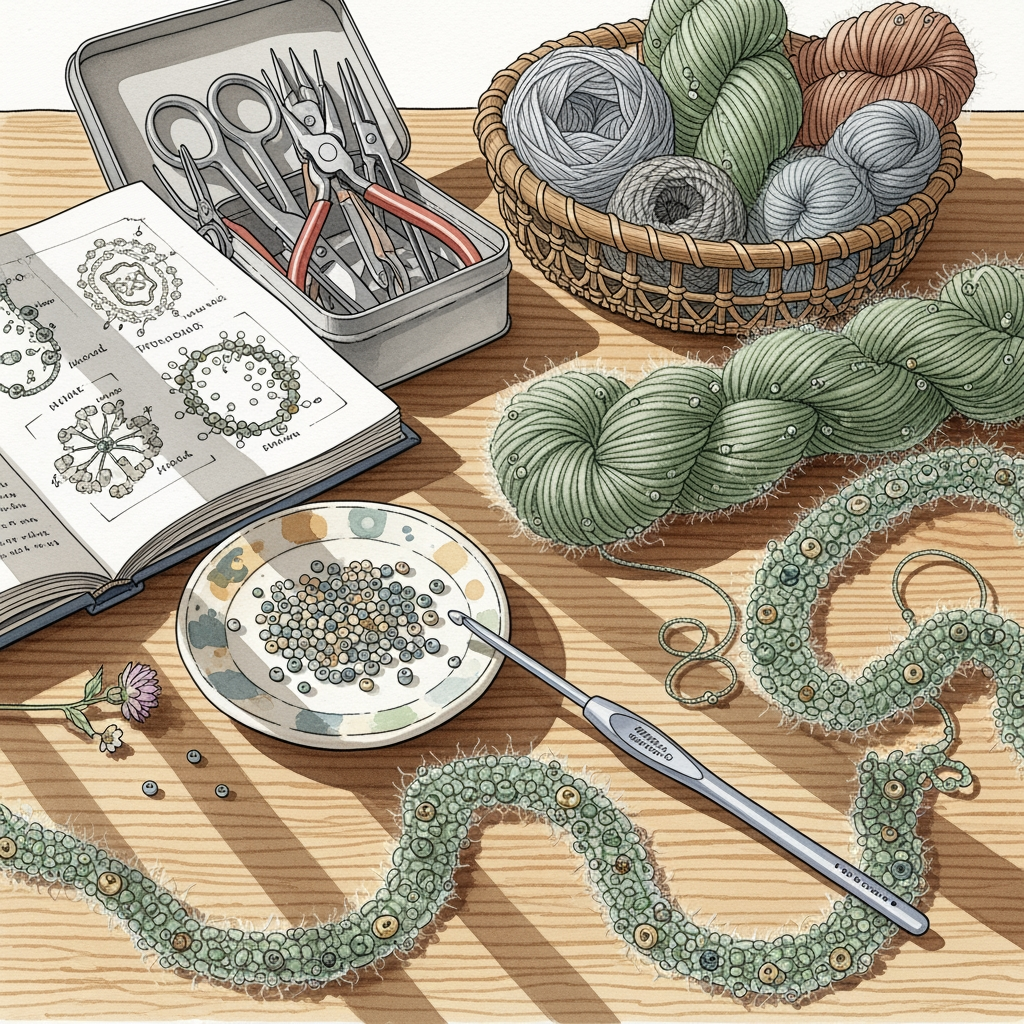
There are two primary methods for placing beads: pre-stringing them onto the yarn or applying them “on the fly” with a crochet hook. When using a hook, tweezers are the vital intermediary that loads the bead onto the hook without requiring the knitter to drop their tension.
When pre-stringing, use tweezers to navigate the yarn through the eye of the bead if the hole is exceptionally small or the yarn is fuzzy. Avoid using rough or serrated tweezers, as these can strip the fiber of mohair or angora, leaving behind thin, weakened sections.
Always maintain a consistent grip pressure. If a bead feels loose in the tweezers, it is likely to drop and roll into a carpet or under furniture; using a rubberized or textured-tip tweezer can prevent this common mishap.
Caring for Your Tools: Preventing Bent Tips
The longevity of a tweezer set depends on proper storage and mindful use. Never use precision tweezers to force open metal findings or to act as a pry bar, as this will inevitably warp the delicate alignment of the tips.
Store them in a dedicated case or a block rather than tossing them loosely in a project bag. A bent tip renders a tool useless for fine beadwork, and once the factory alignment is lost, it is rarely possible to restore it perfectly.
Clean the tips regularly with a dry, lint-free cloth to remove any yarn oil or residue. Keeping the metal clean prevents “stickiness” that can cause fibers to cling to the tool, ensuring every stitch remains as clean as the first.
Equipping your knitting station with the right precision tools removes the friction often associated with intricate beadwork. Whether choosing the versatility of an iFixit kit or the specialized grip of the SE cross-locking set, the right tool elevates the process from a struggle to a flow. With the correct care, these implements will remain reliable companions for years of creative projects.