6 Best Tracing Films For Transferring Stamp Designs
Discover the 6 best tracing films for transferring stamp designs with precision. Read our expert guide to choose the right material for your next art project now.
Transferring intricate embroidery or stitch patterns onto fabric is a foundational skill that bridges the gap between a simple sketch and a professional-grade finished garment. Choosing the correct tracing film or transfer medium prevents the common frustration of distorted lines or permanent stains on precious hand-dyed yarns and textiles. Understanding the interplay between fiber tension and marking tools ensures that the design remains crisp while the work is in progress. The following guide explores the most reliable options to ensure every stitch lands exactly where intended.
Sulky Sticky Fabri-Solvy: Best Water-Soluble Film
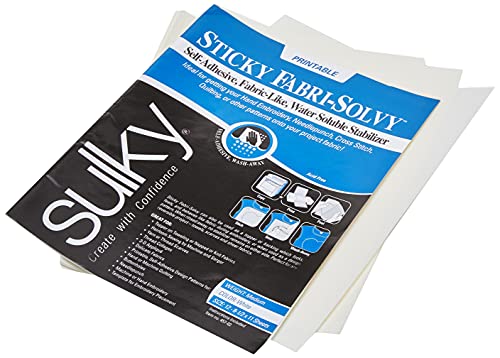

This product functions as both a stabilizer and a transfer medium, making it ideal for those who struggle with the “drag” of fabric while stitching. It features a pressure-sensitive adhesive backing that holds firmly to the fabric surface without requiring pins or basting stitches.
When working on high-twist wools or delicate silks, the film provides a rigid structure that prevents the fabric from puckering under the weight of the design. Because it dissolves completely in warm water, there is no risk of leftover residue interfering with the final drape or texture of the project.
It is particularly useful for adding embroidery to pre-knitted swatches or sweater panels. The film keeps the knit stitches from shifting while the needle penetrates the fabric, maintaining the integrity of the original gauge.
Pellon Stick-N-Washaway: Great for Delicate Knits

Stability is the primary concern when applying designs to loosely knit garments or fine-gauge accessories. Pellon Stick-N-Washaway offers a slightly thicker, more supportive feel that prevents the fabric from stretching out of shape during the transfer process.
For projects involving loose, open-work lace or thin fingering-weight yarn, this film provides the necessary resistance to keep the fabric flat. It adheres well to textured surfaces where standard transfer papers might fail to make contact with the fibers.
Take care to remove this stabilizer gently after the work is complete. Soaking the finished piece in lukewarm water ensures the adhesive breaks down entirely, leaving the delicate fibers soft and supple once more.
Dritz Mark-B-Gone Paper: Best for Fine Line Work
Precision is paramount when mapping out complex cables or intricate motifs that require exacting stitch placement. Dritz Mark-B-Gone provides a clean, clear transfer that allows for detailed patterns without the clutter of heavy ink lines.
This paper excels when working with tight, refined fabric surfaces where excess residue could become trapped between the fibers. The lines are distinct and easy to follow, reducing the likelihood of eye strain during long hours of meticulous needlework.
Always test this product on a scrap swatch first to ensure the ink interacts correctly with the specific fiber content. While excellent for cotton and synthetic blends, heavy oil-based fibers may sometimes cause marking ink to bead rather than settle.
Saral Wax-Free Transfer Paper: Most Reusable Pick
Efficiency in the studio often means finding tools that can be used across multiple projects without degradation. Saral wax-free paper stands out because it can be used repeatedly, provided the transfer surface remains free of lint and debris.
Because it is wax-free, it avoids the common pitfalls of waxy residues that can coat and dull the natural luster of high-quality animal fibers like alpaca or mohair. This makes it a preferred choice for artists who need to transfer a single pattern to various parts of a larger garment.
It is essential to use a stylus or a dull pencil when tracing through this paper to avoid damaging the underlying fabric. Gentle, consistent pressure ensures a clean transfer line that is dark enough to see but light enough to be easily covered by the thread.
Clover Chacopy Paper: Best for Versatile Crafting

Clover Chacopy is a staple in many sewing rooms for its reliability across various fabric weights. It provides a consistent, high-contrast line that holds up well, even when handled frequently during the construction of complex garments.
For knitters who integrate sewing elements into their work, such as lining a wool jacket or adding felted appliqués, this paper is invaluable. It performs reliably on both natural fibers and synthetic linings without smudging or bleeding.
The key to success with this medium is ensuring the fabric is perfectly flat on a hard surface before beginning the transfer. Even a slight ripple in the fabric can cause the paper to shift, resulting in a distorted design.
Sublime Stitching Paper: Top Choice for Dark Fabric
Darker fabrics often present a challenge for traditional marking methods, which rely on black or blue ink that becomes invisible against dark backgrounds. Sublime Stitching offers specialized transfer papers designed to show up clearly on navy, black, or charcoal textiles.
These papers are formulated to provide high-visibility lines that guide the needle without requiring the maker to strain their eyes. This is especially useful when working with dark-colored wools where lighting conditions might be suboptimal.
Always ensure the transfer is firmly pressed; darker dyes can sometimes be sensitive to heat, so use an iron on a low, dry setting if the manufacturer recommends heat-setting the transfer. This added step prevents the design from lifting while in the hoop.
How to Choose the Right Tracing Film for Your Job
Selecting the right film depends heavily on the “memory” and elasticity of the fabric. If the material is highly stretchy, such as a rib-knit cuff or a loose stockinette panel, opt for a stabilizer-film like Sulky to prevent distortion.
Consider the removal process when making your selection. If the project cannot be submerged in water—perhaps due to the inclusion of delicate beads or non-washable fibers—choose a dry-transfer or light-chalk method instead of a water-soluble film.
Finally, evaluate the complexity of the design. Simple, bold lines can be transferred using almost any method, but fine, detailed motifs require a film that doesn’t bleed or lose its edge during the pressure of the tracing process.
Tips for a Perfect, Smudge-Free Design Transfer
- Prep the surface: Ensure the fabric is clean, dry, and free of any finishing oils or conditioners that might repel the ink.
- Use a hard surface: Always place a cutting mat or a hard piece of cardboard under the fabric when using transfer papers to get the sharpest lines possible.
- Secure the pattern: Use painter’s tape to hold the pattern and the transfer paper in place, preventing shifting while tracing.
- Gentle pressure: Use light, steady pressure with a tracing stylus to avoid marking the fabric deeper than necessary.
Wash-Away vs. Tear-Away vs. Transfer Paper
Wash-away stabilizers are the gold standard for projects where you want a perfectly clean finish with no leftover structural elements inside the garment. They dissolve completely, leaving no trace behind, which is vital for the drape of high-end knitwear.
Tear-away stabilizers are best for high-density stitching where the support needs to remain until the very last stitch is cast. Once the project is complete, the excess is simply ripped away, though this can sometimes leave small fragments caught under dense embroidery.
Transfer papers function differently, as they do not provide structural support but merely project the design onto the fabric. Use these when the fabric is already stable enough to handle the needlework without extra reinforcement.
Removing Leftover Markings from Your Project
If markings persist after the main work is finished, avoid harsh chemical solvents that could damage the fiber’s natural cuticle. Most water-soluble markings respond best to a gentle soak in lukewarm, deionized water for thirty minutes.
For stubborn marks on wool, a small amount of mild, pH-neutral wool wash can help break down the binders in the ink. Gently agitate the water with your hand, but never scrub the fabric directly, as this can cause unwanted felting in animal fibers.
Always lay the piece flat on a clean towel to air dry after cleaning, ensuring it returns to its original dimensions. This restores the shape of the garment and confirms that all transfer residues have been successfully neutralized and removed.
The right tracing film acts as a silent partner in the creative process, turning complex ideas into tangible results without compromising the quality of the yarn or the integrity of the knit. By selecting a medium that respects the specific needs of your fabric, you ensure that every project remains as beautiful in its final form as it was on the design board. Mastery of these tools is a hallmark of the experienced maker, turning potential technical challenges into seamless, enjoyable steps in the crafting journey.