7 Best Gemstone Rondelles For Adding Luxury Textures
Elevate your jewelry designs with our 7 best gemstone rondelles. Discover these luxurious textures and shop our curated collection to enhance your creations today.
Incorporating gemstone rondelles into knitwear elevates a standard garment into a bespoke piece of wearable art. These small, disc-shaped beads offer a weight and texture that synthetic sequins simply cannot replicate. When selecting these embellishments, the primary concern must be the balance between the stone’s hardness and the delicate nature of the fiber. Choosing the right gemstone ensures that the final piece remains functional, wearable, and stunning for years to come.
MysticGems Labradorite: Best for Dark Yarns


Labradorite is famous for its “labradorescence,” a flash of iridescent color that reacts beautifully against charcoal, navy, or black wool. When paired with dark, moody colorways, the stone seems to glow from within the stitch structure.
The natural grey-to-blue undertones of labradorite provide a subtle contrast against dark fibers without appearing overly harsh or artificial. This makes them ideal for high-end accessories like cowls or evening shawls where a sophisticated, understated shimmer is preferred over blatant sparkle.
Note that labradorite can vary significantly in quality; look for beads with a smooth, polished finish to avoid snags on wool fibers. For the best result, select these for low-friction projects where the beads won’t rub constantly against other fabric surfaces.
Dakota Stones Garnet: A Classic Luxury Choice
Garnet brings an unmistakable richness to knitwear, offering deep, blood-red hues that pair perfectly with neutral earth tones like cream, taupe, or deep forest green. These stones are naturally durable and hold their luster through repeated wear and gentle washing.
Because garnet is a relatively hard stone, it is excellent for projects that see frequent use. The weight of these rondelles helps pull drape-heavy patterns—like lace or delicate fingering-weight cowls—into a more graceful shape.
Be mindful that genuine garnet has a significant weight compared to acrylic beads. If incorporating these into a lightweight garment, ensure the yarn has enough structure, such as a sturdy plied wool or a wool-nylon blend, to prevent the fabric from sagging or distorting over time.
Kingman Turquoise Rondelles: Best Southwest Vibe
Kingman Turquoise provides a distinct, vibrant blue-green pop that works wonders when combined with rustic, woolen-spun yarns or tweed textures. It introduces a bold, heritage-inspired aesthetic that stands out in a world of muted, monochrome knitwear.
These beads look best when integrated into colorwork charts or as an anchor point in a fringe. The matte, opaque nature of the stone provides a grounding effect against the loft and fuzz of natural animal fibers.
Since turquoise is a softer gemstone, handle these with care during the knitting process. Avoid using metal needles with aggressive tips, which could potentially chip the edges of the bead if you tend to knit with a high-tension grip.
Afghan Lapis Lazuli: For Deep, Royal Blue Tones
Lapis Lazuli offers a regal, intense blue that works beautifully with metallic yarns or silk-blend lace. The occasional flecks of pyrite within the stone add a natural gold-flecked detail that creates a luxurious, high-end visual impact.
This stone is best suited for statement pieces where the bead is meant to be a focal point rather than a subtle accent. The density of the stone gives it a premium feel that pairs well with the luxury of cashmere or high-twist merino.
Due to the porous nature of some Lapis, avoid exposing these garments to harsh chemicals or excessive steam during blocking. Keep the embellishment away from direct, high-heat pressing to maintain the stone’s deep, saturated pigment.
Rainbow Moonstone Rondelles: For Ethereal Sheen
Rainbow Moonstone is the premier choice for white, cream, or pastel-colored knitwear, providing a ghostly, opalescent shimmer. It captures the light in a way that creates an almost ethereal quality, perfect for bridal knits or delicate shawls.
The translucent nature of these rondelles means they take on the color of the yarn underneath, making them incredibly versatile. They essentially “absorb” the surrounding palette while adding their own distinct blue-white fire.
Because these stones are highly delicate, they are best reserved for special-occasion pieces. Their beauty lies in their softness, so they are not recommended for items that will endure heavy friction or daily, rugged use.
Fire Mountain Gems Amethyst: Best Budget Option
Amethyst is an accessible way to introduce genuine gemstone luxury without an exorbitant cost. Its deep purple tones provide a classic look that complements a wide spectrum of colors, from soft lavender to deep navy and charcoal.
These rondelles are often available in consistent sizes, which simplifies the process of spacing them out across a garment. The uniformity makes them a reliable choice for beginners who want to experiment with bead placement for the first time.
While they are budget-friendly, the quality of the facet cut is essential for maximizing light reflection. Always choose facets that are polished smooth to the touch, ensuring the bead will not fray or cut the delicate strands of your yarn.
Faceted Black Spinel: For Sophisticated Sparkle
Black Spinel is arguably the best alternative to diamonds for knitters who desire a high-shine, jet-black sparkle. It is remarkably hard and durable, making it an excellent choice for items that get a lot of wear, such as mittens or cuffs.
Unlike softer stones, spinel maintains its high-gloss finish even after years of use and handling. Its reflective quality provides a sharp, crisp contrast that looks intentional and professional, elevating even the simplest stockinette fabric.
Use these to edge a garment or as a border element. Their durability allows them to withstand the tension and occasional snagging that comes with everyday wear, making them one of the most practical investments for your craft.
Choosing Rondelles: Hole Size and Your Yarn
The most common failure in beaded knitting is selecting a bead with a hole too small for the yarn to pass through easily. As a rule, the diameter of the hole should be at least twice the thickness of the yarn to allow for a smooth transition during the stitch.
If you are working with a thin fingering weight or lace weight, you may need a specialized beading needle or a piece of dental floss to act as a threader. Never force a bead onto a yarn that is too thick, as this will lead to constant fiber breakage and weakened, fuzzy yarn.
Always test your chosen bead with a small swatch before committing to an entire garment. If the bead feels tight on the yarn, it will likely compromise the integrity of the fiber over time, leading to premature thinning or snapping at the site of the bead.
How to Add Beads and Rondelles to Your Knitting
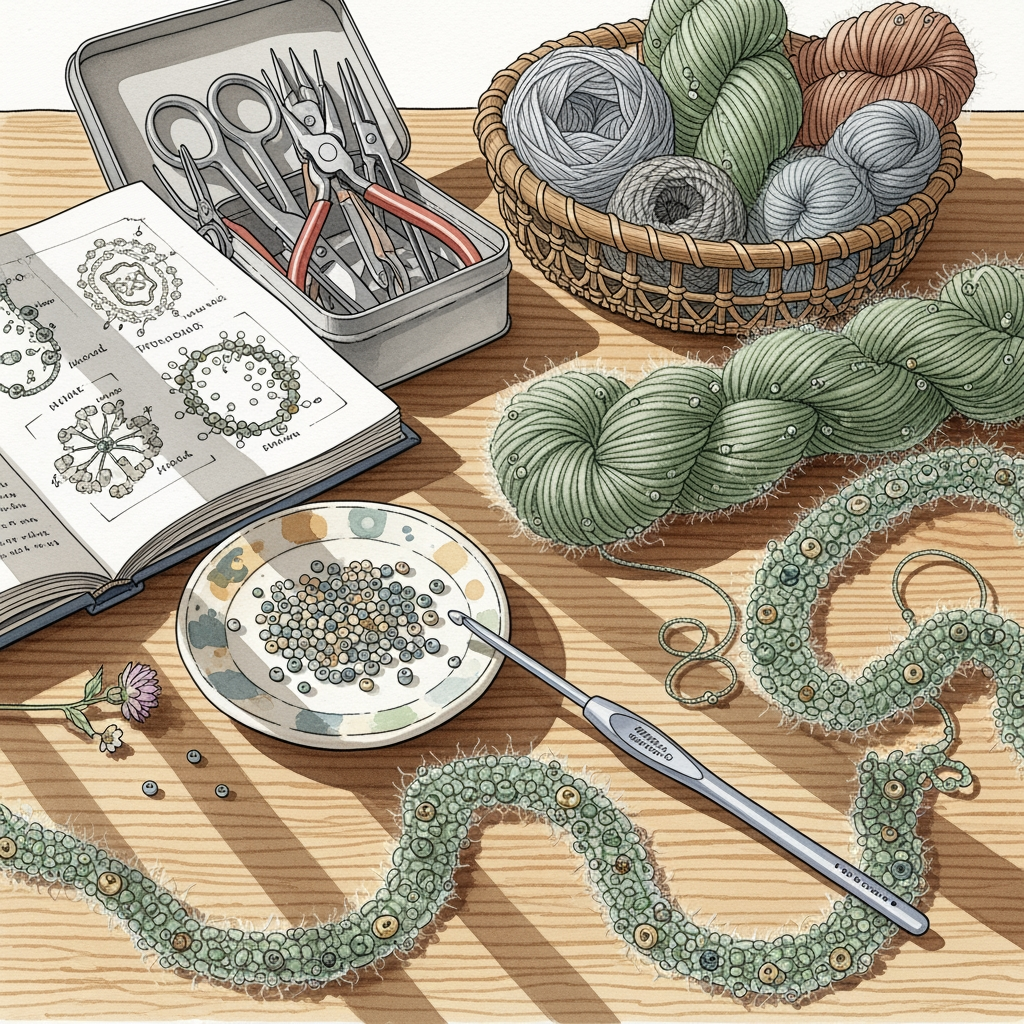
There are two primary methods for adding rondelles: the pre-stringing method and the hook-placement method. Pre-stringing involves threading all beads onto your yarn before you begin casting on, which is ideal for all-over bead patterns or structured, geometric designs.
The hook-placement method, which uses a tiny crochet hook to pull the yarn loop through the bead as you go, is significantly more flexible. This technique allows you to decide exactly where to place a bead while knitting, providing far more control over the final design.
For beginners, the hook method is generally safer because it avoids the frustration of tangled beads on a long yarn tail. If you choose to pre-string, always secure the end of your yarn with a knot to prevent the beads from sliding off until they are knit into the project.
Caring for Garments with Gemstone Embellishments
Gemstone-embellished garments require a more gentle touch than standard wool knits. Always opt for hand-washing in cool water with a mild, wool-safe detergent, and never leave the beads soaking for an extended period, as this can affect the finish of certain stones.
When drying, lay the garment flat and shape it carefully; be mindful that the extra weight of the gemstones can cause the garment to stretch significantly when wet. Never hang a beaded garment, as the gravity will pull the beads downward and cause the stitches to distort.
If you must store the garment long-term, ensure it is folded gently or kept in a breathable cotton bag. Protecting the beads from direct friction against other garments in the closet will prevent the stones from scratching or dulling over time, keeping them as luminous as the day they were stitched.
Integrating gemstone rondelles into your knitting requires patience and careful planning, but the result is a unique, heirloom-quality piece that transcends standard fashion. By focusing on the interplay between stone hardness, yarn weight, and proper care, you ensure that every bead serves to enhance, rather than hinder, the life of your knitwear.