
6 Best Sharpeners For Fine Point Sketching To Own
Achieve precision in your drawings with our expert guide to the 6 best sharpeners for fine point sketching. Upgrade your art toolkit and find your perfect match.
Precision in sketching requires the same attention to detail as selecting the perfect needle size for a delicate lace project. Just as a blunt needle drags through fine silk, a dull pencil fails to capture the intricate nuances of a stitch diagram or a design sketch. Achieving a needle-fine point is not just about the graphite; it is about the geometry of the sharpening tool. Investing in the right sharpener ensures that every stroke on the page is as crisp and intentional as a well-defined knit-purl stitch.
Blackwing Long Point: The Artist’s Go-To Choice


The Blackwing Long Point sharpener employs a unique two-step process that separates the wood casing from the graphite core. This mechanical distinction mirrors the way a professional knitter treats different yarn weights; it prepares the medium with surgical precision before any actual work begins.
By sharpening the wood first and then the core, it creates an exceptionally long, tapered point that resists breakage. This is vital when drafting detailed cable patterns or complex schematics where fine lines must remain distinct and clean.
It is a more deliberate process than a standard schoolhouse sharpener, but the results are unrivaled for consistent, fine-line accuracy. Consider this the “circular needle” of sharpeners: highly specialized, reliable, and capable of handling intricate, long-term projects.
Kum Masterpiece: For The Sharpest Possible Point
The Kum Masterpiece is essentially a dual-stage sharpening system encased in a tiny, magnesium body. It functions similarly to how one might carefully calibrate tension when working with slippery alpaca fiber; it controls every stage of the reduction to prevent wastage and damage.
The first hole shaves the wood, while the second precisely hones the graphite into a razor-sharp, concave point. This level of refinement is perfect for artists who prioritize extreme detail, such as rendering the tiny loops of a sweater’s texture.
Because the point is so fine, it remains fragile and may require more frequent touch-ups. It is not designed for heavy, broad shading, but rather for the high-definition marking needed when precision is the only option.
M+R Brass Bullet: Best Pocket-Sized Sharpener

M+R’s Brass Bullet is built with a level of durability that rivals the sturdiest stainless steel needles. Its compact design makes it an ideal companion for a project bag, ensuring that a sharp point is always available during a sketching session away from the studio desk.
Despite its small footprint, the brass housing provides enough weight to offer a stable grip. Using this tool feels like using a high-quality aluminum needle; it is smooth, consistent, and remarkably sturdy.
The blade is replaceable, meaning this tool can last for decades if maintained properly. It is the ultimate utility piece for the artist who values minimalist design without sacrificing professional-grade output.
Dahle 133: The Ultimate Desktop Studio Sharpener
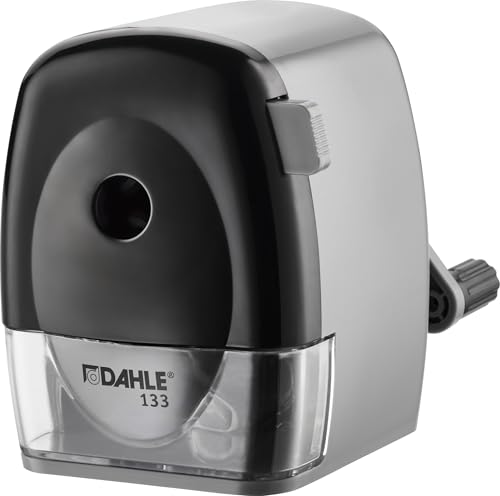
The Dahle 133 is a heavy-duty manual sharpener that anchors firmly to a desk, much like a ball winder secures to a tabletop. Its automatic feed stops sharpening once the ideal point is reached, preventing the common frustration of over-sharpening and wasting high-quality pencils.
This tool is designed for high-volume work, such as drafting multiple pattern drafts or extensive design layouts. The internal gears ensure that the pencil is shaved evenly, avoiding the off-center points that can cause uneven pressure and lead to broken lead during use.
While it lacks the portability of a handheld sharpener, its efficiency is unmatched for long drawing sessions. It turns the chore of sharpening into a smooth, mechanical rhythm that keeps the creative flow uninterrupted.
T’gaal Multipurpose: Most Versatile Point Adjuster
The T’gaal features an adjustable dial that allows the user to choose the length and sharpness of the point. This versatility is akin to a needle gauge tool that offers multiple sizing options in one convenient package.
A shorter, blunter point is better for softer, darker shading, while the longest setting provides the needle-sharp tip required for fine drafting. If an artist fluctuates between different drawing styles—from broad strokes to microscopic detail—this single tool adapts to the requirement.
It is a fantastic entry-level choice for those who are still discovering their preferred style of sketching. The ease of adjustment makes it highly forgiving and adaptable to various pencil hardness grades.
Sandpaper Block: For Perfect Custom Chisel Points

A sandpaper block acts as the final finishing tool, similar to how one might use a blocking board to set the shape of a finished garment. It allows for the creation of a custom chisel point that a traditional blade sharpener simply cannot achieve.
By rubbing the lead against the abrasive surface at a specific angle, the artist gains total control over the geometry of the point. This is indispensable for calligraphic sketching or creating varying line weights in a single drawing.
It is a simple, inexpensive, and highly effective way to refine a pencil after it has been through a mechanical sharpener. Every serious sketching kit should include one for that final, tailored touch.
Choosing Your Sharpener: Manual vs. Electric
Manual sharpeners offer a level of tactile control that allows for subtle adjustments in how the blade bites into the wood. Much like using wooden needles provides more feedback on the tension of a yarn, manual sharpening allows the artist to feel the resistance of the lead.
Electric sharpeners offer convenience and speed, making them suitable for environments where time is at a premium. However, they often lack the precision required for the very fine, long-tapered points needed for professional-grade sketching.
The best choice depends on the specific project. For sketching in a journal, a high-quality manual sharpener is usually superior, as it allows for the quiet, meditative process that accompanies high-level creative output.
Long Point vs. Short Point: Which Do You Need?
A long point provides a much greater range of motion and allows the artist to see the tip clearly while sketching. It is functionally similar to using a long-tip needle, which provides better visibility and access when working through intricate lace stitches.
A short point, conversely, is much stronger and less prone to snapping, making it better for rapid, heavy-handed sketching. It serves the same purpose as a thicker, tapered needle that can handle high-tension work without bending or breaking.
Select a long point for precision, detail, and finesse. Select a short point for durability, shading, and expressive, high-speed mark-making.
How to Clean and Maintain Your Pencil Sharpener
Just as a knitting machine requires regular oiling and cleaning to function smoothly, a pencil sharpener needs maintenance to stay effective. Graphite dust can accumulate in the mechanism, clogging the blades and causing uneven performance.
Use a small brush to remove loose dust after every few uses to prevent buildup. If the sharpener uses a metal housing, ensure it stays dry to prevent oxidation that could interfere with the blade’s edge.
Periodically inspect the blade for dullness or nicks. If the wood casing begins to look frayed rather than cleanly cut, it is time to replace the blade or the entire unit to maintain the integrity of your pencils.
Creating a Needle-Fine Point With a Sandpaper Block
To create a professional-grade needle point, first sharpen the pencil to a medium length using a mechanical sharpener. Once the wood is removed, gently rub the graphite against the sandpaper block at a low angle.
Rotate the pencil slowly as you move it across the grit to ensure the point remains perfectly centered. This prevents the tip from becoming lopsided, which would result in an uneven, scratchy line on the paper.
Continue until the desired sharpness is achieved, then brush away any loose particles. A needle-fine point requires frequent maintenance, so keep the block accessible for quick sharpening sessions while working on fine-detail portions of a sketch.
Finding the right sharpening tools is a vital step in elevating sketching from a casual hobby to a precise craft. By understanding the mechanical differences and material requirements of each sharpener, an artist ensures that every stroke remains as clean and intentional as the stitches in a perfectly executed cable knit. Choose tools that align with your specific sketching needs, and you will find that the quality of your work improves with every precise, needle-sharp point.