7 Best Needle-Nose Pliers For Tight Spaces To Keep
Struggling with cramped projects? Explore our expert guide to the 7 best needle-nose pliers for tight spaces and upgrade your toolkit today. Shop our top picks.
When a tapestry needle slips into a dense cable or a stray wire needs adjusting in a handmade project bag, standard household pliers often prove too clumsy for the job. Precision tools act as an extension of the hands, allowing for delicate maneuvers that prevent damage to fragile fibers or polished metal needles. Selecting the right needle-nose pliers involves balancing grip strength with a profile slim enough to navigate tight, crowded workspaces. The following list highlights tools that provide the necessary control for refined fiber arts tasks.
Xuron 450 TweezerNose Pliers: Ultimate Precision
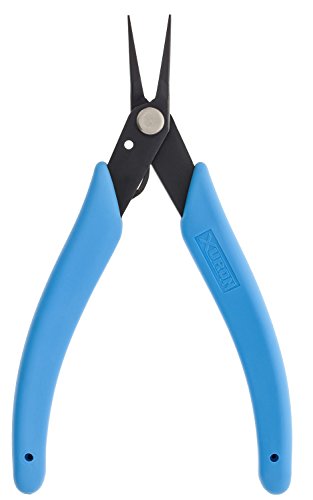

The Xuron 450 excels when handling the most delicate tasks, such as maneuvering fine-gauge wire for beaded lace or retrieving dropped stitches from intricate silk work. Its ultra-slim profile mimics the action of tweezers, offering a level of finesse that standard hardware-store pliers simply cannot replicate.
The cushioned grips provide stability during long periods of use, preventing hand fatigue when repetitive adjustments are necessary. Because the tips are exceptionally fine, they excel at gripping tiny elements without obscuring the view of the work.
Avoid using these for heavy-duty metal bending, as the fine tips can be prone to misalignment if overstressed. Reserve this tool for high-precision tasks where space is at a premium and visibility is the primary concern.
Beadsmith Bent Chain Nose Pliers: For Awkward Angles

Bent-nose pliers are a specialized solution for when the project configuration prevents a straight-on approach. The angled tip allows the wrist to remain in a neutral, comfortable position, which is essential when working inside narrow areas or around bulky fiber structures.
These are particularly useful for securing stitch markers or adjusting metal findings in jewelry-inclusive knitting. By changing the approach angle, these pliers remove the need to twist the hands into uncomfortable positions, reducing strain during lengthy finishing sessions.
Always assess the angle of the bend before purchase to ensure it matches the typical depth of the workspace. A slight bend is often more versatile, while a sharp, severe angle is best suited for deep-set, vertical access points.
Wubbers Baby Chain Nose Pliers: Built for Comfort
Wubbers are widely recognized for their ergonomic handles, which cater to knitters who spend hours on finishing work. The “Baby” size features a reduced head profile that fits into tight gaps while maintaining enough leverage to manipulate findings or decorative elements securely.
The grip design prioritizes comfort, which is critical for those dealing with hand stiffness or arthritis. When the goal is to manage multiple intricate adjustments without sacrificing physical comfort, these pliers stand out as a premier choice.
Consider the weight distribution of these tools when tackling fine-thread work. The slightly larger handle provides excellent leverage, but the user must ensure it does not feel overly heavy against the delicate tension of the yarn.
Lindstrom RX 7890: The Professional’s Choice

Lindstrom tools represent the gold standard in terms of material quality and precision engineering. The RX 7890 features a specialized spring system that provides a consistent, fluid motion, minimizing the effort required for every squeeze.
These are an investment for the dedicated maker who values tools that last a lifetime. The jaw alignment is impeccably precise, ensuring that even the thinnest wire or smallest metal component is held firmly without slipping.
While the price point is significantly higher, the durability and performance justify the cost for those working with precious metals or high-end components. They are the ideal choice for someone who performs finishing work with the same intensity applied to their knitting gauge.
Cousin Craft 3-Piece Plier Set: Best Budget Pick
For the beginner who is still exploring how much jewelry-making or metal-based fiber embellishment they plan to integrate into their projects, a set is often the most sensible starting point. This collection offers a variety of jaw shapes, covering the majority of basic needs without requiring a large initial outlay.
While the materials may not match professional-grade tools, they provide sufficient performance for light-duty, occasional tasks. They are perfect for testing whether a specific technique requires a more specialized, expensive tool later on.
Check the alignment of the jaws immediately upon receipt, as budget manufacturing can sometimes lead to slight inconsistencies. If the fit is tight and the springs snap back consistently, these will serve as a reliable workhorse for standard utility tasks.
Fiskars Craft Needle Nose Pliers: A Reliable Basic
Fiskars is a staple in the craft world for a reason: the tools are consistent, readily available, and designed with the crafter’s needs in mind. Their needle-nose pliers offer a balanced, mid-range profile that is neither too thin nor too bulky for most fiber arts maintenance.
The orange-handle design is easy to locate in a busy project box, which is a minor but appreciated feature for organized knitters. They perform well for general wire manipulation and holding pins in place during blocking or garment construction.
These pliers are best viewed as a multipurpose utility tool rather than a specialized precision instrument. If the projects involve extreme detail work, the user might eventually outgrow them, but for day-to-day maintenance, they are exceptionally dependable.
Beadalon Slim Line Pliers: For The Tiniest Spaces
When space is exceptionally restricted—such as navigating between tight, non-stretch bind-offs or metallic stitch markers—the Beadalon Slim Line pliers are the go-to. Their design focuses on a narrow profile that allows access into spaces that would be completely blocked by standard tools.
The slim jaws are engineered to remain parallel during closure, which provides a secure grip across the entire surface of the object. This feature is vital for preventing the tool from slipping or scratching delicate surfaces during a tight maneuver.
Be aware that these are not designed for high-torque applications. Keep them exclusively for precision adjustments to ensure the longevity of the thin, tapered tips.
Why Every Crafter Needs a Good Pair of Pliers
Many knitters mistakenly believe that fiber arts require only needles and yarn, overlooking the utility of metal tools in finishing and accessory integration. Pliers act as the final step in securing findings, untangling knots in fine-gauge wire, or adjusting snagged metal elements.
Possessing a quality pair of pliers allows for professional-level finishing that enhances the longevity of the garment. Whether securing a shawl pin or untwisting a stranded wire component in a delicate heirloom piece, these tools provide a level of control that fingers simply cannot manage.
Refinement in tools often leads to a more refined end product. By choosing a dedicated tool rather than using household pliers, the risk of snagging yarn or distorting the shape of metal accents is significantly reduced.
Smooth vs. Serrated Jaws: What Crafters Need
The choice between smooth and serrated jaws is determined by the material being handled. Serrated jaws offer superior grip, which is beneficial when working with heavy-duty wire that needs to be held firmly against significant resistance.
However, serrated jaws are often disastrous for fiber arts because they can leave indentations or mar the surface of soft metals and delicate materials. Always opt for smooth jaws when working with items that could potentially catch on the fibers of the garment.
If a project requires both, prioritize smooth jaws for the bulk of the work. If extra grip is absolutely necessary, a thin layer of tape or a small piece of fabric can be placed between the jaw and the object to protect the surface.
Choosing Your Plier: Grip, Spring, and Material
Selecting the right tool is a balance of ergonomics and technical requirement. Look for spring-loaded handles, which automatically return the pliers to an open position, significantly reducing the pressure required on the thumb and forefinger during long sessions.
The material of the plier head also dictates performance; high-carbon steel is generally preferred for its strength and ability to hold a precise tip, while stainless steel is ideal for those living in humid climates where rust might be a concern. Finally, consider the handle material, as rubberized, non-slip coatings prevent the tool from sliding during complex adjustments.
When deciding between models, simulate the grip by holding the tool for a few minutes; the hand should remain relaxed, and the reach should feel natural. A tool that feels forced or awkward in the hand will eventually lead to uneven work and fatigue.
Selecting the right pair of needle-nose pliers ensures that the final stages of a project are as precise and enjoyable as the knitting process itself. By matching the tool’s profile and jaw type to the specific demands of the craft, the risk of damaging delicate handiwork is minimized. Investing in quality tools today will pay dividends in the longevity and professional finish of every piece created.