6 Best Weaving Shuttles For Smooth Yarn Gliding
Discover the 6 best weaving shuttles designed for smooth yarn gliding. Explore our top expert-tested picks and improve your weaving precision today. Shop now.
Weaving is the rhythmic dance of passing a shuttle through a shed, a motion that relies entirely on the precision of the tool in hand. When the yarn glides effortlessly, the process becomes meditative, but a snagging or heavy shuttle can quickly turn a creative session into a chore. Choosing the right shuttle is about finding the balance between the weight of your material and the tension required for a clean edge. The following guide breaks down the essential tools that transform how the weft travels across the loom.
Schacht End-Delivery Shuttle: Best for Tension


The Schacht End-Delivery shuttle stands out because it acts as its own tensioning device. Instead of yarn pulling from a rotating bobbin, it travels through a series of tension pads that ensure the weft lays at a consistent pressure across the entire width of the fabric.
This is a critical advantage when working with fine or slippery yarns that tend to create wavy edges if the tension varies. By maintaining a uniform draw, these shuttles help produce perfectly straight selvedges, which are the hallmark of professional-quality weaving.
Be prepared for a steeper learning curve, as threading the tensioning system requires patience and specific technique. If the goal is high-end table linens or intricate wall hangings, the investment in a Schacht End-Delivery shuttle is well worth the effort for the consistency it provides.
Ashford Boat Shuttle: Top Pick for All-Around Use
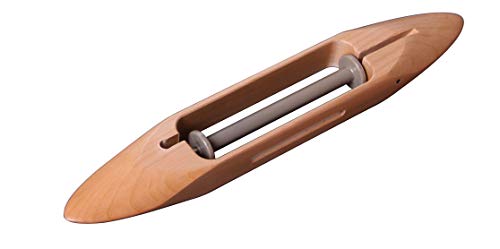
Ashford boat shuttles are the workhorses of the weaving world, favored for their ergonomic shape and reliable performance. They feature a smooth, tapered design that slides through the shed with minimal friction, making them excellent for learners and veterans alike.
The weight distribution is carefully calibrated, providing enough mass to throw the shuttle easily without causing fatigue during long sessions. They are compatible with a wide range of standard bobbins, which simplifies the process of switching between colors or yarn weights.
While they do not provide the active tensioning of an end-delivery shuttle, they are far more forgiving and easier to load. For those working on standard floor or table looms, an Ashford boat shuttle is a versatile, reliable staple that rarely disappoints.
Leclerc Ski Shuttle: Ideal for Rugs and Bulky Yarn
The Leclerc Ski Shuttle is designed specifically for heavy-duty projects that require a large volume of fiber to be passed through the warp. Its flat, ski-like profile allows it to slide across the bottom of the shed, carrying thick wool or rag strips without creating unnecessary strain on the warp threads.
Because this shuttle sits low in the loom, it is less likely to jump out of the shed when working with sticky or textured yarns. It provides a stable base that keeps bulky materials organized as they traverse the width of the warp.
Do not attempt to use this for fine, delicate yarns, as the surface area is too broad and lacks the grace of a boat shuttle. If the project involves weaving thick blankets, rugs, or heavy tapestries, the Ski Shuttle is the most efficient tool for the job.
Bluster Bay End-Feed Shuttle: The Weaver’s Upgrade
Bluster Bay shuttles are widely regarded as the gold standard in craftsmanship, often carved from beautiful, high-density hardwoods. They are essentially a refined version of the end-delivery concept, providing an incredibly smooth yarn release that minimizes breakage.
The weight and balance of these shuttles are superior, providing a satisfying “throw” that feels like an extension of the weaver’s hand. Because they are handcrafted, they offer a level of detail and finish that mass-produced plastic or basic wooden shuttles simply cannot match.
This is a premium investment intended for weavers who have mastered their craft and are ready to reduce the fatigue associated with repetitive motion. For those spending hours at the loom, the ergonomics of a Bluster Bay shuttle will prove their value immediately.
Glimakra Boat Shuttle: Best for a Lightweight Feel
Glimakra boat shuttles are known for their slim, elegant profile and exceptionally light weight. They are designed to glide through tight sheds, making them an excellent choice for looms with smaller shed openings where bulkier shuttles might get stuck.
The lightweight nature of these shuttles is a major benefit for weavers who suffer from wrist strain or those working on delicate projects where heavy tools might damage the warp. They move with speed and agility, allowing for a faster pace during complex pattern work.
Because they are so light, they may require a slightly more deliberate throw to ensure they reach the other side of a wide warp. However, for sheer grace and ease of movement, they are often the preferred choice for those who value speed and precision.
Kromski Boat Shuttle: Great Value for New Weavers

Kromski offers a fantastic balance of functionality and affordability, making them a go-to for weavers setting up their first studio. These shuttles are finished to a high standard, ensuring that there are no rough spots to snag delicate fibers like alpaca or silk.
The design is straightforward and intuitive, requiring no complex adjustments to get started. They fit well in the hand and provide enough weight to clear the shed cleanly without feeling cumbersome.
While they may not have the luxury finishes of custom-made tools, they provide everything a weaver needs to achieve professional results on a budget. They are an excellent starting point that will remain useful in the kit long after the basics have been mastered.
Boat vs. Stick vs. Ski: Choosing Your Shuttle Type
Choosing a shuttle is rarely about which is “best,” but rather about matching the tool to the shed and the weft. Boat shuttles are the most versatile, meant for standard bobbins and average to fine yarns.
Stick shuttles are the most basic, often used for pick-up techniques or simple plain weaves where you need to pass a specific amount of yarn. They are simple pieces of wood, making them the most affordable option, but they require the weaver to manage the yarn tension manually.
Ski shuttles are specialized for heavy, bulky materials. Understanding that each type solves a specific problem—whether it is weight, tension, or shed clearance—will dictate which shuttle gets picked up from the shelf for the current project.
Open vs. Closed Bottom Shuttles: What’s the Deal?
The decision between an open or closed bottom shuttle usually comes down to the style of the loom and the weaver’s personal technique. Open bottom shuttles allow the bobbin to ride lower in the shed, which is helpful if the shed opening is relatively small.
Closed bottom shuttles provide a smoother, more solid surface that glides across the warp threads without the risk of the yarn getting caught on the bottom shed. They are generally considered more stable and are preferred by those who prefer a “slide” rather than a “toss” motion.
If the warp has a tendency to catch or is made of a high-friction fiber like cotton, a closed bottom shuttle can prevent many headaches. Experiment with both to see which aligns better with the loom setup.
How to Wind a Bobbin for a Perfect, Snag-Free Throw
The secret to a perfect throw is not just the shuttle, but how the bobbin is wound. Never overfill a bobbin, as the yarn must remain below the shuttle’s sides to prevent it from rubbing against the warp and causing friction.
Distribute the yarn evenly across the length of the bobbin to maintain a balanced weight. If the yarn is bunched in the center, the shuttle will wobble during its flight; if it is bunched at the ends, it will not unwind smoothly.
Always check that the yarn releases from the bobbin in the direction that minimizes drag. A well-wound bobbin should spin freely and quietly, ensuring the shuttle travels across the loom in one fluid motion without snagging on the yarn itself.
Maintaining Your Shuttle for a Lifetime of Weaving
Shuttles are tools of fine wood, and they deserve proper care to prevent them from drying out or developing nicks. Periodically wipe them down with a light furniture wax or a small amount of wood-conditioning oil to keep the finish slick.
Check the surface for small burrs or rough spots after every project, as these can snag fine fibers. If a rough spot is found, use a very fine-grit sandpaper to smooth it out, then re-wax the area to ensure it remains snag-free.
Keep shuttles stored in a cool, dry place away from direct sunlight, which can warp or crack the wood. With basic maintenance, a well-made shuttle will perform consistently for years, becoming a trusted, familiar presence in the weaving process.
Choosing the right shuttle is a personal process that evolves as skills grow and project requirements change. By understanding the mechanical differences between these tools, every weaver can improve the flow of their work and the quality of their fabric. Whether the priority is tension control or ease of movement, these options provide a solid foundation for any weaving journey.