

6 Best Anti Glare Sprays For Finished Frames To Use
Stop annoying reflections on your artwork. Discover the 6 best anti glare sprays for finished frames to achieve a perfect, professional, and clear display today.
Framing a finished lace shawl or an intricate piece of embroidery is the final, essential step in honoring hundreds of hours of delicate work. Glare from protective glass can often obscure the beautiful texture, stitch definition, and color nuances that were so carefully crafted during the making process. Choosing the right anti-glare or matte spray ensures that the viewer sees the fiber art, not the reflection of the room. This guide explores the most effective sprays to protect and finish frames while preserving the integrity of the textile.
Krylon Matte Finish Spray: Best Overall Choice


This spray stands out as the industry standard for general-purpose finishing because it consistently delivers a soft, non-reflective surface. It dries quickly, which is critical when working in a home studio where dust motes can easily settle on a wet surface.
The finish is remarkably forgiving, providing an even coat that hides minor imperfections on the frame’s surface. It does not drastically darken the frame material, keeping the intended aesthetic of wood or painted finishes intact.
For those who prioritize balance, this remains the most reliable option. It provides just enough protection without masking the subtle details of the craftsmanship behind the glass.
Rust-Oleum Matte Clear: Most Durable Finish
When the frame is destined for a high-traffic area, such as a hallway or a gift intended for a household with active children, durability becomes the priority. This formula creates a robust, hard-wearing barrier that resists scuffs and fingerprints far better than standard artist fixatives.
While it is exceptionally tough, it leans toward a true matte that can sometimes appear slightly more “chalky” on dark surfaces. It is essential to apply this in thin, light layers to avoid a heavy build-up that might look plastic-like.
Think of this as the heavy-duty sealer for pieces that need to withstand the test of time. If the frame is made from reclaimed wood or materials with a rustic texture, the extra protection is worth the slight loss of deep sheen.
Winsor & Newton Matt Varnish: Pro’s Choice
Artists and master framers often gravitate toward this varnish because of its archival-quality composition. It is designed to be permanent and non-yellowing, which is vital when the frame contains a sentimental heirloom or a high-value piece of needlepoint.
Unlike standard hardware store sprays, this product behaves more like a professional medium, providing a deep, sophisticated matte finish. It allows the grain of the wood frame to show through clearly while completely neutralizing unwanted light reflections.
Because it is a professional-grade product, it requires a steady hand and proper ventilation during application. It is the best choice for gallery-quality displays where visual clarity is the absolute priority.
Mod Podge Clear Matte Sealer: Budget-Friendly
This option proves that professional results do not always require a high price tag. It is a user-friendly, water-based spray that is remarkably easy to control, making it perfect for those who do not regularly work with heavy-duty chemical varnishes.
It provides a soft, satin-matte finish that effectively cuts down on glare without changing the color of the underlying frame material. It is particularly safe to use in indoor environments, as it lacks the harsh chemical odor found in many industrial fixatives.
While it may not offer the extreme scratch resistance of a professional varnish, it is more than sufficient for wall-mounted art. It remains a staple for hobbyists who want a clean, finished look without the complex setup.
Grumbacher Final Fixative: For Delicate Work
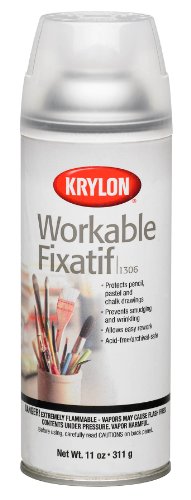
This fixative is formulated to be neutral and unobtrusive, making it an ideal candidate for frames that feature delicate finishes or intricate gold leaf. It is designed to lock in the surface without causing any texture buildup or unwanted visual shifts.
The spray pattern is notably fine, which helps in achieving a uniform coat without the risk of pooling or dripping. It is the safest choice for those who are nervous about potentially ruining a high-quality frame with an overly heavy coating.
If the project involves metallic threads or intricate surface embellishments that extend to the frame, this fixative is the most gentle option available. It preserves the sparkle of metallic elements while dulling the glare from the frame itself.
Blair Matte Spray Fix: Top Archival Quality
Blair is frequently chosen by conservators for its commitment to long-term stability. The formula is specifically engineered to resist yellowing over the decades, ensuring that the frame remains as clear as the day it was finished.
The finish is extremely flat, providing a true matte appearance that is entirely free of unwanted sheen. This is particularly useful for darker frames where any reflective spots would distract from the intricate lace or colorwork displayed inside.
While it is a specialty product, the investment is worthwhile for pieces intended to be passed down through generations. It secures the frame’s appearance, allowing the focus to remain strictly on the fibers held within.
Picking Your Spray: Key Factors to Consider
Choosing the right spray depends heavily on the material of your frame and the environment where the finished piece will reside. Wood, metal, and plastic frames all interact with chemical sprays differently, and porous surfaces may require a heavier coat.
- Material Porosity: Wood absorbs more product than sealed metal, often requiring an initial base layer.
- Environment: High-humidity areas or direct sunlight necessitate a more robust, UV-resistant formula.
- Texture: If the frame has carvings or deep grooves, a fine-mist spray is mandatory to prevent uneven pooling.
- Archival Needs: Always verify that the product label explicitly states “non-yellowing” and “archival safe.”
If you are unsure, consider the weight and finish of the frame. A heavy, dark-stained frame can handle a thicker varnish, while a delicate, painted frame requires a lighter touch to avoid obscuring fine details.
Applying Your Spray Like a Pro: Step-by-Step
Preparation is the secret to a professional result. Always clean the frame surface thoroughly to remove dust and oils, as any trapped particles will become permanently locked under the spray.
- Shake the can for at least two minutes to ensure the matte agents are fully integrated.
- Hold the can 10 to 12 inches away from the surface, using a sweeping motion rather than a fixed spot spray.
- Apply thin, light layers rather than one thick, heavy coat, allowing the spray to dry completely between applications.
- Work in a dust-free environment with good airflow to prevent particles from settling on the tacky surface.
Avoiding “runs” or “drips” is all about patience. If the spray looks wet, you have applied too much; the goal is a fine, uniform mist that settles into a matte layer as the solvents evaporate.
Will the Spray Damage or Yellow Your Project?
A common fear among fiber artists is that the chemicals in these sprays will migrate to the fabric, causing damage or yellowing. While the spray is intended for the frame, accidents can happen, so it is critical to mask the glass and the textile completely before spraying.
Most modern archival sprays are formulated to be non-yellowing, but they can still change the appearance of specific frame finishes if applied too heavily. Synthetic finishes are generally more resilient, but natural wood can sometimes darken slightly when wet with a solvent-based spray.
The danger of yellowing is almost always related to the quality of the spray and the age of the product. Using fresh, high-quality cans and avoiding direct sun exposure during the drying process minimizes this risk significantly.
A Crucial Step: Always Test Your Spray First
Never apply a new product directly to a finished frame without running a small, inconspicuous test. Find a hidden spot on the back or bottom of the frame to spray a small area, allowing it to dry for at least 24 hours.
This test allows you to observe the actual finish, confirming that it achieves the level of matte you desire without interacting poorly with the frame’s finish or paint. If the test area becomes cloudy or sticky, the formula is not compatible with your material.
Think of this like swatching for a sweater; it saves time and prevents catastrophic errors. A simple test ensures that your final frame is a beautiful, glare-free home for your handiwork.
Taking the time to properly finish your frame ensures that your fiber art remains the centerpiece of the room. By selecting the right spray and applying it with patience, you preserve the visual integrity of your work for years to come.
