7 Best Fineliner Nibs For Precise Line Work
Achieve professional results with our guide to the 7 best fineliner nibs for precise line work. Discover your perfect tool and upgrade your drawing kit today.
Precision in drafting charts and annotating patterns requires tools that offer as much control as a well-calibrated set of interchangeable needles. Much like selecting the right needle material for lace versus worsted weight yarn, choosing a fineliner is about matching the tool’s output to the desired level of detail. Clean lines and consistent ink flow are essential when tracking stitch repeats or documenting custom adjustments in a project journal. These seven fineliners provide the reliability necessary to ensure every technical drawing remains as accurate as the gauge swatch that preceded it.
Sakura Pigma Micron: The Archival Standard
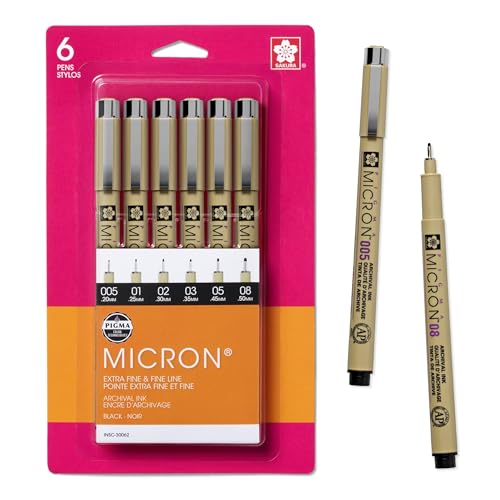

The Sakura Pigma Micron is widely regarded as the baseline for technical drawing, mirroring the reliability of a classic set of nickel-plated needles. Its archival-quality ink ensures that annotations made on pattern margins or custom design sketches will not fade or yellow over time.
Because this ink is pH-neutral and chemically stable, it is an ideal choice for documenting long-term projects that might stay in a binder for years. Much like a high-quality wool that holds its shape through multiple washings, this ink remains crisp and permanent on the page.
However, the nibs can be sensitive to heavy pressure. If a light touch is maintained—similar to the tension required for delicate lace work—the nibs will last through hundreds of pages of charting.
Staedtler Pigment Liner: Best for Versatility

Staedtler Pigment Liners offer a robust build quality that stands up to frequent use, much like a pair of high-grade bamboo needles that maintain their structural integrity over years of knitting. The hardened tips are designed to resist the wear that occurs during repetitive drawing motions.
This pen is particularly effective for knitters who need to move between different types of paper, from smooth printer stock to textured graph paper. It handles various surfaces without the nib fraying or skipping, ensuring consistent line width throughout.
If the goal is to create complex colorwork charts that require both fine detail and bold outlines, this liner provides the necessary range. Its performance remains consistent across different drawing speeds, offering the same predictability as a reliable, non-stretching acrylic yarn.
Copic Multiliner SP: The Refillable Pro Choice
The Copic Multiliner SP is the investment piece of the drawing world, akin to purchasing a set of high-end brass or carbon fiber needles. Its aluminum body provides a balanced, weighted feel in the hand, reducing fatigue during long sessions of drafting complex cables or lace motifs.
The primary advantage here is the refillable ink system and replaceable nibs. Instead of disposing of the entire tool, the core components are swapped out, making this an environmentally conscious choice that mirrors the practice of repairing or re-using knitting notions.
While the upfront cost is higher, the long-term utility is unmatched for those who design patterns frequently. It serves as a permanent fixture in a maker’s toolkit, providing the same comfort and familiarity as a favorite set of circular needles.
Faber-Castell Pitt Pen: Best Waterproof Ink
Faber-Castell Pitt Pens utilize India ink, which is naturally waterproof and lightfast once dry. This makes them the superior choice for knitters who draft in environments where the risk of spills—or simply humid conditions—could compromise a standard pen’s ink.
The brush nib variations available in this line allow for expressive work, which is helpful when sketching schematics or adding flair to pattern notes. It mimics the behavior of a flexible cord on a circular needle, allowing for smooth, fluid strokes.
Because the ink is exceptionally permanent, it is forgiving if a pattern document is handled frequently or exposed to the damp environment of a craft room. For those who prioritize durability, these pens provide an essential layer of security for important project notes.
Uni Pin Fineliner: The Dependable Workhorse
The Uni Pin is the “everyday carry” of the stationery world, performing with the unfailing consistency of a standard worsted-weight wool. It is an affordable, high-performance option that does not require the specialized care of more expensive technical pens.
The ink flow is remarkably consistent, rarely suffering from the start-and-stop issues that can plague lesser quality fineliners. This is ideal for quick notation or sketching out a new stitch pattern on the back of a napkin or a scrap piece of paper.
Its simplicity is its greatest strength. While it may not offer the modularity of professional-grade tools, it fulfills the requirements of 90% of knitting-related tasks with ease and efficiency.
Sharpie Art Pen: For Bold, Smudge-Free Lines
The Sharpie Art Pen is distinct from the traditional felt-tip markers that often bleed through paper. It is designed specifically for precision work, offering a crisp, clean line that is ideal for highlighting key numbers in a printed pattern.
If a knitter tends to write quickly or has a heavy hand, this pen is less prone to smudging than traditional pigment-based fineliners. The ink adheres rapidly to the surface, similar to how superwash wool responds quickly to a block, leaving a finished, professional look.
Because the nib is slightly firmer than that of a Micron, it is better suited for rapid-fire marking of row counts. It is a practical tool for the busy maker who needs to annotate patterns without waiting for the ink to set.
Zebra Sarasa Fineliner: Smoothest Ink Flow
The Zebra Sarasa uses a water-based pigment ink that glides across the page with minimal friction. For a knitter, this feels like working with a slick metal needle that requires almost no effort to move through a stitch.
The flow is consistent, which helps in creating even lines without needing to apply significant pressure. It is a relaxing tool to use when spending an evening documenting a project’s progress in a journal.
While the ink is high quality, it is worth noting that it can take a few seconds longer to dry on non-porous surfaces. Patience with the ink drying time, much like waiting for a garment to dry after a soak, ensures the final result is crisp and legible.
Choosing Your Nib Size: A Practical Guide
- 0.03mm – 0.1mm: Best for highly detailed stitch diagrams and micro-notes.
- 0.2mm – 0.3mm: The sweet spot for standard pattern annotations and graph paper charting.
- 0.5mm – 0.8mm: Ideal for bolding section headers or outlining schematic diagrams.
Choosing a nib size is remarkably similar to choosing a needle size. A finer nib (like a 0.05mm) requires a lighter touch and is best for intricate, small-scale work, just as a 2.00mm needle is meant for fine lace yarn.
Conversely, a thicker nib provides visibility and bold definition. If you are sketching a large, chunky sweater schematic, a thicker nib will make the geometry of the garment much easier to visualize at a glance.
Pigment vs. Dye Ink: What’s the Difference?
- Pigment Ink: Composed of solid particles suspended in liquid. It is waterproof, fade-resistant, and sits on top of the paper, making it perfect for permanent project journals.
- Dye Ink: Composed of colorants dissolved in liquid. It is often more vibrant and offers a smoother flow, but it can fade when exposed to sunlight and will bleed if the page gets wet.
Understanding ink chemistry is much like understanding fiber properties. Pigment ink acts like wool: it is resilient, durable, and holds its own under pressure. Dye ink is more like a delicate silk; it provides beautiful, vibrant color, but it requires careful handling and preservation.
Tips for Keeping Your Fineliner Nibs Clean
- Always cap pens immediately after use to prevent the ink from drying on the nib.
- If a nib begins to skip, gently tap it on a scrap piece of paper or wipe it with a slightly damp cloth to clear any trapped paper fibers.
- Store pens horizontally rather than vertically to keep the ink distribution even across the nib.
Maintenance is the key to longevity. Just as you would store needles in a case to prevent warping, treating fineliners with care ensures the nibs remain precise throughout their lifespan. A clean, well-cared-for nib is the difference between a frustrating drafting session and a productive one.
Selecting the right fineliner is an investment in the clarity of your craft, much like choosing the correct yarn for a sweater’s drape or the perfect needle for a specific stitch pattern. By matching the nib size, ink type, and pen construction to your specific project needs, you ensure that your design notes remain a durable, accurate record of your work. Whether you are charting complex lace or simply keeping track of row counts, these tools will help maintain the precision that every great project deserves.