6 Best Sewing Needles For Applying Paste To Tight Spaces
Struggling with precision application? Explore the 6 best sewing needles for applying paste to tight spaces and master your craft. Read our expert guide today.
Applying precise amounts of adhesive to delicate knit fabrics or intricate needlework requires tools that offer control without damaging individual fibers. While standard sewing needles are designed to pierce fabric, repurposing them as applicators for fabric glue, starch, or anti-fray agents turns them into surgical-grade instruments for tight spaces. Choosing the right needle for this task depends entirely on the viscosity of the paste and the density of the project. A well-selected needle ensures that the bonding agent lands exactly where intended, preventing unsightly residue on the surface of fine yarns like silk or merino.
Clover Darning Needle Set: Best All-Purpose Pick


These needles feature a polished, snag-free surface that is essential when working with delicate fiber constructions. The range of sizes in a standard set allows for versatility, whether one is applying a tiny dot of glue to a knotted yarn end or a larger smear of starch to a lace picot edge.
The blunt-tip design of darning needles acts as a mini-spatula, holding a small bead of paste without absorbing it like a porous tip would. Because they are manufactured with a high-quality nickel-plated finish, they are remarkably easy to wipe clean before the paste dries.
For those who frequently alternate between bulky wools and finer fingering-weight yarns, this set provides a reliable baseline. They are the most forgiving option for beginners who are still developing the steady hand required for precision work.
John James Chenille Needles: For Precise Application

Chenille needles are characterized by a sharp tip and a large, elongated eye, making them excellent for navigating through tight spaces where a blunt needle might struggle to penetrate. The sharpness allows for slight adjustments in the positioning of the paste, especially when working on dense, felted, or tightly spun materials.
When using high-viscosity glues that tend to bunch up, the slender profile of these needles ensures that the application remains controlled and narrow. This is particularly useful for securing the ends of stranded colorwork or reinforcing delicate embroidery stitches.
The trade-off is the sharp point, which can accidentally pierce a delicate ply if one is not careful. Use these when absolute accuracy is required and the needle must touch the very base of a stitch.
Dritz Curved Upholstery Needles: For Awkward Angles

Curved needles are specialized tools that shine when the application point is recessed or hidden behind structural elements of a garment. Applying paste to the inner seams of a knitted bag or the underside of a collar becomes significantly easier when the tool naturally tracks away from the user’s hand.
These needles are generally thicker and more robust, meaning they hold a larger volume of paste than a thin beading needle. They provide excellent leverage when working on bulky, rigid projects where maneuvering a straight needle feels cumbersome or physically impossible.
Avoid using these on sheer or delicate fabrics, as their larger diameter can create visible gaps between stitches. They are best reserved for structural repairs or heavy-duty fabric bonding.
Tulip Hiroshima Tapestry Needles: Premium Choice

These needles are renowned for their superior smoothness and a tip that is tapered with surgical precision. The manufacturing process ensures a lack of burrs or rough spots, which is vital when working with fragile materials that snag at the slightest friction.
The strength of the steel used in Tulip needles prevents bending, even when the needle is used to push thick paste into dense seams. They offer a tactile feedback that is unmatched, allowing the user to “feel” the weave of the fabric as they apply the adhesive.
While the price point is higher than standard household varieties, the longevity of these needles makes them a sound investment for the frequent maker. They represent the gold standard for those who prioritize tool quality and smooth operation.
Beadsmith English Beading Needles: For Fine Lines

Beading needles are extremely thin and flexible, making them ideal for injecting paste into the smallest, tightest crevices. If one needs to apply a microscopic amount of glue to a single ply of a yarn strand, these are the only tools that offer sufficient delicacy.
Their extreme flexibility is both a benefit and a liability; they can navigate around buttons and hardware with ease, but they lack the rigidity for applying thicker pastes. They work best with liquid-based adhesives that flow readily off the metal surface.
These needles are delicate by design and can break under pressure. Treat them as precision instruments rather than heavy-duty tools, and they will become the most important item in a detail-oriented toolkit.
Singer Heavy Duty Household Needles: Budget Option
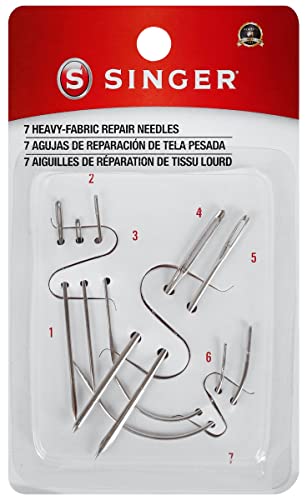
For projects where the adhesive might eventually ruin the needle, or for applications involving messy, abrasive pastes, a budget-friendly option is practical. Singer household needles are easy to source and perform adequately for simple, non-critical tasks.
These needles are generally stiff and provide a solid, consistent base for applying medium-weight pastes. They lack the high-end polish of specialty needles, so they may require a quick rub with a fine-grit sandpaper if a burr is detected during initial use.
Because they are inexpensive, they are perfect for experimentation with different adhesives. They offer a reliable “disposable” option for high-mess scenarios where cleaning might prove too tedious.
How to Pick a Needle for Your Paste’s Thickness
The viscosity of the paste dictates the ideal tool geometry. A thick, gel-like paste requires a needle with a wider shaft and perhaps a slight groove to hold the material in place during transport to the fabric.
Liquid glues and thin starches, conversely, adhere best to very fine, smooth needles. If the needle is too wide, the thin liquid will bead up and fall off before it reaches the target area.
- Thin/Liquid Adhesive: Use fine beading needles or thin tapestry needles.
- Medium/Gel Adhesive: Use chenille or standard darning needles.
- Thick/Paste Adhesive: Use thicker upholstery or heavy-duty sewing needles.
Always test the combination of paste and needle on a scrap piece of the same yarn or fabric before moving to the final project. This prevents accidental saturation or uneven application on the finished piece.
Sharp vs. Blunt Tips: What You Really Need to Know
The choice between a sharp and a blunt tip changes the interaction between the tool and the fiber. A sharp tip is intended to penetrate the fiber structure itself, which is useful when the paste must be deposited deep inside a stitch or seam.
Blunt tips are designed to slide between existing stitches without damaging them. This is the safer choice for knitwear, as it prevents the needle from splitting the plies, which can lead to weakened yarn and unsightly loops.
If the application requires pushing the paste into a knot, a sharp needle is superior for nudging the knot open. If the goal is simply to “paint” the paste onto the surface, a blunt needle will always provide a cleaner, safer experience.
Techniques for Loading and Applying Paste with a Needle
Effective loading involves dipping the tip of the needle into the paste and allowing a small, controlled amount to collect on the side of the shaft. Avoid dunking the entire needle, as excess paste will inevitably smear onto the surrounding areas of the project.
When applying, use a “dotting” motion rather than a dragging motion. Dragging a needle saturated with paste through fibers will create a messy trail and often results in over-application.
If the paste is too thick, dampen the needle slightly before loading; this helps the paste adhere to the metal surface. Keep a clean, lint-free cloth nearby to wipe the needle after every two or three applications to ensure the paste does not build up and dry on the metal.
Keeping Your Needles Clean and Ready for Next Time
Maintenance is the difference between a tool that lasts years and one that is tossed after a single project. Adhesive residue, if allowed to harden, becomes a permanent obstacle that can snag yarn fibers and compromise the needle’s performance.
Immediately after finishing the application, wipe the needle with a damp cloth or a solvent appropriate for the type of paste being used. If the glue has already hardened, a brief soak in warm, soapy water or a gentle swipe with isopropyl alcohol will usually dissolve the buildup.
Store needles in a dry environment to prevent rust, which can introduce iron oxide stains onto light-colored yarns. Keeping needles in their original cases or a dedicated needle book ensures that the tips remain protected and organized for the next session.
Investing in a few high-quality needles for adhesive application will save countless hours of frustration and protect the integrity of delicate knitting projects. By matching the needle size and tip type to the specific paste and fiber, the maker gains the surgical precision necessary for a professional finish.