7 Best Archival Ink Journals For Long Term Storage
Preserve your memories for decades with these 7 best archival ink journals for long-term storage. Explore our top-rated recommendations and start writing today.
Maintaining a detailed record of every project is as vital to a knitter’s growth as choosing the right wool for a complex cabled sweater. Over decades of crafting, the notes kept on gauge, yarn substitutions, and modification details become an irreplaceable personal reference library. Selecting an archival-quality journal ensures these legacy details remain legible long after the blocking pins are put away. This guide evaluates the best paper options for preserving a knitting life’s work against the test of time.
Leuchtturm1917 Notebook: The Classic Choice


The Leuchtturm1917 is a staple in the maker community for its numbered pages and pre-printed index, which simplifies tracking hundreds of finished garments. The 80g/m² paper is acid-free, providing a stable foundation that resists yellowing over decades of shelf life.
Its standout feature for knitters is the robust binding that allows the book to lay flat while open. This is essential when referring to a complex lace chart or a row-by-row increase instruction while managing a project on the needles.
- Pros: Includes a table of contents and matching stickers for spine labeling.
- Cons: The paper weight is thinner than other options, which can lead to ghosting if using heavy markers for color-coding swatches.
Bottom line: If you prefer an organized, methodical approach to documenting stash inventory, this notebook is the superior choice.
Rhodia Webnotebook: For Fountain Pen Lovers

The Rhodia Webnotebook is renowned for its high-quality, ivory-colored paper that handles wet inks with minimal feathering. For knitters who use fountain pens to record yarn dye lots or color theory notes, this paper prevents the unsightly bleeding that obscures handwriting.
The paper is exceptionally smooth, which provides a tactile contrast to the texture of working with rustic, high-twist wools. It offers a premium writing experience that makes documenting the mundane details of a project feel like a significant part of the craft.
- Pros: Extremely fountain pen-friendly; no ink spread even with broader nibs.
- Cons: The leatherette cover is durable but prone to scratching if tossed into a project bag alongside sharp DPNs or metal scissors.
Bottom line: Choose this if your documentation process involves fountain pens, calligraphy, or detailed ink-based sketches of garment schematics.
Clairefontaine My Essential: Smooth & Timeless

Clairefontaine is famous for manufacturing paper that feels like velvet to the touch, and the My Essential line brings that quality to a durable, bound format. The 90g/m² brushed vellum paper is pH-neutral, ensuring that your long-term notes remain stable and white for a lifetime.
The texture is so refined that it minimizes friction, which is helpful when you are quickly scribbling down a row count change while your hands are tired from knitting. It provides a consistent, reliable surface that never surprises the user with unexpected ink absorption.
Bottom line: This is the ideal journal for knitters who prioritize paper texture and want a high-performance surface for daily logging.
Stillman & Birn Zeta Series: For Mixed Media
The Zeta series is the heavy hitter for knitters who treat their journals as visual design books. The thick, 270g/m² paper is heavy enough to support collage, glued-in yarn snippets, and even light watercolor washes used for planning colorways.
If you like to tape down small swatches or attach printed photos of your finished projects alongside your technical notes, this paper will not buckle under the weight. It essentially functions as a scrapbook and a technical log in one, making it a perfect companion for designing custom garments from scratch.
- Pros: Exceptional durability; can handle heavy glue and mixed media without warping.
- Cons: Significantly thicker and heavier than standard journals, which limits portability in smaller project bags.
Bottom line: If your design process relies on swatches, sketches, and visual inspiration, the Zeta is the only choice that won’t give way under the bulk.
Exacompta Basic Journal: Professional & Durable
The Exacompta Basic Journal utilizes archival-grade paper that is specifically designed for permanence. Its sewn binding is built to endure frequent handling, mirroring the sturdiness required of a well-made, long-wearing wool cardigan.
It lacks the bells and whistles of modern planners, focusing instead on pure utility and longevity. This makes it an excellent choice for a “master ledger” where you keep permanent records of every project you have ever completed, rather than a transient, daily notebook.
Bottom line: Invest in this if you need a professional-grade, no-nonsense repository for your permanent knitting records.
Midori MD Notebook: Minimalist Japanese Design
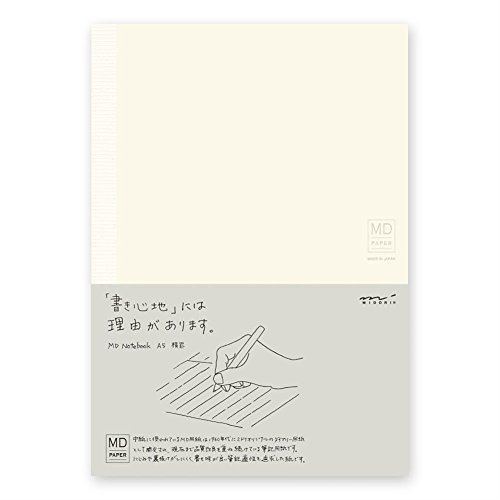
The Midori MD Notebook is a masterclass in simplicity, featuring cream-colored paper that is gentle on the eyes during late-night knitting sessions. The paper is designed specifically to prevent ink bleed and is notably resistant to the passage of time.
Its minimalist design allows the contents—your notes—to take center stage without the distraction of pre-formatted headers. This flexibility is ideal for knitters who vary their documentation style from project to project, switching between narrative descriptions and mathematical charts.
Bottom line: Perfect for the maker who prefers a clean, distraction-free environment to document their creative process.
Pentalic Traveler Pocket Journal: Budget-Friendly
The Pentalic Traveler is an approachable, reliable option that does not compromise on the essentials of archival quality. It uses high-quality, acid-free paper that provides a solid writing experience without the steep price tag of luxury stationery.
It is small enough to fit into a medium-sized notions pouch, meaning you can record your gauge or row counts at the local yarn store or during a knitting retreat. It is the workhorse of the journaling world—sturdy, reliable, and entirely focused on utility.
Bottom line: The best choice for those who need a durable, portable logbook for project bags and travel without breaking the bank.
What Makes Paper and Ink Truly “Archival”?
Archival quality is defined by the absence of acid, which causes paper to yellow and become brittle over time. Wood-pulp paper contains lignin, an acidic substance that breaks down when exposed to light and oxygen, eventually destroying the fibers of the page.
For long-term storage, look for paper labeled “acid-free” or “buffered.” Buffered paper contains a small amount of calcium carbonate, which neutralizes acids that may develop in the future. Pair this paper with archival, pigment-based ink rather than dye-based ink, as pigment particles are more resistant to fading under UV light.
Pairing Archival Pens With Your New Journal
The choice of pen is just as critical as the choice of paper for permanent records. Dye-based inks, common in many standard pens, will fade into illegibility within a few years of exposure to ambient light.
Instead, seek out pens labeled “archival” or “permanent,” specifically those utilizing carbon-based pigments. These inks chemically bond with the paper fibers, ensuring that your records of delicate lace modifications or stranded colorwork ratios remain sharp and readable for future generations.
How to Store Your Completed Fiber Arts Journals
Once your journal is filled, its life as an archival object truly begins. Protect your records by storing them in a cool, dry environment, away from direct sunlight which can accelerate the breakdown of both paper and ink.
Avoid storing journals in basements or attics, where humidity fluctuations can cause mold or attract pests that enjoy the cellulose in paper. Keep them upright on a shelf rather than stacked, allowing for air circulation to prevent the binding from warping under the weight of other books.
Establishing a consistent habit of documenting your knitting not only creates a reference for future projects but leaves a beautiful, tangible history of your evolution as a maker. By prioritizing archival materials, you ensure that the effort poured into every stitch is preserved for years to come.