7 Best Sketch Clips For Holding Paper In Place
Keep your artwork secure with our top picks. Explore the 7 best sketch clips for holding paper in place and upgrade your drawing setup with our expert guide.
Keeping a complex lace chart or a dense pattern book open while managing two needles and a ball of yarn is a constant struggle for knitters. A reliable clip keeps your place visible without requiring a constant, distracting adjustment that pulls focus from the rhythm of the knitting. Choosing the right tool depends entirely on whether the pattern lives on a single sheet of printer paper or in a heavy, spiral-bound reference book. These seven solutions address different organizational styles, ensuring the pattern remains accessible whether working in a cozy armchair or commuting on public transit.
Clover Wonder Clips: The Versatile All-Rounder
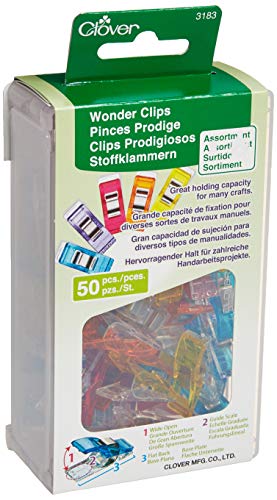

Clover Wonder Clips are widely recognized for their ability to replace pins in sewing, but they possess a hidden talent for holding knitting charts. Their flat base allows them to sit sturdily on a tabletop without tipping, while the strong spring provides a reliable grip on standard-weight paper.
The design is particularly effective for knitters who prefer to keep their patterns organized on a rigid backing board. Because they open wide, they can hold multiple pages of a complex colorwork chart together without creating bulky creases.
They are less ideal for securing papers to thicker objects, as the jaw depth is limited compared to heavy-duty industrial clips. However, for everyday chart management, their portability and rounded edges ensure they won’t snag delicate hand-dyed yarns if they happen to come into contact with your project bag.
Lamicall Gooseneck: Best for Hands-Free Viewing

For those who rely on digital patterns or tablets, the Lamicall Gooseneck provides a robust structural solution that goes beyond a simple clip. By mounting the device to a table edge, you keep your workspace completely clear of paper clutter.
This is the ultimate tool for knitters working on intricate lace or long-form cables where constant glancing at a screen is required. The adjustability allows for precise positioning, which helps maintain ergonomic posture and reduces neck strain during long sessions.
The tradeoff is the lack of portability compared to small hand-held clips. It is a stationary tool, best reserved for the primary knitting station rather than the travel bag.
ACCO Binder Clips: The Classic Budget-Friendly Pick

Binder clips are the utility players of the knitting world, and their simplicity is their greatest strength. The metal arms fold flat, keeping them out of the way, or can be removed entirely for a permanent, low-profile hold on a clipboard.
These clips are perfect for pinning a pattern to a cardboard backing or a stiff project folder. The various sizes available mean you can select a micro-clip for a single sheet or a large, heavy-duty size for a thick pattern compilation.
Take care when using them with delicate or high-value printed patterns, as the metal edges can leave pressure marks or indentations. Always ensure the edges are smooth before attaching them to prevent minor paper tears.
U-Mark Jumbo Clip: Best for Thick Pattern Books

When tackling a heavy reference book or a massive sweater pattern with dozens of pages, standard clips often fail to provide enough tension. The U-Mark Jumbo Clip bridges the gap between a paper clip and a heavy-duty clamp.
These clips offer a deep reach and a powerful grip, making them the superior choice for keeping thick volumes open to the correct page. They are essentially industrial-strength tools repurposed for the studio.
Their size can be cumbersome, and they are prone to taking up significant space in a small project bag. Use them primarily for large-format pattern books that require maximum leverage to stay flat.
KnitPro Magma Clips: Perfect for Magnetic Boards

Designed specifically for the fiber arts, KnitPro Magma Clips are tailored for use with magnetic pattern holders. They combine the gripping power of a clip with the convenience of a magnetic backing.
They are indispensable for knitters who use magnetic boards to track their progress through charts. The magnets are strong enough to hold several pages securely without sliding, even if the board is tilted at an angle.
The main consideration is compatibility; they only function as intended when paired with a ferromagnetic surface. While they can act as standard clips, their specialized design is wasted unless utilized with a magnetic system.
Della Q Oh Snaps: The Most Stylish Pattern Tamer
Della Q Oh Snaps are designed with the modern maker in mind, focusing on both form and functionality. They offer a secure, snap-shut mechanism that is less prone to accidental opening than spring-loaded clips.
These are excellent for keeping patterns tucked into the pockets of a knitting bag without snagging the lining. Their aesthetic appeal makes them a favorite for knitters who enjoy coordinating their tools with their project bags.
Because they are made from materials like canvas and leather, they provide a gentle hold that is less likely to damage paper. They are generally not as strong as metal clips, so they work best for folding and securing smaller documents or swatches.
Dritz Mighty Clips: The Strongest Grip for Travel
Dritz Mighty Clips offer an aggressive grip that makes them the go-to for knitters who travel. They are designed to hold tight even when jostled in a carry-on bag or a crowded backpack.
The high-tension spring ensures that your pattern stays exactly where you left it, even through airport security or bumpy transit. They are virtually indestructible and hold up well to the wear and tear of active, on-the-go knitting.
They can be difficult to open for those with arthritis or limited grip strength due to their strong spring tension. Test the opening action before committing to a large set if hand fatigue is a concern.
How to Choose the Right Clip for Your Project Bag
Selecting the correct clip starts with identifying the weight and volume of the material you need to hold. A lightweight pattern sheet needs a gentle clip, while a spiral-bound book requires significant clamping force.
Consider your knitting environment next. If you work primarily at a dedicated desk, a gooseneck mount or heavy clips are excellent choices. If you are a mobile knitter who switches between knitting in the car, at a café, and on the couch, prioritize portability and snag-free designs.
- For thin, single sheets: Use small binder clips or magnetic strips.
- For heavy pattern books: Use Jumbo clips or sturdy spring clamps.
- For travel: Prioritize clips with a low profile that won’t snag yarn or catch on project bag pockets.
Beyond Paper: Clever Uses for Your Pattern Clips
Pattern clips are surprisingly versatile tools that can assist with various aspects of the knitting process. Use them to hold the ends of circular needles together to prevent stitches from sliding off when the project is in storage.
They are also excellent for securing loose yarn ends during colorwork or weaving in ends while you work. When blocking, use clips to hold the edges of a garment to a blocking board, providing more tension than a single pin could offer.
Experiment with using them as makeshift stitch markers for very large projects where standard markers might be too small to be useful. Their ability to hold fabrics in place during seaming also makes them a valuable asset for garment construction.
Pattern Clips vs. Magnets: Which Is Better?
Magnets provide a sleek, low-profile way to track rows and hold patterns in place without obstructing the text. They are fantastic for charts but require a dedicated metal backing to function effectively.
Clips are inherently more versatile because they do not rely on the surface material to work. They hold thick books better than magnets ever could, though they may obscure small sections of the pattern text.
Choose magnets for fine-tuned chart tracking and portability with magnetic boards. Choose clips when dealing with bulkier materials or when you need a solution that works on any surface, anywhere.
Choosing the right clip can transform a frustrating knitting session into a seamless, enjoyable experience. By matching the strength and size of your clips to your specific project needs, you eliminate unnecessary interruptions and maintain the flow of your work. While no single clip is the perfect solution for every scenario, having a small variety of these tools in your knitting kit ensures that you are prepared for any pattern, regardless of its size or complexity.