6 High Carbon Steel Needles For Leather Stitching
Upgrade your leatherwork with our top 6 high carbon steel needles for leather stitching. Explore these durable, sharp tools and buy your professional set today.
Leatherworking shares a profound mechanical intimacy with knitting, as both crafts rely on the precise tension of a strand being drawn through a resistant medium. Just as you choose a specific needle material to achieve the perfect stitch definition in a wool cable, selecting the correct steel needle dictates the structural integrity of your leather seams. High carbon steel stands as the industry gold standard, offering the necessary rigidity to penetrate dense hides without snapping under pressure. This guide examines the essential needle types required to translate fiber arts precision into the durable world of leather craft.
John James Harness Needles: The Saddle Stitch Standard


John James harness needles are widely considered the gold standard for anyone serious about saddle stitching. These needles are manufactured with a blunt point, which allows the maker to find existing holes created by a stitching chisel with ease, much like finding the correct stitch in a complex lace pattern.
The finish is remarkably smooth, ensuring the needle glides through thick vegetable-tanned leather without drag. This lack of friction prevents the dreaded fraying of high-quality waxed threads, preserving the integrity of the cord in the same way a polished steel knitting needle protects delicate silk fibers.
When working on heavy-duty projects like belts or dog collars, the harness needle provides the necessary leverage for a consistent, professional stitch. They are non-negotiable for those prioritizing traditional craftsmanship and long-term durability.
C.S. Osborne Glover’s Needles: For Piercing Tough Hide

Glover’s needles are designed with a unique triangular point that acts as a blade, slicing through leather rather than pushing it aside. This design is essential when working with chrome-tanned leathers or thicker hides that have not been pre-punched.
Using a needle with a cutting edge is akin to using a sharper needle point when knitting with high-twist wool; it offers greater control and cleaner entry. Because these needles physically cut the fiber, they leave a distinct, clean hole that prevents the leather from tearing under tension.
It is vital to use these strictly for materials that require piercing, as their blade-like tips will compromise the structural stability of lighter materials. They are specialized tools reserved for specific, high-resistance applications.
Tandy Leather Blunt Needles: For Pre-Punched Projects
Tandy Leather’s blunt needles are crafted specifically for kits or projects where the stitching holes have already been established by a punch. The blunt, rounded tip ensures the needle cannot accidentally pierce the leather surface, which is a common mistake that can ruin a pristine piece of work.
Much like using a tapestry needle for weaving in ends on a completed sweater, these needles prioritize the safety of the surrounding material. They are exceptionally forgiving for beginners who are still developing the manual dexterity required to keep stitches uniform.
While they lack the piercing power of a harness or glover’s needle, their utility in assembly-heavy projects is unmatched. When the holes are already present, the sharp tip of a standard needle becomes a liability rather than an asset.
Dritz Curved Upholstery Needles: For Awkward Angles

Curved needles allow the maker to navigate difficult spaces where a straight needle simply cannot reach, such as the inside of a bag gusset or a curved seam on a furniture piece. The arc of the needle dictates the angle of the stitch, mimicking the geometry of a circular knitting needle working in the round.
This specialized shape helps maintain tension in cramped quarters, preventing the leather from puckering or distorting. Without this curve, reaching the back of a deep corner often results in uneven stitching and potential damage to the leather edge.
These are not for everyday sewing, but they serve as the “emergency utility” option in any leatherworker’s kit. Keep them on hand for the specific moments when a straight path is physically obstructed.
L-W Lacing Needles: Ideal for Decorative Leatherwork
Lacing needles, often featuring a threaded internal mechanism, are designed to hold flat leather lace securely during complex braiding or lacing patterns. They effectively lock the lace in place, preventing the slip that occurs when using a standard eyed needle for flat materials.
In knitting terms, think of this like a stitch holder that prevents dropped stitches; it maintains the placement of the material throughout the entire movement. By keeping the lace flat and taut, these needles ensure that the decorative pattern remains consistent and visually balanced.
They are indispensable for projects involving whip-stitching or intricate edge braiding. Attempting this work with a standard eye needle often leads to the lace twisting, which ruins the finished aesthetic of the piece.
FEPITO Leather Needle Kit: The Versatile Starter Set
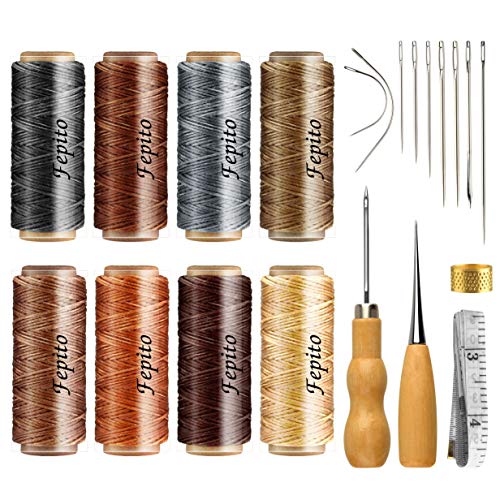
The FEPITO kit provides a broad spectrum of needle gauges and shapes, acting as an excellent entry point for someone mapping out their future in leatherwork. It allows for experimentation across different weights of leather, helping the maker understand how needle diameter correlates to thread weight.
Much like a starter set of interchangeable knitting needles, having a variety of sizes encourages the user to find their personal preference regarding drag, tension, and ease of use. It is far more cost-effective to test these varieties in a kit than to purchase specialized needles individually.
While the steel quality may not reach the same professional-grade longevity as individual specialized brands, the utility of having a complete range is vital for skill development. It allows you to match the tool to the task without hesitation.
How to Choose the Right Leather Needle Point
The choice of point is arguably the most important decision in the process, as it dictates how the needle interacts with the grain of the hide. A diamond or triangular point is best for heavy, dense leather, while a blunt point is mandatory for pre-punched holes.
Consider the material structure: * Blunt tips: Best for projects where the hole is already defined, such as hobbyist kits. * Triangular/Diamond points: Best for creating new holes in tough, thick, or chrome-tanned leathers. * Round points: Useful for softer, garment-weight leathers where you want to displace fiber rather than cut it.
Selecting the wrong point can lead to “walking” stitches or unintended perforations. Always match the geometry of the point to the mechanical requirements of the project at hand.
Why High Carbon Steel Matters for Your Needles
High carbon steel is chosen for leather needles because it offers a superior balance between hardness and flexibility. A needle that is too brittle will snap under the tension of pulling thick waxed thread through dense grain, while one that is too soft will bend and lose its shape.
This material property is remarkably similar to the requirements of high-end knitting needles that must remain rigid yet feel comfortable in the hand. The steel holds a sharp edge longer and resists the abrasive nature of both the leather and the wax coating on the thread.
Investing in high carbon steel is an investment in the long-term success of your projects. Cheap, plated needles often become dull or rusty, which eventually damages the leather surface and compromises the structural integrity of your stitching.
Pairing Needles With the Right Waxed Thread
The rule of thumb for leather stitching is that the thread should fill the hole created by the needle, but not by so much that it causes the leather to stretch or tear. If the needle is too thick for the thread, it will leave large, unattractive gaps in the seam.
If you are using a finer waxed thread, choose a thinner, high-quality needle to maintain a sleek, tight stitch. If your thread is bulky or braided, you need a larger eye to prevent the thread from bunching up, which causes the needle to stick mid-stitch.
Always test your thread and needle combination on a scrap piece of leather before starting the final assembly. This ensures that the stitch pull-through is smooth and that the final knot is secure and unobtrusive.
Safely Using and Storing Your Leather Needles
Leather needles are inherently sharper and more prone to breakage than standard sewing needles, making storage and handling a primary safety concern. Store them in a dedicated case with a felt insert or a magnetic tray to prevent them from rolling off the workspace and potentially causing injury.
Maintain your needles by wiping them clean after every project to remove residual wax or oils that can attract dust and grime. If a needle shows signs of rusting or if the point becomes burred, discard it immediately, as these defects will tear the leather fibers and ruin the look of your seam.
Treat your leather needles with the same respect you give your finest circular needles. Proper care extends the life of these tools, ensuring they are always ready to provide the consistent, professional results your projects deserve.
Ultimately, the mastery of leather stitching rests on the marriage between the right needle and the intended material. By understanding these six varieties and their specific mechanical roles, you gain the confidence to execute projects that are both functional and enduring.