6 Best Parchment Drying Sheets For Beginners
Struggling with sticky drying projects? Discover the 6 best parchment drying sheets for beginners to achieve perfect results. Read our expert guide to shop now.
Blocking is the final, essential step that transforms a piece of knitted fabric from a loose collection of stitches into a finished garment with professional drape and defined edges. While many beginners mistakenly believe they can simply lay a project flat on a bath towel, specialized drying surfaces offer superior air circulation and structural support. Choosing the right tool depends on your space, your budget, and the specific fibers currently occupying your needles. These six options represent the most reliable solutions for ensuring your hard work retains its intended shape throughout the drying process.
KnitPicks Blocking Mats: The Best All-in-One Kit


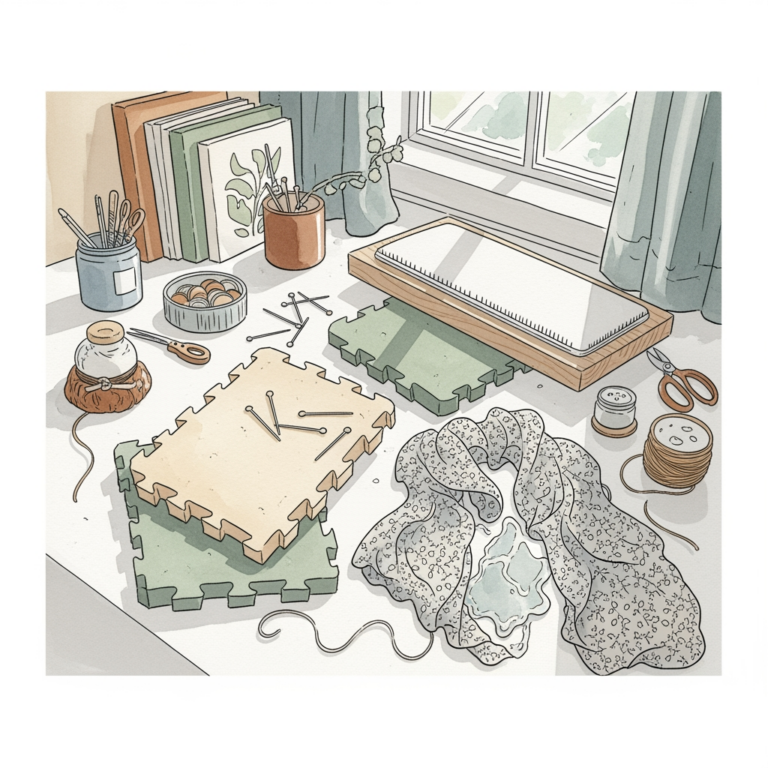
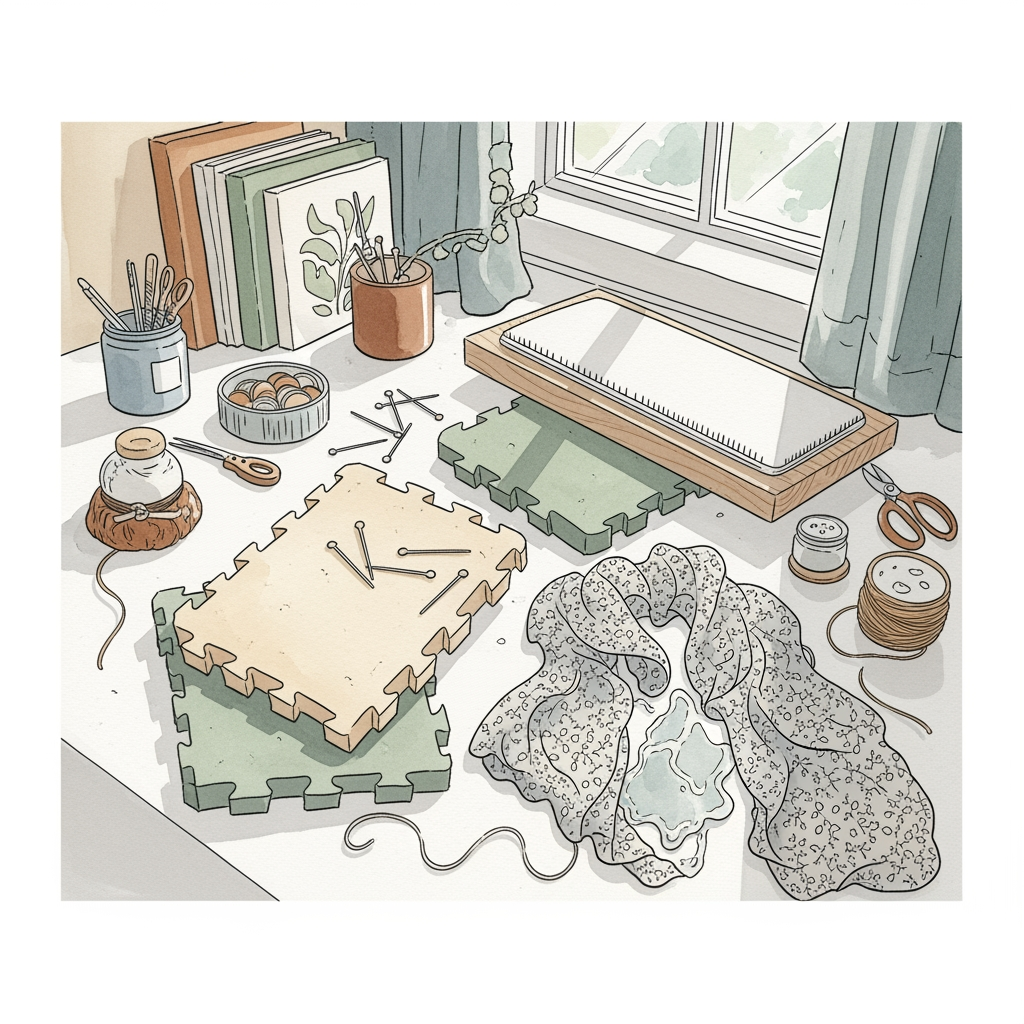
These interlocking foam tiles provide a dedicated, grid-lined surface that is invaluable for achieving precise dimensions. The grid markings act as a visual guide, ensuring that every corner of a shawl or sweater panel is blocked symmetrically.
The foam construction is firm enough to accept T-pins or blocking wires without warping, yet soft enough to handle delicate lace. Because the tiles interlock, they offer versatility for projects of varying sizes, from small baby garments to large adult pullovers.
The primary benefit here is the modularity, which allows for customization based on the project at hand. If you frequently knit shawls, the ability to expand your workspace is a significant advantage over a fixed-size mat.
OXO Good Grips Sweater Dryer: For Maximum Airflow

When dealing with heavy wool or thick cotton sweaters, moisture trapped against a flat surface can lead to slow drying times and potential mildew odors. The OXO dryer uses a raised mesh design that allows air to circulate underneath the fabric, significantly speeding up the drying process.
This feature is critical for high-twist yarns or dense, Aran-weight knits that tend to hold water. By preventing the garment from resting directly on a solid surface, it ensures that gravity does not pull the wet, heavy fabric out of its intended shape.
The sturdy, elevated frame keeps your laundry off the counter while maximizing ventilation from all sides. It is an excellent choice for those who want to avoid the “musty” smell sometimes associated with air-drying natural fibers.
Euclan Wrapture Towel: The Most Absorbent Option
For knitters working with high-moisture-retention fibers like bamboo, silk, or superwash wool, a standard household towel often falls short. The Euclan Wrapture Towel is designed specifically for fiber arts, featuring a unique weave that draws excess water away from the garment rapidly.
Efficiency is the name of the game when it comes to blocking, as shorter drying times equate to less risk of fiber degradation. By pulling moisture into the towel rather than letting it sit on the surface, this product helps maintain the structural integrity of the yarn.
This is a professional-grade tool that eliminates the guesswork involved in the “towel roll” method. If you are tired of your projects remaining damp for days, this highly absorbent material is a game-changer.
Honey-Can-Do Stackable Dryer: Our Space-Saving Pick

Small apartment living often restricts a knitter’s ability to dedicate entire tables or floor space to blocking. The Honey-Can-Do system solves this by allowing multiple dryer units to be stacked vertically, utilizing height instead of floor area.
Each tier provides a separate mesh surface, meaning you can block a full sweater set—front, back, and sleeves—simultaneously without them touching. This organized approach minimizes the footprint of your drying station while maximizing output.
The lightweight frames are easy to assemble and store flat when not in use, making them ideal for the casual maker. It is the most practical solution for anyone balancing a knitting hobby with limited square footage.
Cocoknits Super-Absorbent Towel: A Luxury Choice
When the goal is to protect delicate, expensive fibers like cashmere or hand-dyed angora, using a high-quality surface is paramount. The Cocoknits towel is designed for knitters who view blocking as an extension of the craft itself, providing a gentle, lint-free environment.
These towels are crafted to be large enough for full-sized garments while remaining lightweight and easy to handle. The material is specifically engineered to be colorfast, ensuring that no dye transfer occurs during the critical blocking phase.
While it carries a higher price point, the longevity and performance of the material justify the investment. It is the perfect pairing for a luxury project that demands the highest level of care.
Boye Interlocking Blocking Boards: Budget-Friendly
For the beginner who is already investing heavily in needles, yarn, and patterns, the Boye interlocking boards offer a reliable, cost-effective entry point. These foam tiles fulfill the core requirement of providing a pin-able, flat surface without unnecessary bells and whistles.
They are durable, simple to clean, and easily replaceable if a specific tile becomes worn over time. While they may lack the high-density premium feel of more expensive brands, they perform the essential task of stabilizing your fabric perfectly well.
If you are just beginning to build your toolkit, this is a sensible way to acquire a functional blocking setup. Focus your budget on high-quality yarn, and use these reliable boards to ensure the final result looks professional.
“Parchment Sheet” vs. Blocking Mat: A Quick Guide
A common misconception in the knitting community is that parchment paper, which is used for baking, can serve as a suitable blocking surface. While parchment paper is water-resistant, it does not provide the structure or air permeability required to dry knitted fabric correctly.
- Parchment Paper: Offers zero absorption, traps moisture, and does not allow you to pin your work securely.
- Blocking Mats: Provide essential drainage, allow for airflow, and give you a firm surface to manipulate the dimensions of your fabric.
Only use parchment paper as a temporary barrier if you are concerned about dye bleed onto a clean surface. Never treat it as a substitute for a legitimate blocking mat or towel.
How to Dry Knits Without Stretching Them Out
The most common mistake during drying is allowing the weight of the water to pull the garment into a distorted shape. Always remove as much water as possible by laying the item on a dry towel and rolling it up, pressing gently to squeeze out the excess.
Once the item is damp rather than soaking, transfer it to your blocking surface and lay it out flat. Never hang a wet, knitted item on a hanger, as gravity will inevitably cause the shoulders to stretch and the fabric to grow in length.
Always measure your garment against your intended gauge and pattern schematics while it is wet. Use pins to gently coax the fabric into shape, but avoid aggressive stretching unless the pattern specifically calls for opening up lace holes.
Mats vs. Towels vs. Racks: Which Is Right for You?
Choosing between these tools requires an honest assessment of your typical projects. Mats are ideal for precision, such as matching panels or blocking intricate lace, while racks provide the best airflow for heavy, dense sweaters.
- Choose Mats: If you knit items that require specific shaping or geometric accuracy.
- Choose Racks: If you focus on heavy woolens that need deep, consistent airflow to dry safely.
- Choose Specialized Towels: If you work with fine fibers that need rapid moisture extraction to maintain their sheen and texture.
Remember that you can combine these methods, such as placing a specialized towel over a mesh rack. The goal is always to keep the fabric stable and dry it as evenly as possible.
Do You Really Need to Block Every Single Project?
The short answer is yes; blocking is not optional if you want your work to look finished. Even if a project seems “good enough” off the needles, the water-based process resets the tension of the stitches, evening out tiny inconsistencies in your gauge.
For items like cables, blocking is the only way to make the stitches pop and the design definition sharp. For stockinette fabric, it eliminates the slight curls at the edges and provides a smooth, professional hand.
Skipping this step is like baking a cake and forgetting to decorate it; it is still edible, but it lacks the polish of a professional effort. Treat blocking as the final, rewarding stage of your creative process rather than a chore to be avoided.
By selecting the right tools for your specific needs, you transform your hand-knitted pieces into heirlooms. Whether you choose a stackable rack for space-saving efficiency or a modular mat for perfect symmetry, remember that your choice should support the unique properties of your fiber. Consistent practice with these tools will lead to more professional outcomes and greater pride in every finished project.