
6 Best Earring Findings For Matching Costume Sets
Upgrade your jewelry making with the 6 best earring findings for matching costume sets. Explore our top hardware picks and start crafting your unique designs today.
Creating matching costume sets often involves marrying the structure of knitted or crocheted embellishments with the delicate mechanics of jewelry making. Selecting the right earring finding determines whether a finished piece feels like a cohesive accessory or a fragile, unfinished craft project. High-quality hardware ensures that intricate wirework or tiny fiber motifs remain secure throughout a full day of wear. Balancing aesthetics with durability is the secret to elevating handmade accessories into professional-grade wearable art.
Beadsmith Gold-Plated Leverbacks: Most Secure


Leverbacks are the gold standard for projects that demand high-security hardware. The hinged mechanism snaps firmly into place, creating a closed loop that prevents the finding from slipping out of the ear during movement.
These are ideal for heavier fiber ornaments, such as beaded micro-crochet flowers or intricate lace motifs. Because the weight is distributed evenly across the closed loop, there is significantly less risk of snagging the finding on a scarf or sweater collar.
Opt for these when the wearer plans to move frequently, such as at a craft fair or a gallery opening. While gold-plating provides a luxurious finish, keep in mind that the base metal underneath can oxidize over time. Use these when peace of mind and structural integrity are the top priorities.
Unicraft Niobium Fish Hooks: Hypoallergenic Pick
Sensitivity to metal is a common issue that can render beautiful handmade earrings unwearable for many individuals. Niobium is an inert metal, making it an excellent choice for those who struggle with traditional nickel-based alloys.
These fish hooks are particularly useful when gifting items to others whose metal tolerances remain unknown. Unlike plated options that may lose their protective coating through friction, niobium is solid throughout and naturally hypoallergenic.
The wire gauge on these is often slightly thicker, providing a sturdy base for attaching jump rings. If the fiber work is exceptionally lightweight, ensure the jump ring is closed tightly to prevent the hook from sliding out. Choose these for long-term comfort and safety above all else.
Charming Beads Kidney Wires: Best for Dangles
Kidney wires offer a distinct aesthetic that creates a long, elegant line. The elongated teardrop shape provides ample room to hang multi-layered yarn tassels or complex beaded dangles without crowding the earlobe.
The locking mechanism on a kidney wire is surprisingly secure once seated in the catch. However, it requires a bit of manual dexterity to open and close correctly without distorting the wire’s shape.
These are best suited for lightweight fiber pieces that benefit from a bit of swing and motion. Because the wire is relatively thin, avoid attaching heavy metal charms alongside heavy wool or cotton elements, as this can pull the wire out of alignment. Use them when the design calls for a dramatic, flowing silhouette.
Darice Flat Pad Posts: Top for Glued Elements
Flat pad posts are the essential bridge between a rigid component and an earlobe. They feature a small, flat disc designed for the application of industrial-strength adhesive.
These are perfect for securing a crocheted medallion or a stiffened needle-felted shape directly to the ear. The key to success here is ensuring the surface of the fiber is clean and the adhesive is compatible with both the metal and the material.
If the fiber piece is particularly porous, apply a small amount of fabric stiffener or craft glue to the back of the work before attaching the post. This creates a stable surface that prevents the adhesive from soaking into the yarn. Always prioritize a quick-set, permanent bond to ensure the motif stays centered.
EuTengHao Clip-On Converters: For All Ears
Not every wearer has pierced ears, yet every wearer appreciates a well-crafted set of accessories. Clip-on converters allow for the universal application of any hanging earring design.
These converters feature a small loop at the bottom where jump rings can be attached to existing earring findings. They are a practical solution for makers who want to sell their pieces to a broader audience without doubling their inventory.
Be aware that these add extra weight and length to the finished earring. When using them, consider scaling down the size of the knitted or crocheted element to ensure the total weight remains comfortable. They represent a compromise between accessibility and design weight.
Craftdady Hinged Hoops: Best for Versatility
Hinged hoops provide a modern, sleek look that pairs beautifully with minimalist fiber art. The hinge allows for easy insertion, while the post snaps securely into the opposite side of the hoop.
They function as a foundational frame for adding small, lightweight yarn wraps or beaded charms. Because the loop is continuous, the added elements stay centered and do not migrate around the hoop as easily as they might on an open wire.
These are best used for projects where the jewelry is intended to be worn for extended periods. The hinge mechanism is less likely to catch on fabric than a standard fish hook, making them a great choice for winter accessories. Always check that the post is properly aligned before snapping it into the catch to maintain the longevity of the hinge.
Finding Metals: Plated, Sterling, or Niobium?
Choosing the right metal is about balancing budget, appearance, and physical reactivity. Plated metals are the most affordable but will eventually show wear and oxidation, especially when exposed to skin oils or humidity.
Sterling silver offers a higher quality aesthetic and is generally well-tolerated by most, though it requires occasional polishing. Niobium and titanium remain the top contenders for those with severe metal allergies, as they contain no copper or nickel.
When selecting for a costume set, consider the color of the yarn or thread used. A bright silver finding may clash with warm, earthy tones, whereas a brass or gold-plated finding might perfectly complement rich, deep fiber colors. Always look for lead-free and nickel-free options to ensure user safety.
Attaching Findings to Fabric, Yarn, and More
Connecting metal to fiber requires a gentle touch to avoid fraying or tearing the material. For woven or knitted fabrics, using a small, sharp tapestry needle to pierce the fabric before inserting a jump ring prevents unwanted strain.
When attaching to yarn, it is often safer to sew the finding directly onto the piece using a matching thread rather than relying on a jump ring. This provides a soft, flexible connection that moves with the fabric rather than fighting against it.
If the fiber is delicate, reinforce the area where the finding will be attached with a dab of clear fabric glue or a small patch of stiff interfacing on the backside. This adds structural support, ensuring the earring maintains its shape after repeated use. Proper reinforcement is the hallmark of a professional finish.
Essential Tools for Assembling Your Earrings
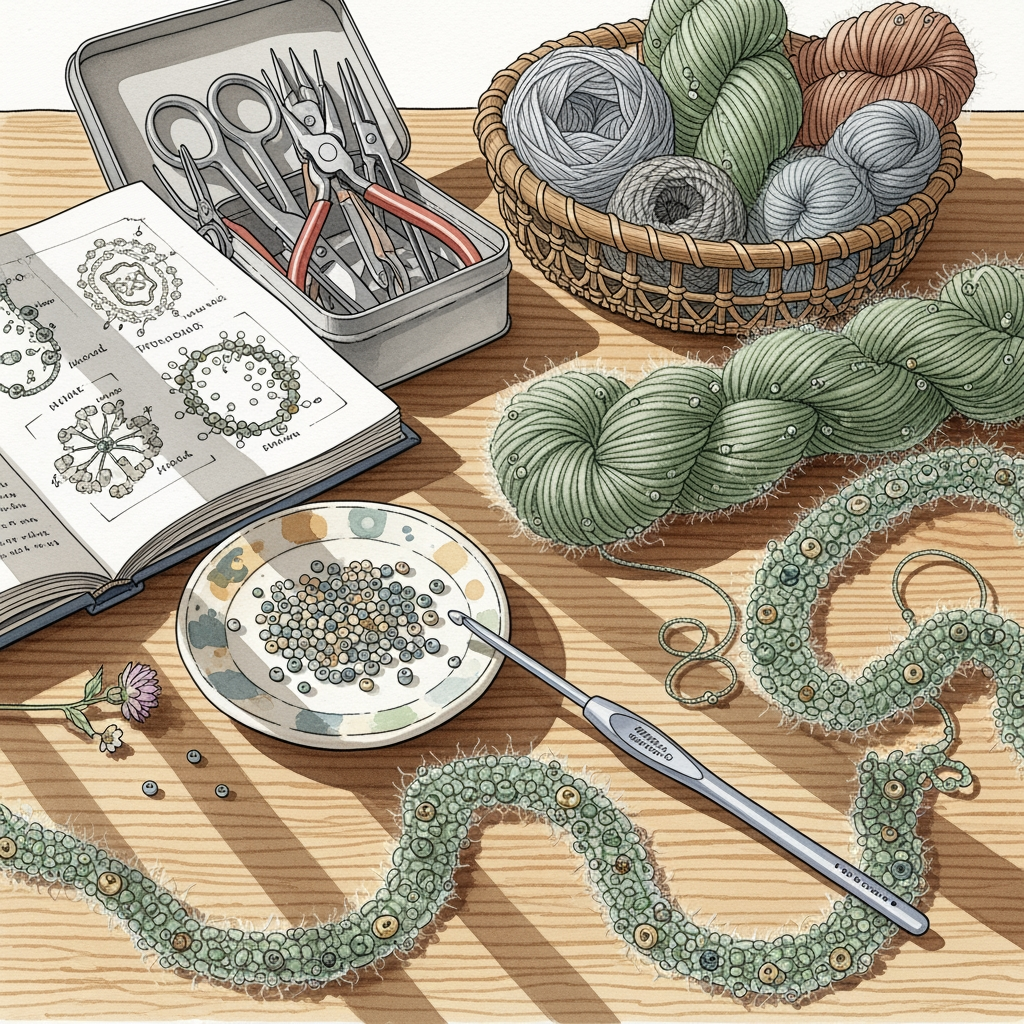
Assembling earrings requires precision tools that prevent scratching the metal. A pair of chain-nose pliers is essential for opening and closing jump rings with a side-to-side motion rather than pulling them apart.
Round-nose pliers are equally important for creating custom wire loops or adjusting the shape of kidney wires. Invest in a pair of nylon-jaw pliers if working with plated findings; the nylon tips provide a secure grip without marring the finish.
Keep a pair of flush-cut wire cutters on hand to trim excess wire or headpins. These simple tools, when used correctly, will drastically improve the professional appearance of the finished work. A cluttered workspace often leads to damaged components, so keep these few essentials organized and within reach.
How to Balance Earring Weight for Comfort
Weight is the silent enemy of wearable fiber art. Even the most stunning crochet earrings will lose their appeal if they cause the earlobe to stretch or feel weighed down after an hour of use.
If the fiber element is naturally heavy, pair it with a very lightweight finding and avoid adding extra beads or metal charms. If using lightweight yarn, consider adding a small, flat component to the back of the finding to help the earring lay flat against the skin.
Always test the weight of a prototype before finalizing a collection. If a design feels heavy in the hand, it will feel twice as heavy after a full day of wear. Prioritizing comfort ensures that the wearer will reach for the piece again and again.
Mastering the connection between jewelry findings and fiber arts is a journey in precision and material science. By selecting the correct metal for skin sensitivity, reinforcing your attachment points, and balancing the overall weight, you transform simple yarn motifs into sophisticated jewelry. With these findings in your toolkit, every costume set will achieve a polished, professional finish that stands the test of time.


