7 Best Ergonomic Wrist Supports For Stylists To Try
Reduce hand strain with our top 7 ergonomic wrist supports for stylists. Compare the best options today to improve your daily comfort and work performance.
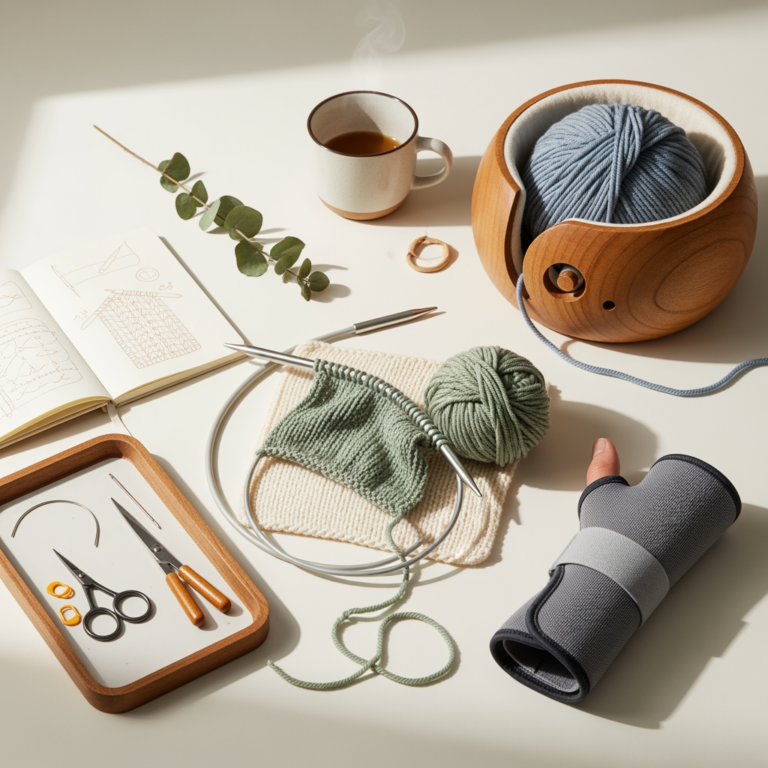
Stiff, aching wrists are the silent enemy of every long-term knitting project, often creeping in during the final stages of a complex lace shawl or a dense, colorwork sweater. When the repetitive motion of flicking needles begins to feel like a sharp protest from your joints, it is time to reassess your support strategy. Choosing the right wrist stabilizer can mean the difference between finishing a cherished heirloom and leaving a project languishing as a permanent work-in-progress. The following selection focuses on products that provide the necessary stability to keep hands mobile and pain-free during even the most demanding knitting marathons.
Mueller Green Fitted Wrist: Best Overall Support


The Mueller Green Fitted Wrist stands out because it balances firm structural integrity with an eco-conscious design. Its primary strength lies in the rigid plastic splint that runs along the palm, effectively preventing the wrist from bending into positions that aggravate tendonitis during long sessions of English or Continental style knitting.
For those tackling heavy, worsted-weight blankets that place significant physical strain on the wrists, this brace provides the necessary leverage to keep the joint neutral. The fabric is constructed from breathable, recycled materials, which is crucial when working with wool fibers that can become quite warm in your lap.
The primary tradeoff is bulk; this is not a brace that slides easily under tight sweater sleeves. However, for sheer stability, it remains the standard-bearer for knitters dealing with repetitive strain.
BraceUP Adjustable Brace: Most Versatile Option

Versatility is the hallmark of the BraceUP Adjustable Brace, which features a modular design that allows for varying degrees of tension. This is an excellent feature for knitters who find their hand fatigue fluctuates depending on the project, such as switching from delicate 2.0mm sock needles to heavier, bamboo circular needles for a bulky cowl.
The straps are highly customizable, meaning you can loosen the support during quick gauge swatches and tighten it significantly when starting a long, arduous stockinette section. The lightweight material is less intrusive than many rigid alternatives, allowing for better tactile feedback.
Because it does not have an aggressive, pre-molded shape, it may require some initial adjusting to find the perfect fit. Once dialed in, it offers a tailored level of compression that adapts to your specific hand anatomy.
ComfyBrace Night Support: For Overnight Recovery
If hand pain wakes you up in the middle of the night, your joints are likely bending during sleep, undoing the work of resting your hands after a long day of crafting. The ComfyBrace Night Support is engineered to hold the wrist in a neutral position while you rest, ensuring you start the next morning with reduced inflammation.
This brace is essentially a reset button for the tendons strained by intricate cabling or tight gauge work. By immobilizing the wrist while you sleep, it allows the soft tissues to recover without the constant irritation of daily movement.
It is not designed for knitting, as it is far too bulky for manual dexterity. Use it exclusively for recovery; it is an essential tool for maintaining the longevity of a serious knitter’s hands.
Wellgate PerfectFit Brace: Best for Smaller Wrists
Finding a support that fits slim, narrow wrists is a common frustration for many fiber artists. The Wellgate PerfectFit is designed with a more anatomical shape that hugs smaller frames without the excessive fabric overlap found in universal-sized braces.
A better fit ensures that the support remains exactly where it is needed during repetitive movements. When the brace fits properly, the internal stays align perfectly with the carpal tunnel, preventing the joint from collapsing during the rhythmic motion of knitting purls.
Because of its slim profile, it is far less likely to snag on your yarn as you pass the needle through the stitches. It is a thoughtful design that proves you do not need an oversized medical device to get proper therapeutic support.
Copper Compression Gloves: Best for All-Day Wear

Copper-infused sleeves are ideal for knitters who suffer from mild, persistent stiffness rather than acute, sharp pain. These gloves offer light, consistent compression that helps increase blood flow and reduce minor swelling in the hands and fingers.
These are particularly effective when working with slippery, synthetic fibers or fine cottons that require a constant, delicate grip to maintain even tension. Because they are fingerless, you maintain full tactile control over your yarn, which is essential for reading your stitches and avoiding dropped loops.
While they do not provide the rigid support of a splint, they are excellent for prevention. Wearing them during a long session keeps the joints warm and supple, effectively staving off the “knitter’s cramp” that often sets in after a few hours of work.
IMAK SmartGlove: Top Choice for Thumb Support
The thumb does a tremendous amount of work in knitting, especially when manipulating the tension of the working yarn. The IMAK SmartGlove features a unique design that provides a supportive cushion specifically for the base of the thumb, relieving pressure during the constant pinch-and-release cycle of knitting.
This glove is breathable and remarkably unobtrusive, making it easy to wear for hours at a time. It is a standout choice for those who notice pain specifically at the base of the thumb—a common issue for knitters who use a high-tension style.
The design encourages a neutral wrist position while still allowing for the full range of finger motion. It is a specialized tool that addresses the exact point of failure for many knitters’ hands.
Vive Arthritis Gloves: Best Budget Compression

For those just beginning to explore wrist supports, the Vive Arthritis Gloves offer an affordable way to test the benefits of compression. They are simple, pull-on cotton-spandex blends that provide enough pressure to mitigate the discomfort of mild arthritis or general fatigue.
These gloves are excellent for keeping hands cozy and joints warm in cooler knitting environments, such as a drafty studio. The fabric is soft and pliable, ensuring that your knitting rhythm remains unaffected by the gear itself.
They provide basic support and are easily machine-washable, which is a significant plus if you work with naturally shedding fibers like mohair or angora. They are a sensible starting point for anyone experiencing early signs of hand strain.
How to Choose the Right Wrist Support for You
Selecting the right support requires an honest assessment of your current symptoms and your knitting habits. If you are experiencing sharp, shooting pain, a rigid splint is necessary to immobilize the joint. If you are dealing with dull, pervasive aching after a long project, moderate compression is often enough to manage the inflammation.
Consider your knitting style: do you hold your needles with a tight, death-grip, or do you have a relaxed, flowing style? Tight knitters often require more rigid, long-term support, whereas relaxed knitters may find relief with flexible compression sleeves.
Finally, always account for the weight of your yarn and the size of your needles. A bulky project on large wooden needles requires different physical support than working a lace pattern on tiny, lightweight metal needles.
Brace vs. Sleeve: Which Style Do You Need?
A brace contains rigid elements like metal or plastic stays designed to prevent movement. Use these when you are in pain, suffering from tendonitis, or recovering from a repetitive strain injury. They are the best tools for forced rest and stabilization, but they will drastically reduce your knitting speed and range of motion.
A compression sleeve, by contrast, provides warmth and light pressure without restricting movement. These are best used for prevention, maintenance, and managing minor aches. They will allow you to maintain your usual knitting speed while offering a gentle, supportive hug for your joints.
Think of the brace as a cast that heals and the sleeve as an athletic wrap that supports. Use the former when the damage is done, and the latter to keep yourself in the knitting chair for longer.
Getting the Right Fit: How to Measure Your Wrist
To get the most out of any wrist support, accurate sizing is non-negotiable. Use a soft tailor’s tape to measure the circumference of your wrist directly over the joint, just below the thumb, and ensure the tape is snug but not constricting.
Avoid measuring over clothing, as the thickness of a sweater sleeve will lead to an incorrect measurement. If you fall between two sizes, err on the side of a tighter fit for rigid braces, as they need to remain stationary to be effective.
For compression gloves, follow the manufacturer’s specific sizing chart, as these are meant to be form-fitting to provide the necessary pressure. A brace that slips or a sleeve that bunches will only provide more annoyance than relief, so take the extra moment to measure correctly before you order.
Taking care of your wrists is an essential part of your journey as a fiber artist. By choosing the right support, you can protect your hands from the strain of long-term projects and ensure your craft remains a source of joy rather than discomfort. Listen to what your joints are telling you and don’t hesitate to incorporate these tools into your knitting toolkit. With the right gear, you can keep creating beautiful, handmade pieces for decades to come.