7 Best Reference Books For Stitch Libraries To Own
Build a versatile stitch library with these seven essential reference books. Discover expert techniques and timeless patterns to elevate your needlework skills.
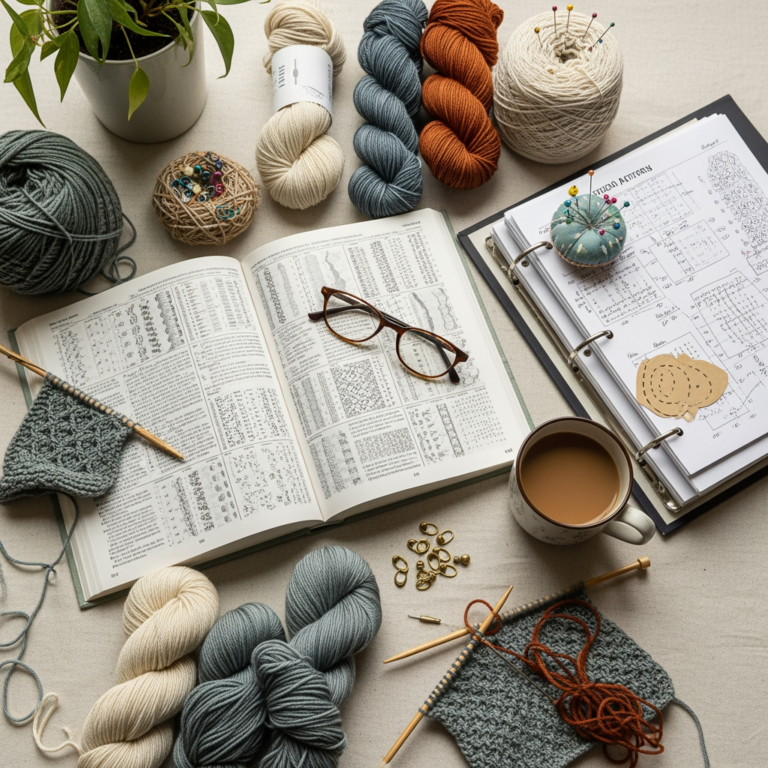
Every knitter eventually hits a wall where the standard stockinette stitch just won’t suffice for their creative vision. Building a personal reference library is the single most effective way to transition from following patterns to designing your own garments. These seven books represent the gold standard for stitch architecture, providing the technical foundation needed to elevate any project. Whether you are looking for texture, lace, or colorwork, these volumes offer the blueprints for a lifetime of knitting.
A Treasury of Knitting Patterns by Barbara G. Walker


Barbara Walker’s work is the foundational text of modern knitting, serving as the "bible" for many of us. She moved away from prescriptive patterns, instead teaching knitters how to understand the geometry of a stitch.
Her approach is purely analytical, focusing on the construction of the stitch rather than just the aesthetic result. This makes it an essential tool for anyone who wants to understand how a cable crosses or how a lace eyelet is formed.
The trade-off here is the lack of modern, high-definition photography. You won’t find glossy, full-page lifestyle shots, but you will find the most comprehensive collection of stitch patterns ever compiled.
Vogue Knitting: The Ultimate Knitting Book Review
Think of this book as the encyclopedia of the knitting world. It covers everything from basic cast-ons to complex finishing techniques and garment construction.
It is indispensable when you are stuck on a technical nuance, such as how to pick up stitches along a neckband or execute a perfect three-needle bind-off. The diagrams are clear, precise, and incredibly reliable.
While it isn’t a stitch dictionary in the traditional sense, it provides the "why" behind the stitches. If you want to understand how a stitch interacts with the fabric’s drape, this is the book you pull off the shelf.
Japanese Knitting Stitch Bible by Hitomi Shida

Hitomi Shida’s designs are legendary for their intricate beauty and complex lace work. These patterns often involve multiple steps and sophisticated maneuvers that require a high level of focus.
If you are looking to create a statement piece, such as a delicate shawl or a textured sweater, this book provides the most elegant motifs available. The charts are works of art in their own right.
However, be prepared for a learning curve. These stitches are not for the faint of heart and often require a deep understanding of chart reading and stitch manipulation to execute correctly.
400 Knitting Stitches by Potter Craft Essentials

This book is the "workhorse" of the library, perfect for those moments when you just need a quick, reliable texture for a hat or scarf. It is accessible, easy to navigate, and features clear photography.
It is particularly useful for beginners who want to experiment with stitch variation without getting overwhelmed by complex lace or stranded colorwork. The layout is intuitive, making it a great "grab and go" reference.
Don’t expect groundbreaking, avant-garde designs here. Instead, expect a solid, dependable collection of classic patterns that will serve you well for years of everyday knitting.
The Harmony Guides: Stitch Library Classics Review

The Harmony Guides have been a staple in knitting bags for decades for a good reason. They are concise, portable, and cover a massive range of stitch types, from cables to bobbles.
Because they are often sold as smaller, thematic volumes, you can build a library that fits your specific interests. If you primarily knit cables, you can focus on the cable-specific volume without buying unnecessary lace patterns.
These books are excellent for swatching. When you are deciding between a wool-blend yarn with high memory or a cotton yarn with little elasticity, these guides help you test which stitch pattern holds up best with your chosen fiber.
AlterKnit Stitch Dictionary by Andrea Rangel

Colorwork can be intimidating, but this book demystifies the process by focusing on stranded knitting motifs. It’s a game-changer for those who want to move beyond basic stripes.
The strength of this book lies in its modern aesthetic and the way it encourages creative play. You aren’t just following a pattern; you are learning how to incorporate small, manageable motifs into your own designs.
If you struggle with tension in stranded colorwork, keep in mind that these charts require consistent practice. Start with small motifs before attempting a full-colorwork sweater.
Up, Down, All-Around Stitch Dictionary by Wendy Bernard
This book is a masterclass in directional knitting. It teaches you how to create stitches that can be worked in multiple directions, which is vital for modular knitting and garment shaping.
It is a fantastic resource for the intermediate knitter who wants to understand the mechanics of how fabric is shaped. It bridges the gap between simple stitch patterns and complex garment construction.
By learning how a stitch looks when worked from the bottom up versus the top down, you gain total control over your final product. This is essential for customizing the fit of your garments.
Why Every Knitter Needs a Physical Stitch Library
While the internet is filled with free patterns, a physical library offers a depth that a screen cannot replicate. You can spread multiple books out on your table, compare textures, and make notes in the margins.
Digital databases often lack the curated, expert-vetted quality of a published book. A good stitch dictionary provides a cohesive vision that helps you develop your own style as a maker.
Furthermore, there is something tactile about flipping through pages that helps you visualize the finished fabric. It is a slow, thoughtful process that mirrors the meditative nature of knitting itself.
How to Choose the Best Stitch Dictionary for You
Start by identifying your current knitting goals. Are you obsessed with lace? Do you want to master cables? Or are you looking for basic textures to liven up your everyday projects?
Consider your preferred learning style. Some knitters thrive on written instructions, while others prefer clear, visual charts. Make sure the book you choose matches the format you find easiest to follow.
Finally, look for books that offer a variety of stitch counts and repeats. This allows you to scale your projects up or down, whether you are knitting a baby blanket or a king-sized afghan.
Tips for Mastering Complex Stitch Pattern Charts
Always swatch before you start your main project. Using a different yarn than the one recommended in the book can significantly change how the stitch looks, especially if you are working with fibers of different weights or twists.
Don’t be afraid to use stitch markers to break down long, complex rows. Placing a marker every 10 or 20 stitches can save you from having to rip back your work when you lose your place in a chart.
If a chart looks intimidating, break it down into smaller, manageable sections. Focus on mastering one repeat at a time until the pattern becomes intuitive and your hands begin to "remember" the movements.
Building a library of stitch dictionaries is an investment in your own creative potential as a knitter. By moving beyond single-pattern reliance, you gain the freedom to customize, design, and truly understand the fabric you are creating. These seven books provide the technical depth and inspiration to support your journey for years to come. Take your time, explore the pages, and let your curiosity guide your next set of needles.