6 Best Wood Circular Needles For Slippery Yarns
Master slippery yarns with our top 6 wooden circular needles. Discover how these smooth, grippy tools improve control and tension for your next knitting project.
Knitting with slippery yarns like silk, bamboo, or superwash wool can often feel like wrestling with a handful of greased eels. When your stitches slide off the needle before you’ve finished a row, the meditative act of knitting quickly turns into a frustrating battle against gravity. Choosing the right wooden needle provides the perfect amount of friction to keep your stitches secure without sacrificing your knitting speed. This guide explores the best wooden tools to help you master those elusive, high-sheen fibers.
Lykke Driftwood Circulars: The Best Overall Choice
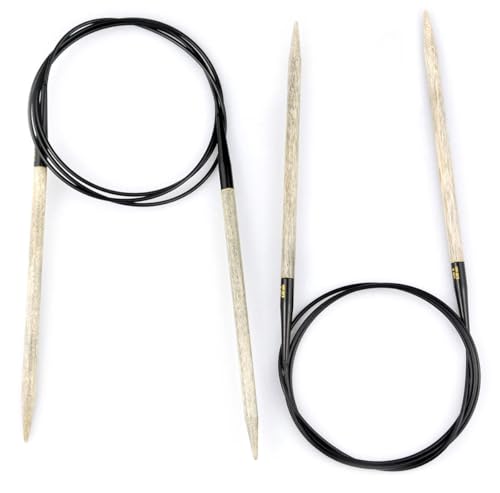

Lykke Driftwood needles are the gold standard for many of us who crave a balance between aesthetic beauty and functional reliability. Their signature grey, weathered finish isn’t just for show; it provides a subtle, matte texture that holds onto slippery yarn just enough to prevent dropped stitches.
The joins on these circulars are famously smooth, ensuring your yarn travels from the cord to the needle tip without snagging. If you are working on a complex lace shawl with fine silk yarn, the transition between the cord and the needle is vital to maintaining your rhythm.
However, keep in mind that these needles are made from birch wood, which can be prone to snapping if you are a particularly tight knitter or if you use very small sizes. They are a fantastic investment for the mid-range knitter looking for a comfortable, long-term tool.
Knitter’s Pride Ginger Fixed Circular Needles

Ginger needles are crafted from a warm-toned, laminated birch that feels substantial in the hand. They are slightly denser than some other wooden options, which gives them a bit more "heft" and durability during long, marathon knitting sessions.
The surface of the Ginger needle is polished to a satin finish, which offers a unique middle ground. It is slick enough for speed but provides enough drag to keep alpaca or mohair blends from sliding off prematurely.
These needles are excellent for those who find bamboo too "sticky" but find metal needles far too fast. If you’re tackling a sweater project where gauge consistency is key, the stability of these needles will serve you well.
Lantern Moon Ebony Circulars for Precision Grip

Ebony is a dense, exotic hardwood that provides a level of precision rarely found in wooden tools. Because the wood is naturally dark and extremely smooth, the tips can be crafted to a sharper point without becoming brittle or prone to splintering.
If you are working with slippery, multi-ply yarns where you need to pick up individual strands for cables or intricate stitch patterns, the sharpness of these tips is a game-changer. They grip the fiber with a refined, tactile quality that feels luxurious.
The tradeoff here is price and availability, as these are premium tools. They are best reserved for special projects where you want to treat your hands and your yarn to the best possible experience.
Brittany Birch Needles: Sustainable and Smooth

Brittany needles are a staple in the knitting community for their simplicity and dedication to sustainable, domestic birch wood. They lack the bells and whistles of modern interchangeable sets, but they offer a consistent, reliable surface that is gentle on the hands.
The texture of these needles is ideal for beginners who are still learning to control their tension. Because they aren’t overly polished, they provide a "soft" grip that helps stabilize the yarn while you focus on your stitch mechanics.
If you have arthritis or hand fatigue, the natural warmth of the birch can be more soothing than cold metal. Just be aware that their tips are generally more rounded, which might not be ideal for complex lace work requiring frequent decreases.
Clover Takumi Bamboo Circulars for Beginners
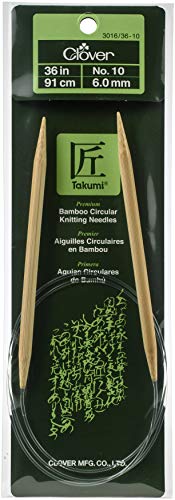
Clover Takumi needles are arguably the most recognizable bamboo tools on the market, and for good reason. They are lightweight, affordable, and possess a natural "grab" that is perfect for those new to the craft.
When you are learning to knit, the last thing you want is your yarn flying off the needle every time you look away. The natural porosity of bamboo provides the necessary friction to help a novice knitter maintain even, consistent tension.
While they may be too "slow" for advanced knitters who want to zip through miles of stockinette, they are an essential tool for training your muscle memory. Keep a set of these on hand for when you’re working with particularly difficult or "slinky" synthetic yarns.
Addi Olive Wood Circulars: Luxury and Comfort

Addi Olive Wood needles are a treat for the senses, featuring a beautiful, unique grain pattern that makes every needle feel like a piece of art. Beyond the looks, the wood is treated with a natural oil finish that makes it incredibly smooth to the touch.
This finish creates a "fast" wooden experience, bridging the gap between the grip of wood and the speed of metal. They are remarkably comfortable for long-term use, especially if you have sensitive skin or find synthetic needles irritating.
Because they are a premium product, they are best suited for experienced knitters who know their preferred needle size and want a tool that will last for years. They are a joy to use with luxury fibers like cashmere or merino-silk blends.
Why Wood Needles Tame Slippery Fiber Textures
Slippery yarns, such as 100% silk or high-twist rayon, lack the "scales" found in wool fibers. In wool, these microscopic scales interlock, providing natural friction; in slippery yarns, those scales are absent, allowing the yarn to glide effortlessly.
Wooden needles counteract this by providing a microscopic surface texture that creates a gentle "brake" for the yarn. This allows you to maintain your tension without having to death-grip the needles, which is the primary cause of hand strain.
- Natural Friction: Wood fibers interact with the yarn to prevent accidental drops.
- Temperature Regulation: Wood stays at body temperature, unlike metal, which can feel cold and cause muscles to tense up.
- Reduced Hand Fatigue: You don’t have to work as hard to keep the yarn in place, leading to less cramping during long projects.
How to Match Needle Surface to Your Yarn Choice
The golden rule of knitting is to match the "slipperiness" of your needle to the "slipperiness" of your yarn. If your yarn is very slick, move toward a wood needle with a matte finish; if your yarn is "sticky" or fuzzy, you might actually prefer a polished metal needle.
If you find yourself constantly losing stitches, don’t just blame your technique—try swapping your needles for a wood set with more texture. Conversely, if you are struggling to move the stitches across the needle, your wood needles might be too "grippy" for that specific fiber.
- For Silk/Bamboo: Use matte-finish wood needles.
- For Superwash Wool: Use polished wood or smooth bamboo.
- For Mohair/Angora: Use metal needles to prevent the fibers from snagging on the wood grain.
Essential Care Tips for Wooden Knitting Needles
Wooden needles are natural, organic tools that require a bit of maintenance to stay in top shape. Over time, the natural oils from your hands can help keep them smooth, but they can also dry out or become slightly rough if exposed to extreme humidity changes.
If your needles feel like they are losing their "glide," you can lightly buff them with a very fine-grit sanding block or a brown paper bag. A tiny drop of wood-safe wax or oil—applied sparingly—can restore the finish and protect the wood from splitting.
Always store your circular needles in a case that keeps them straight, as wooden cords can develop "memory" if coiled too tightly for too long. Avoid leaving them in a hot car or near a radiator, as heat can warp the wood and damage the join.
Frequently Asked Questions About Circular Tools
Do wooden needles really make a difference for beginners? Yes, they provide the physical feedback necessary to learn tension control. Metal needles often move too fast for a beginner to catch a dropped stitch before it runs down the entire row.
Can I use wood needles for all yarn weights? You can, but be careful with very small sizes (under 2.5mm). Wooden needles in these sizes are quite fragile and can easily snap if you accidentally bend them while knitting.
Why do my wood needles sometimes feel "sticky"? If you are knitting in a humid environment, the wood can absorb moisture and swell slightly, increasing the friction. Try moving to a different room or using a slightly more polished needle if the humidity is high.
Finding the perfect needle is a personal journey that evolves alongside your skill level and your choice of fibers. While wood needles are a fantastic solution for taming slippery yarns, the best tool is ultimately the one that feels most comfortable in your specific grip. Experiment with these options, pay attention to how your hands feel after an hour of work, and don’t be afraid to keep a variety of materials in your knitting bag. Happy stitching, and may your gauge always be true.