
6 Best Silicone Grips For Loom Handle Comfort
Enhance your weaving experience with our top 6 silicone loom grips. Discover ergonomic designs that reduce hand fatigue and improve control during projects.
Loom knitting is a fantastic way to create everything from dense blankets to intricate hats, but the repetitive motion can quickly lead to hand cramping. If you find your fingers aching after just a few rows of working a stockinette stitch, you aren’t alone. Investing in a quality silicone grip can transform your crafting experience from a painful chore into a relaxing hobby. These simple accessories provide the ergonomic support necessary to keep you looming for hours without discomfort.
The Clover Soft Touch Loom Grip: Best Overall


The Clover Soft Touch series is widely considered the gold standard for a reason. These grips feature a uniquely contoured shape that naturally encourages a relaxed, ergonomic hold on your loom hook.
When working with high-tension yarns like cotton or linen, the weight of your project can pull on your wrists. This grip provides enough surface area to distribute that pressure evenly across your palm, preventing the "death grip" that often leads to repetitive strain.
It is particularly effective if you suffer from mild arthritis or carpal tunnel symptoms. While it sits at a slightly higher price point, the durability of the silicone means it won’t degrade or become tacky over time.
Addi Ergonomic Loom Handle Comfort Sleeves

Addi has a reputation for precision engineering, and their comfort sleeves reflect that focus on tool mechanics. These sleeves are designed to slide onto standard hooks, adding a significant amount of girth to the handle.
If you struggle with fine motor control, the increased diameter makes the tool much easier to grasp without squeezing tightly. This is a game-changer when you are working with slippery synthetic yarns that require constant tension management.
However, be aware that these sleeves add weight to the tool. If you prefer a lightweight feel, you might find them slightly bulky during long sessions of loom knitting.
KB Loom Universal Silicone Comfort Cushions
KB Loom is a household name in the loom knitting community, and their universal cushions are designed specifically for the unique geometry of loom hooks. They are built to be soft and squishy, offering immediate relief to sensitive pressure points.
Because they are "universal," they can be a bit loose on thinner, metal-shafted hooks. I recommend using a small piece of double-sided tape inside the sleeve if you find it sliding while you work.
These are an excellent entry-level choice for beginners who aren’t sure how much support they need yet. They offer a great balance of affordability and comfort for those just starting their first afghan.
Boye Ergonomic Loom Tool Grip Add-ons
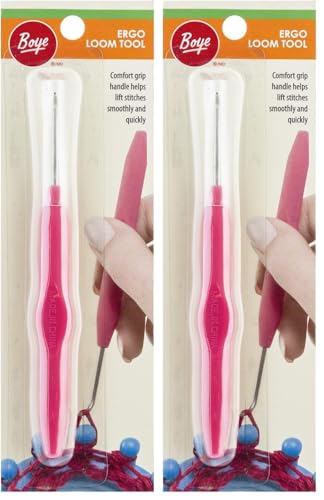
Boye’s approach to comfort is all about simplicity and modularity. These grips are designed to be swapped between different tools, making them a versatile addition to your knitting bag.
The texture is slightly matte, which is a massive benefit if your hands tend to get sweaty while working with wool or alpaca fibers. A slick tool can be dangerous when you’re pulling a loop through a tight stitch; these grips ensure your hand stays firmly in place.
They are quite slim compared to other options on this list. If you have smaller hands, these will provide the comfort you need without making the tool feel like you’re holding a broomstick.
Darice Loom Hook Silicone Comfort Sleeves

Darice offers a straightforward solution for those who want to upgrade their basic plastic loom hooks without a large investment. These sleeves are very easy to install and provide a decent amount of cushion for the price.
They work best when paired with standard-sized hooks. If you are using a specialized, extra-long hook for double-knitting techniques, these might feel a bit short.
They are essentially a "no-frills" product that does exactly what it promises. If you are a casual loomer who only picks up the project once or twice a week, these are more than sufficient to prevent fatigue.
Prym Ergonomic Loom Tool Grip Enhancers

Prym is known for their focus on ergonomic design, and their grip enhancers are no exception. They feature a unique, ergonomic "thumb rest" that forces your hand into a more natural, neutral position.
This is particularly helpful when you are doing complex maneuvers like cable crossings on a loom. By keeping your thumb in the correct spot, you reduce the torque placed on your wrist during the stitch-transfer process.
These are slightly firmer than the silicone options from other brands. If you prefer a grip that provides a solid, steady feel rather than a squishy one, Prym is the way to go.
Why Ergonomic Grips Reduce Looming Hand Fatigue
Looming involves a repetitive cycle of pulling, hooking, and tensioning that places constant strain on the small muscles of your hand. Without a proper grip, you are forced to pinch the narrow shaft of the hook, which is the primary cause of cramping.
Silicone grips work by increasing the diameter of your tool. This simple change allows your hand to stay in a more open, relaxed position rather than a tightly closed fist.
- Muscle Engagement: Wider grips recruit larger muscle groups in the forearm.
- Pressure Distribution: Soft silicone absorbs the impact of the hook hitting the loom pegs.
- Reduced Tension: You don’t have to squeeze as hard to maintain control.
How to Properly Install Silicone Loom Grips
Installing a tight silicone sleeve can be frustrating if you try to force it onto a dry hook. The friction between the silicone and the plastic or metal handle will often cause the grip to bunch up or tear.
The secret is to use a tiny drop of dish soap or a bit of rubbing alcohol as a lubricant. Slide the grip on while the lubricant is wet, then let it sit for a few hours until it dries completely.
- Avoid: Using oils or lotions, which can leave a permanent residue.
- Pro Tip: If the grip is very tight, try warming it slightly with a hair dryer to make the silicone more pliable.
Comparing Silicone vs Foam Loom Handle Grips
While this guide focuses on silicone, you will likely encounter foam grips in your search. Silicone is generally superior for loom knitting because it is non-porous and easy to clean.
Foam grips tend to absorb sweat, skin oils, and dust over time, which can become unhygienic after a few months of heavy use. Silicone can be wiped down with a damp cloth or even submerged in warm, soapy water.
Additionally, silicone maintains its shape and density for years. Foam grips have a tendency to compress and "bottom out," eventually losing the very cushioning you bought them for.
Essential Tips for Looming Without Pain
Even with the best grips, you must listen to your body. If you feel a sharp pain in your wrist or thumb, stop immediately and stretch your hands, wrists, and shoulders.
I always recommend the "20-20-20" rule for fiber artists: every 20 minutes, look away from your project for 20 seconds, and perform 20 seconds of hand stretches. This prevents the cumulative fatigue that leads to long-term injury.
- Vary your project: Switch between different loom sizes to change the tension and hand position.
- Check your posture: Ensure your elbows are supported and your shoulders are relaxed.
- Hydrate: Dehydration can contribute to muscle tightness and cramping.
Finding the right loom grip is a personal journey that depends on your hand size, the type of yarn you use, and your overall knitting style. Don’t be afraid to experiment with different shapes and densities until you find the one that feels like an extension of your own hand. Remember, the goal of looming is to enjoy the process of creation, not to endure physical pain. Once you find your perfect ergonomic match, you’ll find that your stitches are more consistent and your time at the loom is infinitely more enjoyable.

