7 Best Project Journals For Skill Building To Try
Boost your growth with these 7 project journals. Learn how structured documentation improves skill retention and tracks your progress effectively every day.
Every master knitter knows that the difference between a good project and a great one often lies in the details you forget the moment you bind off. A dedicated project journal transforms your craft from a series of isolated tasks into a cohesive library of personal technical data. By documenting your process, you stop guessing about gauge and start mastering the mechanics of your fiber. These seven journals offer distinct pathways to help you build your skills through intentional, recorded practice.
The Knit Notes Journal: Best For Detailed Tracking
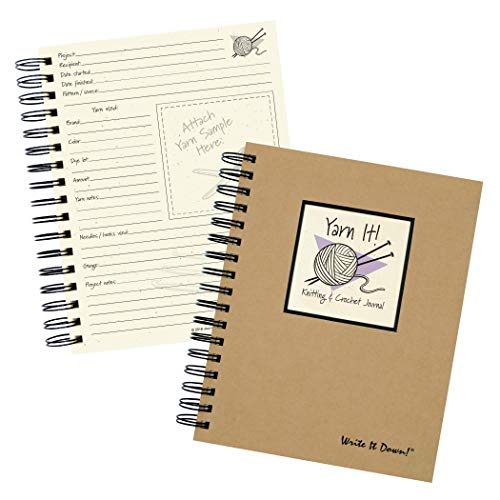

If you find yourself constantly scribbling notes on the back of yarn labels that eventually get lost, this journal is your new best friend. It provides a structured space to record every technical nuance of your work, from needle material to the specific blocking method used.
This level of detail is vital when you are experimenting with different fibers, such as comparing the drape of a rustic Highland wool against a slicker superwash merino. By tracking these variables, you build a mental database of how different materials behave under tension.
The trade-off here is the time commitment required for every project entry. If you prefer a minimalist approach, the sheer volume of fields might feel like a chore rather than a tool. However, for the knitter who wants to troubleshoot tension issues or replicate a perfect fit, this level of granularity is unmatched.
Fringe Association Field Guide: Best For Planning

This guide is designed for the knitter who treats project planning as an essential part of the creative process. It focuses heavily on the "pre-work," encouraging you to map out your yarn requirements and modifications before you ever cast on.
It is particularly useful when you are working with luxury fibers or limited-edition hand-dyed skeins where you cannot afford a calculation error. By forcing you to plan your yardage and stitch counts in advance, it prevents the common heartbreak of running out of yarn three inches from the finish line.
Keep in mind that this journal leans toward a more analytical style of knitting. If you are a "process knitter" who prefers to cast on and see where the needles take you, the structured planning sections might feel restrictive. Use it to balance your creative impulses with the reality of your yarn stash.
The Knitter’s Planner: Best For Project Schedules
Many knitters struggle with "Project Paralysis," where the sheer size of a sweater project makes it feel impossible to finish. This planner breaks down your knitting into manageable timelines, helping you set realistic goals for when to complete your ribbing, body, and sleeves.
Setting these milestones is a game-changer for those who juggle multiple WIPs (Works In Progress) simultaneously. It allows you to see exactly how much time you have invested in a project, which helps in identifying why certain pieces take longer than others.
The danger, of course, is turning a relaxing hobby into a deadline-driven job. If you find yourself feeling guilty for not meeting a "knitting quota," put the planner aside for a few days. The goal is to manage your progress, not to add stress to your quiet time.
Cocoknits Maker’s Journal: Best For Organization
The Cocoknits approach is all about the "system" of knitting, emphasizing how your tools and project notes work in harmony. This journal is perfect for the knitter who values a clean, logical workflow and wants to keep their patterns and progress notes in one organized place.
It excels at helping you track modifications, such as adding waist shaping or adjusting sleeve length. When you record these changes alongside your original pattern, you create a "master copy" that is tailored specifically to your body measurements.
This journal is a significant investment in your craft, and its utility scales with your experience. Beginners might find the organizational features slightly overwhelming at first, but as you move into complex garment construction, you will appreciate the logical structure.
Mindful Making Knitting Journal: Best For Design
If you are moving beyond following patterns and starting to design your own pieces, this journal provides the grid space necessary for drafting charts and stitch patterns. It bridges the gap between a notebook and a technical design manual.
Designing requires a deep understanding of how different stitch patterns—like cables or lace—affect the final gauge of your fabric. This journal encourages you to sketch out your ideas and test your math before committing to expensive yarn.
Remember that design is an iterative process, and your first draft will rarely be perfect. Use the space to record your "failures" just as clearly as your successes; knowing what didn’t work is often more educational than knowing what did.
The Knitting Project Log: Best For Beginners

For those just starting out, the sheer amount of information in the knitting world can be paralyzing. This log keeps things simple, focusing on the basics: yarn name, needle size, and a space for a small swatch or yarn sample.
Recording your gauge swatch here is the most important skill you can learn as a beginner. It forces you to acknowledge that your personal tension, combined with your needle choice, creates a unique result that may differ from the pattern’s suggested gauge.
Don’t be intimidated by the empty pages. Start by just logging the basics, and as your confidence grows, you will naturally start adding more details like needle material or yarn weight. It is a low-pressure way to build the habit of record-keeping.
Moleskine Passion Journal: Best For Customization
The Moleskine approach is for the knitter who wants a journal that feels like a personal diary rather than a technical manual. Its open, unlined, or lightly gridded pages allow you to tape in yarn swatches, print out photos of finished objects, and write long-form reflections.
This is ideal for the knitter who values the emotional and historical aspect of their craft. You can document the story behind a gift or the specific fiber challenges you faced while knitting a complex lace shawl.
The trade-off is the lack of specific templates for row counts or gauge calculations. If you choose this route, you must be disciplined enough to create your own system for tracking data. It is the best choice for the maker who wants total creative control over their documentation.
Why Tracking Your Stash Improves Your Skill Level
Tracking your stash is not just about inventory; it is about understanding the "anatomy" of the yarn you choose. When you log the fiber content, ply, and WPI (Wraps Per Inch) of your yarn, you begin to see patterns in how certain fibers perform.
- Fiber content: Note how wool holds a cable, while alpaca tends to lose stitch definition.
- Ply: Understand why a 4-ply yarn is generally more durable for socks than a loosely twisted single-ply.
- WPI: Learn to estimate yarn weight by eye, which helps when you want to substitute yarns in a pattern.
This practice prevents you from making the same mistake twice, such as choosing a yarn with zero memory for a ribbing-heavy project. Over time, you will stop relying on "luck" and start making informed fiber choices based on your documented history.
Essential Details To Record In Your Project Logs
Regardless of which journal you choose, there are non-negotiable details that every serious knitter should record. These data points turn a simple notebook into a powerful tool for future troubleshooting.
- Needle Material: Wood, metal, and carbon fiber all interact differently with yarn; record what you used.
- Gauge Swatch: Always record your pre- and post-blocking gauge to understand how the fiber "blooms."
- Modifications: If you changed a neckline or added length, write down exactly how you did it.
- Yarn Lot Numbers: If you run out of yarn, you will be thankful you have the dye lot recorded for a potential match.
These details are the difference between a project you love and one you never wear. When you understand the "why" behind your project’s outcome, you gain the ability to replicate success and avoid frustration.
How To Use Journals For Long Term Skill Growth
The true power of a project journal is realized only when you review it after a year or two of knitting. Look back at your early entries to see how your tension has smoothed out and how your choice of yarn has evolved.
Use your journal to identify your "knitting signature." You might notice that you consistently knit tighter than the pattern suggests, which is a signal to always go up a needle size in the future. This is how you move from being a pattern-follower to a confident maker.
Consistency is more important than perfection. You don’t need to write a novel for every project; just record the facts that will help you next time. Over the years, your collection of journals will become an invaluable reference guide that is entirely unique to your hands and your style.
Choosing a project journal is a personal decision that should reflect your unique knitting style and goals. Whether you prefer a highly structured data-logger or a free-form creative space, the act of documenting your work is the fastest path to mastery. Start small, stay consistent, and let your journals become the foundation of your long-term growth as a fiber artist. Happy knitting, and may every stitch be recorded with purpose.