7 Best Wool Yarns For Sweater Knitting To Try
Discover the top seven wool yarns for your next sweater project. This guide evaluates texture, warmth, and durability to help you choose the perfect material.
Choosing the right yarn is the single most important decision you will make before casting on your next sweater. A beautiful pattern can fall flat with the wrong fiber, while a simple design can become a masterpiece when paired with the perfect wool. Over my two decades at the workbench, I have learned that the "best" yarn is defined by the intersection of your personal tension, the garment’s intended use, and the specific architecture of the stitch pattern. This guide explores seven exceptional wools that have earned their place in the kits of serious makers.
Brooklyn Tweed Shelter: Best For Texture Lovers
If you are planning a sweater heavy on cables or twisted stitches, Shelter is a revelation. This woolen-spun yarn is incredibly lofty and airy, which allows it to "bloom" significantly after a good wet block.
Because it is woolen-spun rather than worsted-spun, the fibers are not aligned in a parallel, sleek fashion. Instead, they are jumbled, trapping pockets of air that make the finished fabric feel light as a feather while providing exceptional warmth.
The tradeoff here is durability; because the yarn is lofty and slightly fragile, it can pill if subjected to high-friction areas. I recommend this for sweaters that are worn as a top layer rather than a base layer under a heavy coat.
Quince & Co. Osprey: Best For Quick Projects
When you want a sweater finished in a weekend, reach for a bulky weight like Osprey. This American-made wool has a round, three-ply construction that provides excellent stitch definition, making it perfect for beginners who need to see exactly where their needles are entering the stitch.
Because this is a thicker yarn, your progress will be visually rewarding. You will see the garment shape emerge in a matter of hours, which is a massive morale booster for those prone to starting projects they never finish.
Be mindful that bulky yarns require larger needles, which can be taxing on your wrists if you have a tight grip. If you find your hands aching, try using wooden or bamboo needles to reduce the tension required to move the stitches.


Malabrigo Rios: Best For Vibrant Hand-Dyes
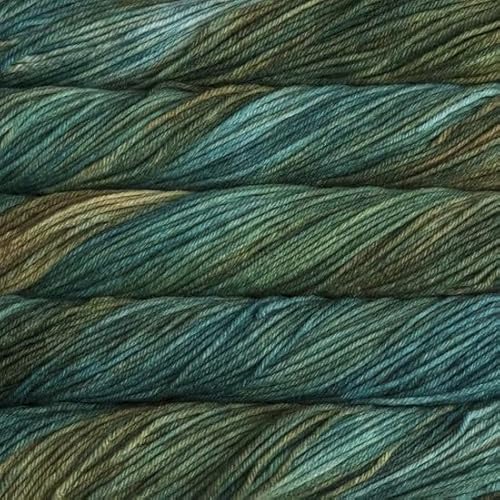
Malabrigo Rios is the gold standard for knitters who want color to be the star of the show. The kettle-dyeing process creates subtle shifts in tone that prevent the "pooling" effect often seen with mass-produced variegated yarns.
This is a plied, superwash merino, meaning it is smooth, soft against the skin, and resistant to felting. It is a fantastic choice for pullovers that will be worn directly against the neck or arms, as it lacks the "itch factor" found in coarser breeds.
However, because it is a superwash, it has a tendency to grow significantly after washing. Always knit a large swatch and wash it exactly as you intend to wash the finished sweater to ensure your gauge remains accurate.
Jamieson’s Shetland Spindrift: Best For Colorwork

If you are diving into stranded colorwork, look no further than Jamieson’s. This yarn is sticky and grippy, which is exactly what you want when carrying multiple colors across the back of your work.
The "stickiness" of the wool means that the strands lock together, preventing the floats from sliding around and creating uneven tension. It is the traditional choice for Fair Isle knitting for a reason: it creates a fabric that is windproof and incredibly durable.
While it may feel slightly rustic or "wooly" to the touch, it softens beautifully with a soak in wool wash. Do not be intimidated by the texture; it is this very quality that makes your colorwork look professional and crisp.
Rowan Felted Tweed: Best For Delicate Blends
Rowan Felted Tweed is a unique blend of merino, alpaca, and viscose that behaves like a dream. It has a slight halo—a fuzzy texture—that blurs the lines between stitches, making it perfect for color-block designs or subtle textures where you want a soft, painterly effect.
It is lightweight and produces a fabric with a lovely drape, making it ideal for cardigans or sweaters that you want to wear year-round. It is not a heavy, winter-only wool, which adds to its versatility in your wardrobe.
The main consideration here is that it is a finer weight, often knitting up as a sport or light DK. It requires patience, but the resulting fabric is far less bulky than traditional heavy wool sweaters.
Cascade 220 Superwash: Best For Easy Care

Cascade 220 Superwash is the workhorse of the knitting world for a reason. It is consistent, widely available, and handles machine washing without turning into a felted mess, making it a favorite for sweaters intended for children or daily wear.
The yarn has a standard twist that creates a very balanced stitch. It is neither too slippery nor too grippy, making it a perfect neutral choice for almost any stitch pattern, from simple stockinette to complex lace.
If you are new to sweater knitting, start here. The predictability of the yarn allows you to focus on your technique—like increasing, decreasing, and seaming—without worrying about the fiber behaving unpredictably.
West Yorkshire Spinners Bluefaced Leicester

Bluefaced Leicester (BFL) is widely considered the "luxury" wool of the British Isles. It possesses a long staple length, which means it is incredibly strong and resistant to pilling while remaining soft enough for most people to wear comfortably against the skin.
This yarn has a natural luster that gives your finished sweater a subtle sheen. It is a fantastic choice for heirloom-quality pieces that you intend to keep for decades.
Because BFL has more drape than a standard Highland wool, it is best suited for designs with a bit of ease. If you are knitting a form-fitting garment, check your gauge carefully, as BFL can stretch slightly more than a traditional crimpy merino.
How To Choose The Right Wool For Your Sweater
- Consider the usage: Will this be a rugged outdoor sweater or a soft indoor layer?
- Check the twist: High-twist yarns are more durable; low-twist yarns are softer but pill more easily.
- Evaluate the drape: If you want a flowy sweater, choose a fiber like BFL or a blend with alpaca.
- Match the yarn to the pattern: Cables need a round, bouncy yarn; lace needs a smooth, high-definition yarn.
Understanding Fiber Micron Counts And Softness
The "itchiness" of wool is primarily determined by its micron count, which measures the diameter of the individual fiber. Generally, anything under 22 microns is considered soft enough for next-to-skin wear for most people.
- Under 20 microns: Very soft, often used for luxury garments.
- 20–25 microns: Standard "soft" wool, suitable for most sweaters.
- 25+ microns: More rustic, better for outer layers or accessories.
Remember that sensitivity is subjective. If you have very sensitive skin, look for blends that include silk, nylon, or cotton, which can mitigate the prickle of coarser wools.
Essential Tips For Washing Hand-Knit Sweaters
Never agitate your sweater in hot water, as this will trigger the felting process. Fill a basin with lukewarm water and a dedicated wool wash, then gently submerge the garment without wringing or twisting it.
- Squeeze, don’t rub: Gently press the water through the fabric to clean it.
- The towel roll: Lay the wet sweater on a clean towel and roll it up like a burrito to extract excess moisture.
- Dry flat: Always dry your sweater on a flat surface to prevent gravity from stretching the fibers out of shape.
There is no single "perfect" yarn, but there is always a perfect yarn for the project currently on your needles. By paying attention to fiber construction, micron count, and your own tactile preferences, you can transform your knitting from a simple hobby into a craft of intentional design. Take the time to swatch, wash your samples, and trust your hands to tell you what the yarn needs. Happy knitting, and may your sweaters be as durable as they are beautiful.