6 Best Needle Tweezers For Tight Spaces To Own
Navigate tight spaces with precision. Our guide reviews the 6 best needle tweezers, highlighting key features for hobbyists and professionals alike. Read on.
Every knitter eventually encounters that heart-sinking moment when a dropped stitch slides deep into a complex lace pattern or a snag threatens a delicate mohair project. Precision tweezers are the unsung heroes of the knitting bag, acting as an extension of your fingers when standard needles simply cannot reach. While many treat them as an afterthought, having the right pair can mean the difference between a quick fix and a project-ending disaster. Here are the six best options to keep your fiber work pristine and stress-free.
Beadsmith Fine Point Tweezers for Precise Work


These tweezers are a staple for those working with fine-gauge yarns or intricate beadwork integrated into knitting. The ultra-fine tip allows you to navigate between tight stitches without distorting the surrounding fabric.
Because they are designed for jewelry making, they possess a level of structural integrity that standard household tweezers lack. When you are picking up a tiny dropped stitch in a Fingering weight shawl, this rigidity ensures you don’t accidentally split the fiber.
The trade-off here is the sharpness of the point. While excellent for precision, they can snag delicate, loosely plied fibers if you aren’t careful. Use them with a light touch, treating them more like a surgical tool than a grabber.
Clover Point 2 Point Tweezers for Yarn Tangles

Clover is a brand that understands the ergonomics of fiber arts, and these tweezers are no exception. They feature a unique tip shape that is specifically engineered to grab onto yarn fibers without slipping.
If you have ever dealt with a stubborn tangle in a multi-strand project, you know the frustration of tools that slide off the yarn. The textured grip on these tips provides the necessary friction to pull a snagged loop back into place.
They are particularly useful for fixing mistakes in chunky or bulky weight yarns where the stitch density makes it hard to see the base of the loop. They aren’t as delicate as jewelry tweezers, but they are far more reliable for heavy-duty untangling.
Wuta Stainless Steel Precision Craft Tweezers

Wuta tweezers are favored by makers who appreciate a heavy-duty feel in their hands. The stainless steel construction is remarkably durable, meaning they won’t bend or lose their alignment after a few months in your project bag.
The ergonomic tension in the metal allows for a controlled grip, which is essential when you are trying to tease a stitch out of a tight cable crossing. You can apply just enough pressure to hold the yarn without crushing the delicate twist of the fiber.
However, because they are made of solid steel, they are slightly heavier than plastic or aluminum alternatives. If you are prone to hand fatigue, you might find them less comfortable for long, intricate repair sessions.
Dritz Quilting Tweezers for Tight Stitching
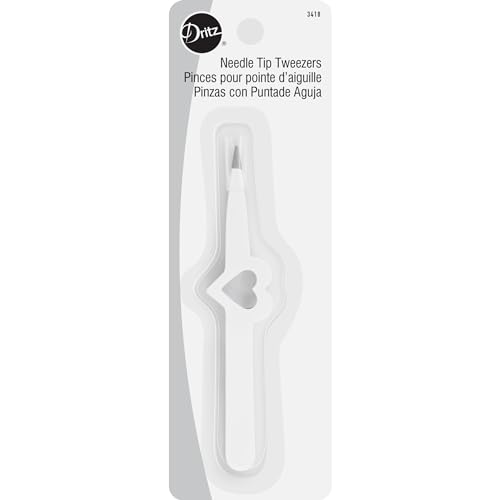
Don’t let the "quilting" label fool you; these are a secret weapon for knitters working with very high-tension fabrics. When you are knitting socks on 2.25mm needles, your stitches are often packed so tightly that a standard knitting needle can’t find the entry point.
These tweezers feature a curved tip that mimics the angle of a crochet hook or a cable needle. This curvature allows you to reach behind the work and hook a dropped stitch from the back, which is often easier than trying to force a needle through from the front.
They are best suited for those working with tightly twisted, non-superwash wools. Because the tips are slightly blunt, they are less likely to pierce the yarn itself, which is a common risk when using sharper jewelry-style tweezers.
Tim Holtz Tonic Studios Retractable Tweezers

The retractable feature is the primary selling point here, making these the ideal choice for a "go-bag." You don’t have to worry about the tips getting bent or poking holes in your project bag lining while you’re on the move.
The spring-loaded mechanism is surprisingly robust, allowing you to operate the tool with one hand while holding your knitting steady with the other. This is a game-changer when you are working on a complex lace chart and can’t afford to put your needles down.
The only drawback is the complexity of the mechanism. Like any spring-loaded tool, it is susceptible to picking up lint or stray fibers over time, so keep them clean to ensure the retraction stays smooth.
Erem Fine Tip Tweezers for Delicate Knitting
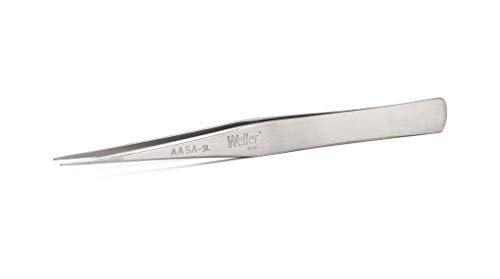
If you specialize in lace, silk, or luxury hand-dyed yarns, Erem tweezers are the professional-grade choice. They are engineered for extreme precision, making them perfect for manipulating single plies of yarn without damaging the fiber integrity.
The tips are perfectly aligned, which is the most critical feature for any fiber tool. When you close them, they meet flush along the entire length of the tip, ensuring that even the thinnest lace-weight silk is held securely.
These are an investment piece, but they prevent the "fuzzing" that occurs when cheaper, misaligned tweezers grip and pull at individual fiber strands. If you frequently work with high-end, expensive fibers, these will pay for themselves by preventing permanent damage.
Why Knitters Need Tweezers in Their Tool Kit
Tweezers are not just for removing splinters; they are essential for "surgical" knitting repairs. When a stitch drops three rows down in a complex cable, you need a tool that can act as a bridge to pull the yarn through the loop without creating extra tension.
They also provide a way to safely pull in yarn ends that are too short to weave in with a tapestry needle. By using tweezers to pull the tail through the back of the work, you save yourself the frustration of having to re-knit a section just because your tail was a half-inch too short.
Ultimately, having a pair of tweezers reduces the "fear of the mistake." When you know you have the right tool to retrieve a dropped loop, you are more likely to experiment with complex patterns and challenging stitch combinations.
Choosing the Best Material for Fiber Tweezers
Material choice dictates how the tool interacts with your yarn. Stainless steel is the industry standard because it is rust-resistant and provides the necessary tension, but it can be slippery against certain synthetic fibers.
- Stainless Steel: Best for durability and overall versatility.
- Coated/Matte Finish: Best for extra grip on slick, slippery fibers like bamboo or silk.
- Plastic/Composite: Best for non-conductive, lightweight use, though they lack the precision of steel.
If you knit with very slick fibers, look for tweezers with a matte or brushed finish. This creates a microscopic amount of friction that prevents the yarn from sliding out of the grip while you are re-inserting it into the needle.
How to Safely Remove Stitches with Tweezers
The biggest mistake knitters make is using tweezers to "pull" a stitch out of the fabric. Instead, use the tweezers to support the loop while you use a crochet hook or your knitting needle to guide the stitch into place.
Always work from the back of the fabric if possible. Pushing the stitch through from the back ensures that the "V" of the knit stitch remains oriented correctly, preventing a twisted stitch that would otherwise ruin your gauge and pattern flow.
If you are dealing with a snag, use the tweezers to gently tease the surrounding loops to redistribute the tension. Never pull the snag directly; instead, work the excess yarn back into the adjacent stitches until the snag disappears.
Essential Maintenance Tips for Needle Tools
Your tweezers will eventually collect lanolin, skin oils, and stray fiber dust. A quick wipe with a soft, lint-free cloth after every project will prevent this grime from building up and affecting the tension of the tips.
If the tips become misaligned, do not force them back into place with pliers, as this can weaken the metal. Instead, check the pivot point for any debris that might be preventing them from closing flush, and clear it out with a blast of compressed air.
Store your tweezers in a dedicated sheath or a small pocket in your project bag. Keeping them loose in a bag with your needles and scissors is the fastest way to blunt the tips and ruin their precision.
Investing in a quality pair of tweezers is a small step that yields massive dividends in your knitting confidence and project quality. By choosing a tool that matches your favorite fiber weight and project style, you turn potential disasters into minor, manageable hiccups. Remember, the best tool is the one that feels like a natural extension of your own hands, allowing you to focus on the joy of the craft rather than the stress of the repair. Happy knitting, and may your stitches always stay exactly where they belong.