6 Best Yarn Bowls For Holding Beaded Skeins Reviewed
Discover the top 6 yarn bowls for beaded skeins. We review designs that prevent tangles and ensure smooth, snag-free crafting for every knitting project.
Working with beaded yarn adds a beautiful, tactile dimension to any project, but it also introduces the frustration of constant tangles and weighted pulls. A high-quality yarn bowl acts as a silent partner, keeping your delicate fibers contained while you focus on your stitch tension. Choosing the right vessel is about balancing weight, friction, and portability to suit your specific knitting style. Here are the top contenders to help you manage those precious, beaded skeins with ease.
Furls Crochet Wooden Yarn Bowl: Best Overall Choice


This bowl is a masterclass in functional elegance, offering a polished interior that prevents delicate beaded fibers from snagging. The wood is sanded to a glass-like finish, ensuring that even the most fragile silk or mohair blends glide effortlessly as you pull from the center.
The weight distribution here is near-perfect, providing enough stability to keep the bowl anchored on your side table without feeling like a paperweight. It’s the kind of tool that feels like an heirloom; it doesn’t just hold your yarn, it elevates the entire knitting experience.
If you frequently switch between projects, the versatility of this bowl is its biggest strength. It handles everything from heavy wools to light, beaded fingering weights with equal grace. For most knitters, this is the gold standard for a reason.
Yarn Valet Ceramic Bowl: Best for Heavy Skeins
When you are working with heavier beaded yarns, a lightweight bowl will inevitably slide off your lap or table. The Yarn Valet Ceramic Bowl offers the necessary heft to counteract the pull of a dense, weighted skein, keeping your yarn exactly where it needs to be.

Ceramic provides a different kind of friction than wood, which can actually be a benefit when working with slippery fibers like rayon or bamboo. It keeps the yarn from "leaping" out of the bowl during a particularly aggressive pull.
However, keep in mind that ceramic is brittle. You’ll want to keep this on a stable surface rather than tossing it into a project bag. It is the ideal anchor for large-scale projects that require a steady, consistent feed.
Nagina International Sheesham Bowl: Best for Value

Nagina International hits a sweet spot for knitters who want the beauty of natural hardwood without the premium price tag. Sheesham, also known as Indian Rosewood, is incredibly durable and develops a lovely patina over time.
Because these are often handcrafted, you’ll find that each bowl has unique grain patterns and character. They are sturdy enough to handle daily use and provide a solid, reliable base for your yarn cakes.
While the finish might not be as ultra-refined as higher-end boutique options, the functionality is spot on. If you are looking for a reliable, attractive workhorse that won’t break the bank, this is your best bet.
KnitPal Premium Rosewood Bowl: Best Portable Pick

Portability is often an afterthought, but for those of us who knit at coffee shops or on public transit, it’s a necessity. The KnitPal Premium Rosewood Bowl is lightweight enough to carry comfortably but maintains enough structural integrity to hold a standard-sized cake of yarn.
The grain of the rosewood is naturally beautiful, making it a piece you’ll be proud to display on your coffee table between sessions. It’s compact, meaning it won’t dominate your entire workspace while you’re trying to juggle a pattern and your needles.
Because it is lighter, it may shift slightly if you are pulling very quickly. This is the perfect companion for the "knit-on-the-go" enthusiast who needs something lightweight and stylish.
Della Q Canvas Yarn Bowl: Best for Travel Knitting

If you have ever tried to pack a wooden or ceramic bowl in a suitcase, you know the anxiety of potential breakage. The Della Q Canvas Yarn Bowl solves this by using a collapsible, reinforced fabric structure instead of rigid materials.
It features a clever design that keeps your yarn contained while being completely crush-proof. You can fold it flat when your project is finished, making it a dream for knitters who travel frequently or have limited storage space.
It doesn’t offer the same "weighty" feel as wood or ceramic, but it makes up for it in sheer convenience. For the traveling knitter, this is the most practical solution for keeping yarn clean and tangle-free on the road.
Stanwood Needlecraft Wooden Bowl: Best Heavyweight
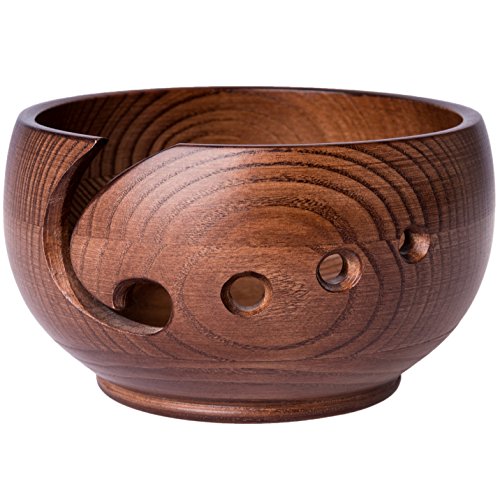
If your biggest gripe is a yarn bowl that skitters across the floor every time you tug on your yarn, the Stanwood Needlecraft bowl is the solution. This is a substantial, heavy-duty piece of woodwork designed to stay put.
The depth of the bowl is particularly impressive, which is a major advantage when working with beaded yarn that has a tendency to bounce or roll. The high walls ensure that even if your skein starts to collapse as you reach the center, the yarn remains safely inside.
It is a larger piece, so it requires a dedicated spot on your craft table. If you want a bowl that acts as a permanent, immovable station, this is the superior choice.
How to Choose the Right Yarn Bowl for Your Needs
Selecting a yarn bowl isn’t just about aesthetics; it’s about how you knit. If you are a "fast" knitter who pulls large amounts of yarn at once, you need a bowl with a heavy base and a smooth, snag-free exit hole.
Consider the types of projects you tackle most often. If you exclusively knit delicate lace shawls with beads, prioritize a bowl with an exceptionally smooth interior finish to avoid catching the threads or the beads themselves.
- Weight: Heavier is better for aggressive pullers.
- Size: Ensure it fits your largest typical yarn cake.
- Material: Choose based on your environment (ceramic for home, canvas for travel).
Why Weight Matters When Holding Beaded Skeins
Beaded yarn is inherently heavier than traditional wool or acrylic, which changes the physics of the pull. When the yarn is weighted with beads, it creates more drag as it travels from the bowl to your needle.
A light bowl will tip over or slide toward you as the beads add resistance. A heavy bowl provides the necessary counter-tension to keep the yarn feeding smoothly, preventing the "snapping" effect that can occur when a light bowl suddenly shifts.
Always aim for a bowl that weighs at least twice as much as the skein you are currently using. This simple ratio ensures that the bowl stays grounded, allowing your hands to maintain a consistent gauge.
Ceramic vs Wood: Choosing the Best Bowl Material
Ceramic bowls offer a cool, sleek surface that is excellent for synthetic fibers that might otherwise generate static electricity in a wooden bowl. They are also incredibly easy to clean if you happen to spill tea or coffee during a late-night knitting session.
Wood, conversely, offers a warm, organic feel that many knitters prefer for natural fibers like wool, alpaca, or cashmere. The natural oils in the wood can even help keep the yarn fibers conditioned over time.
- Ceramic Pros: Heavy, static-resistant, easy to clean.
- Wood Pros: Durable, beautiful aesthetic, tactile warmth.
- The Tradeoff: Ceramic breaks; wood can occasionally develop splinters if the finish wears down.
Essential Tips for Preventing Yarn Tangling Issues
Even with the best bowl, tangles can happen if the yarn isn’t wound correctly. Always wind your yarn into a center-pull cake using a ball winder before placing it in the bowl, as this prevents the yarn from rolling around inside the vessel.
Ensure the yarn guide hole is free of any burrs or rough edges. If you notice your yarn catching, a quick pass with a fine-grit sandpaper or a bit of wax can smooth out the exit point.
Finally, keep your bowl close to your knitting position. The further the yarn has to travel from the bowl to your needles, the more likely it is to twist or snag on furniture, regardless of how high-quality your bowl is.
Investing in a quality yarn bowl is one of the most effective ways to upgrade your knitting setup and protect your hard work. Whether you prioritize the heavy stability of ceramic or the portable flexibility of canvas, the right tool will significantly reduce the friction in your creative process. Take a moment to consider your typical knitting environment and fiber preferences before making your final selection. Happy knitting, and may your yarn always flow smoothly from your bowl to your needles.